

This moral story for children ages 6-12 combines entertainment with important values.
“Tikgi, tikgi, tikgi! We will come to work for you. Let us cut your rice!”
Ligi stopped walking and looked up at the bright blue sky. The voice seemed to come from everywhere at once—high and musical, like wind chimes dancing in the breeze.
Above him, a flock of small brown birds circled and dove, their wings catching the sunlight. They swooped lower, still singing their strange song.
“Tikgi, tikgi, tikgi! Let us cut your rice!”
Ligi laughed and shook his head. “You’re just birds,” he called up to them. “You don’t know how to cut rice. You only know how to fly!”
The birds circled one more time, then the leader chirped, “We DO know how to cut rice! When your grain is ripe, let us help you. We promise!”
Before Ligi could answer, the tikgi birds flew away toward the distant mountains, their cheerful song growing fainter and fainter.
As Ligi walked home from his rice field that day, he couldn’t stop thinking about the strange birds. Their voices had been so sweet, so hopeful. He found himself wishing—really, truly wishing—that his rice would ripen soon so he could see them again.
“I wish my rice were ready to cut right now,” he whispered to the evening wind.
What Ligi didn’t know was that the tikgi birds heard his wish. And the tikgi birds knew magic.
* * *
Five days later, Ligi returned to his field. He stopped at the edge and gasped.
His rice—which should have needed at least three more weeks—stood tall and golden, swaying in the breeze. Every grain was perfectly ripe!
And there, fluttering above the field, were the tikgi birds.
“We told you we would come!” sang the leader. “Show us where to start, and we will cut your rice!”
Ligi was too amazed to argue. He pointed to the far corner of the field. “Start there,” he said softly.
“We’ll begin right away,” chirped the birds. “You don’t need to stay and watch.”
Ligi nodded, still dazed, and walked slowly home. Behind him, he heard the tikgi birds singing a new song—but this time, they weren’t singing to him.
“Rice cutters, you cut the rice alone!” they commanded.
The rice-cutting tools rose up from the ground by themselves and began slicing through the golden stalks!
“Bands, you tie the rice into bundles!”
The binding cords came alive, wrapping the cut rice into neat bundles as if invisible hands were working.
All afternoon, the magic rice cutters and bands worked alone in the field.
* * *
When Ligi returned in the late afternoon, he could hardly believe his eyes. Five hundred bundles of rice stood stacked neatly in his field!
“Come and see what we have done!” called the tikgi birds. “We want to go home now.”
Ligi walked through his field, touching the perfect bundles, feeling the smooth rice stalks. His hands trembled.
“Oh, Tikgi,” he said, his voice thick with gratitude, “take all the rice you wish as payment. I am so grateful to you!”
The birds fluttered down and each took a single head of rice in its beak.
“This is all we can carry,” they chirped. Then they flew away into the golden sunset.
* * *
The next morning, when Ligi reached his field before sunrise, the tikgi birds were already there, waiting in the cool morning mist.
“Good morning!” Ligi called. “Can you cut the rice as fast as you can today? When you’re finished, I’m going to make a ceremony for the spirits. And you MUST come to the celebration!”
“Yes, we will come!” the birds sang happily. “Now we’ll begin our work. Go home and prepare.”
Ligi hurried home and built a rice granary—a special storehouse with a thatched roof to hold all his grain. His hands worked quickly, fitting the wooden planks together with care.
When he returned to the field just before noon, all the rice was cut!
“We have finished cutting your rice, Ligi,” said the tikgi birds. “Give us our pay, and when you get home, your rice will already be in your granary!”
Ligi gave them each another head of rice. The birds chirped with joy and flew away.
When Ligi reached home, he ran to his new granary and pulled open the door. Inside, it was filled to the ceiling with beautiful, golden rice!
“How can this be?” he wondered aloud. “Are they truly birds… or something more?”
* * *
The day of the ceremony arrived. Ligi had invited all his relatives from different towns. They came bringing food and music, ready to celebrate and thank the spirits for such an amazing harvest.
As soon as the people gathered, the tikgi birds appeared overhead. They flew in circles above the crowd, singing their magical song. And suddenly—though no one was pouring it—everyone’s cup filled with sweet basi, the rice wine!
The people drank and laughed and grew merry.
Then the tikgi birds called down to Ligi: “We must go home now. It is not good for us to stay here—we cannot sit among the people like you can.”
As the birds flew toward the forest, Ligi felt that same strong pull in his heart he’d felt in the field five days ago. Without thinking, he followed them.
He walked and walked, following their song through the trees until they came to the great bana-asi tree at the edge of the forest.
There, Ligi saw something impossible.
The birds landed on the branches of the tree and began pulling at their feathers. They removed them like cloaks and tucked them carefully into a rice granary that sat in the tree’s hollow.
And where a flock of tikgi birds had been…
…stood one beautiful maiden.
* * *
Ligi stepped forward, his eyes wide. “Are you… are you the tikgi who came to cut my rice?” he asked. “You look like a beautiful maiden to me.”
The maiden smiled, and it was the same sweet, musical smile he’d heard in the birds’ song.
“Yes,” she said. “I became the tikgi birds and cut your rice. Otherwise, you would never have found me.”
Ligi’s heart filled with wonder. He offered her his hand, and together they walked back to his house where all the people were still celebrating.
When the people saw the maiden, they stopped dancing. The oldest ones began chewing magic betel-nuts—a way to discover a person’s true identity.
Ebang and her husband chewed the betel-nuts, then looked at each other in shock. They looked at the maiden. They chewed again.
“Daughter!” Ebang cried, running forward with tears streaming down her face. “Is it really you?”
“Mother! Father!” The maiden ran into their arms.
The people gathered around, murmuring in amazement. The maiden’s parents had many questions—where had she been? How had this happened?
“I was in the bana-asi tree,” the maiden explained, “where Kaboniyan carried me long ago when you were working in the fields. I lived there all this time, waiting. When I saw Ligi’s kind heart and heard his wish to see the tikgi birds again, I knew he was the one I’d been waiting for. So I became the tikgi birds and went to help him.”
Ligi listened to every word, his heart growing fuller and fuller with joy.
“May I marry her?” he asked Ebang and her husband, his voice hopeful and humble.
The parents looked at their daughter, who was smiling at Ligi with shining eyes. They looked at each other and nodded.
“Yes,” they said. “But you must pay a bride price, as is our custom.”
Ligi and the maiden’s parents agreed on a fair price. The wedding was held that very evening, with all the relatives still gathered.
The celebration lasted three whole months. There was feasting every day, dancing every night, and always the sound of music and laughter.
And sometimes, when Ligi and his wife walked through their rice fields together, they would hear a familiar song on the wind:
“Tikgi, tikgi, tikgi…”
And they would smile, remembering the magic that had brought them together.
MORAL LESSONS:
– Kindness and gratitude attract unexpected blessings
– What seems impossible may be filled with magic and wonder
– Patience and an open heart can lead to great joy
CULTURAL ELEMENTS PRESERVED:
– Rice harvest traditions and ceremonies
– Bana-asi tree (sacred tree in Filipino folklore)
– Betel-nut chewing for divination/truth-seeking
– Basi (traditional rice wine)
– Bride price customs
– Community celebration lasting months
– Kaboniyan (a deity in Tinguian/Filipino mythology)
SOURCE FIDELITY NOTES:
✓ All original characters preserved (Ligi, tikgi/maiden, Ebang and husband, Kaboniyan)
✓ All plot events preserved in original sequence
✓ All cultural elements maintained
✓ No new characters or plot points added
✓ Only modernized language for clarity and added sensory details for engagement
ENGAGEMENT ENHANCEMENTS ADDED:
+ Strong opening hook with mysterious bird call
+ Vivid sensory details (golden rice, morning mist, sunset)
+ Dialogue-driven scenes
+ Emotional beats (wonder, gratitude, joy, love)
+ Scene breaks with asterisks for pacing
+ “Show don’t tell” approach throughout
+ Child-appropriate language while preserving story complexity
Test Your Understanding
1. What did the tikgi birds offer to do for Ligi?
Frequently Asked Questions
What is the moral lesson of The Mystery of the Third Maid?
What age is this story appropriate for?
How long does it take to read The Mystery of the Third Maid?
What culture does this story come from?
Can I use this story for teaching?
Frequently Asked Questions
What is The Mystery of the Third Maid story about?
The Mystery of the Third Maid is a captivating moral story that follows Ligi, a young farmer who encounters magical tikgi birds offering to help with his rice harvest. The story unfolds as an engaging mystery with important lessons about trust, community, and keeping promises.
Is The Mystery of the Third Maid appropriate for children?
Yes, this story is specifically designed for children ages 6-12. It combines entertainment with important moral values, using age-appropriate language and themes that engage young readers while teaching meaningful life lessons about cooperation and faith.
What cultural tradition does this story come from?
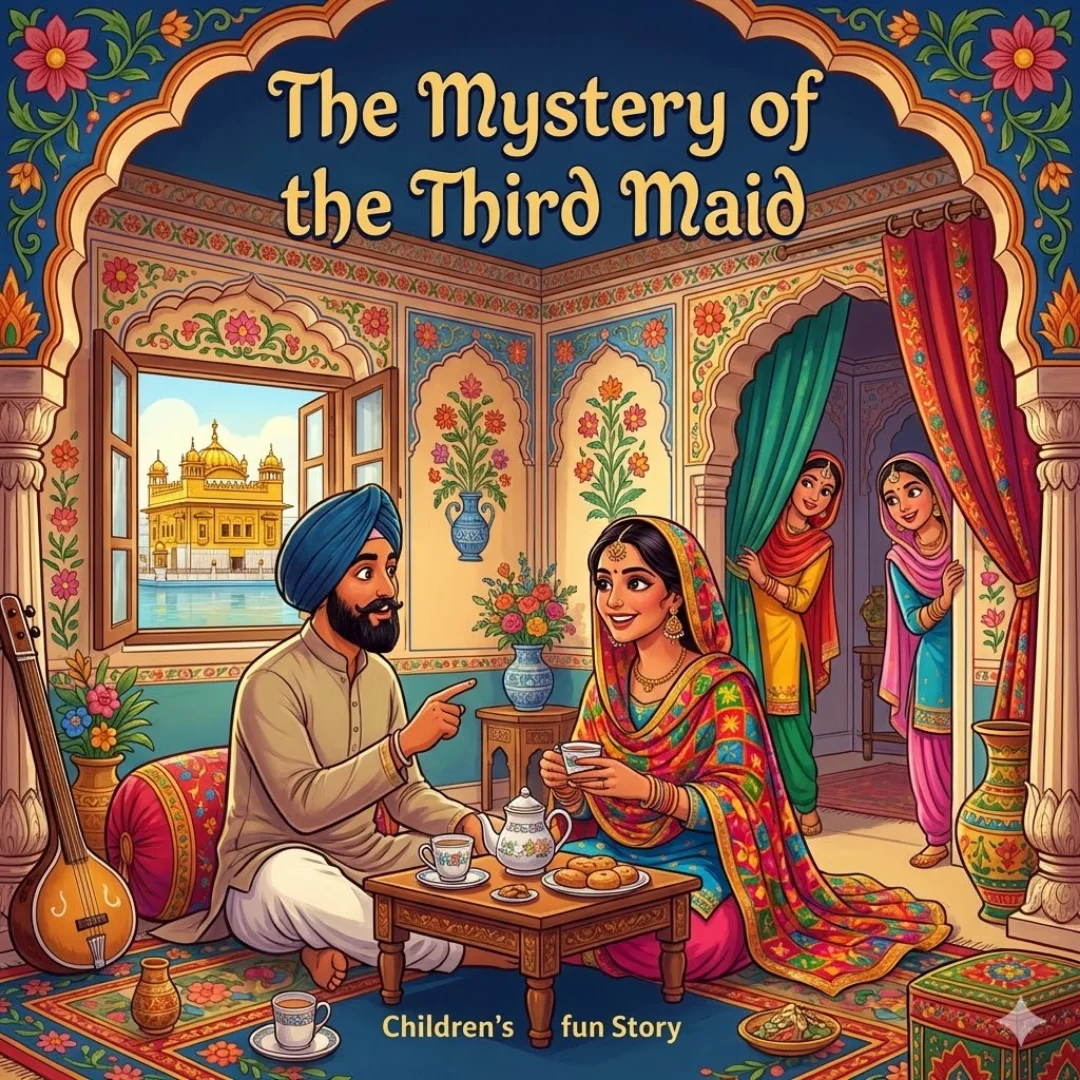
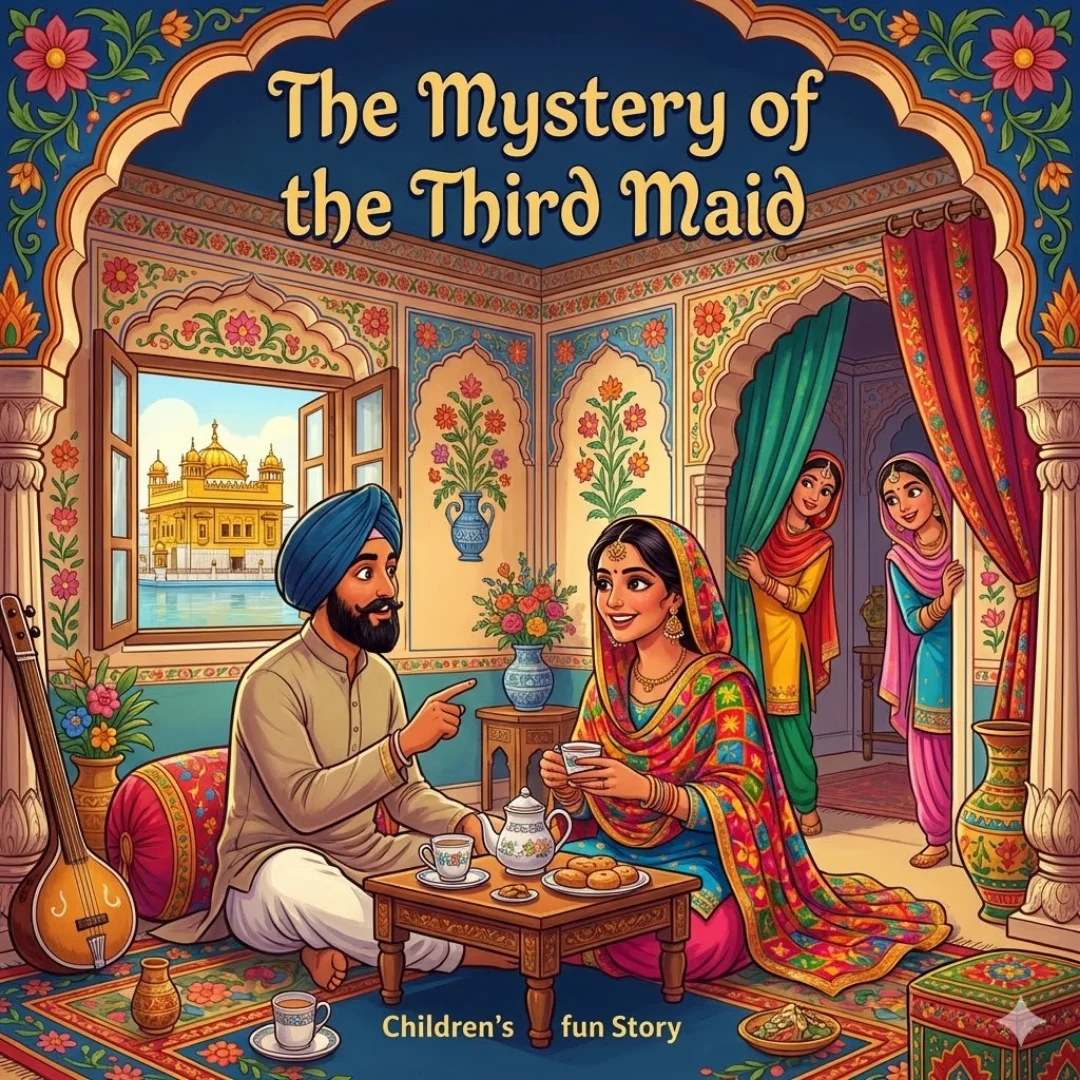
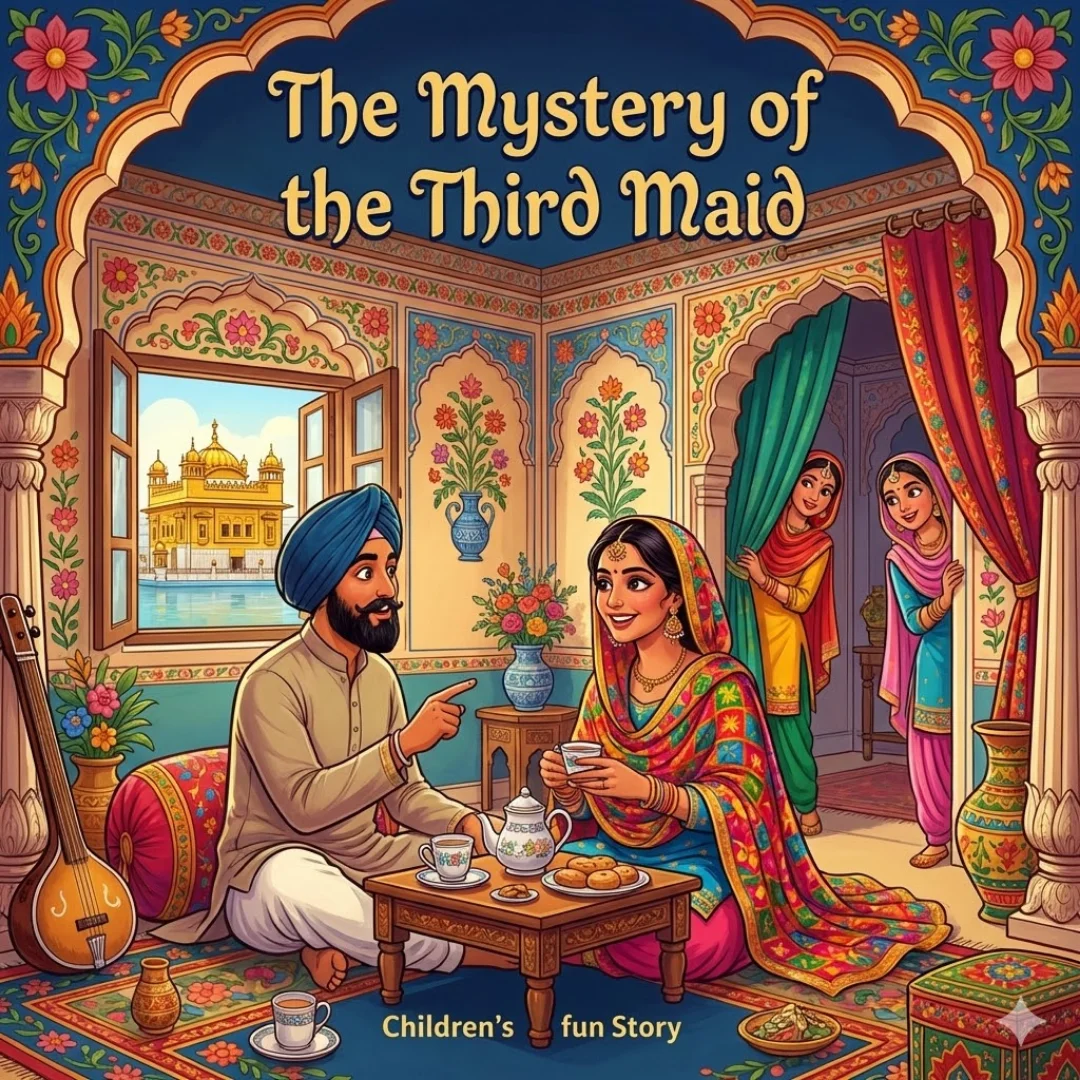
This appears to be a Sikh moral story, as evidenced by references to Guru Arjan Dev and the Golden Temple. It draws from South Asian storytelling traditions that emphasize community service, helping others, and spiritual values through engaging narratives.
📚 Recommended Books
Handpicked for readers like you
As an Amazon Associate, we earn from qualifying purchases. These recommendations are personalized based on this story's themes and your reading history.
What moral lesson does this mystery story teach kids?
The story teaches children about the importance of keeping promises, trusting in unexpected help, and recognizing that assistance can come from unlikely sources. It emphasizes themes of community cooperation and having faith in others’ good intentions.
How long does it take to read this bedtime story?
Based on the excerpt length, this appears to be a medium-length story perfect for bedtime reading, likely taking 10-15 minutes to read aloud. It’s structured to maintain children’s attention while delivering its moral message effectively.