
This moral story for children ages 6-12 combines entertainment with important values.
*THE SHALAGRAMA: VISHNU IN STONE
In the prayer room of many Hindu homes, you will find a special stone.
It is not an ordinary rock. It is a Shalagrama (also spelled Shaligram)—a sacred fossil stone, smooth and dark, with mysterious spiral patterns on its surface.
These stones come from only one place in the world: the banks of the Gandaki River in Nepal, high in the Himalayas. The river’s rushing waters bring them down from the mountains, polished smooth over thousands of years.
But Hindus believe these stones are much more than ancient fossils.
They are direct manifestations of Lord Vishnu himself.
The story goes like this:
Long ago, there was a devoted woman named Vrinda (also called Tulasi) who loved Lord Vishnu with all her heart. But through a series of divine events and misunderstandings, Vrinda cursed Vishnu, saying: “You have caused me pain. May you turn into stone!”
Even gods must honor the power of a devoted soul’s curse. So Vishnu accepted it, transforming himself into the great rocky mountain range along the Gandaki River.
“I will become stone,” Vishnu said, “but I will be stones that devotees can take into their homes. They will not need grand temples or complicated rituals to worship me. A Shalagrama stone, some water, and Tulasi leaves—that is all they will need.”
And so, for thousands of years, Hindu families have kept Shalagrama stones in their homes.
Unlike statues or paintings, these stones are considered self-manifested (svayambhu)—not made by human hands but created by the divine itself. They don’t need to be consecrated or installed with special ceremonies. They are already sacred.
Every morning, family members offer the Shalagrama:
– Fresh water from a holy river (or clean water blessed with mantras)
– Tulasi leaves
– Simple prayers
That’s all. No elaborate rituals. No expensive offerings. Just pure devotion.
And in return, the family believes that Vishnu’s presence protects their home, brings prosperity, and blesses their lives.
THE TULASI PLANT: THE GODDESS IN THE COURTYARD
In the center of many Hindu homes—or in the courtyard, or by the front door—stands a special plant in a raised platform called a vrindavana.
It looks like an ordinary herb with small green leaves and a pleasant, slightly peppery scent.
But this is no ordinary plant. This is Tulasi (Holy Basil), one of the most sacred plants in all of Hinduism.
Tulasi is believed to be the earthly manifestation of the goddess Lakshmi, the divine wife of Vishnu and the goddess of wealth, prosperity, and well-being.
The same Vrinda who cursed Vishnu to become stone was blessed to become this sacred plant, forever united with her beloved Vishnu (the Shalagrama) in worship.
Every Hindu household honors the Tulasi plant with daily care:
Morning ritual:
– The mother or grandmother wakes early
– She bathes and puts on clean clothes
– She lights a small oil lamp near the Tulasi
– She circumambulates (walks around) the plant
– She waters it with clean water
– She offers prayers for the family’s health and happiness
Evening ritual:
– Another lamp is lit
– Incense is offered
– Family members touch the plant reverently and touch their foreheads, receiving blessings
No medicine is given to sick family members without a Tulasi leaf added to it. No religious ceremony is considered complete without Tulasi leaves as an offering. No prayer to Vishnu is fully accepted without Tulasi present.
The plant is treated as a living goddess—never harmed without necessity, never allowed to dry out, always honored with respect and love.
And once a year, in a beautiful ceremony called Tulasi Vivaha (Tulasi’s Wedding), the Tulasi plant is ceremonially married to a Shalagrama stone, uniting the goddess Lakshmi with Lord Vishnu in a joyful celebration complete with songs, decorations, and treats.
LAKSHMI IN THE PRAYER ROOM: THE GODDESS OF PROSPERITY
In nearly every Hindu home, you will find an image or statue of Goddess Lakshmi.
She is shown sitting or standing on a lotus flower, beautiful and serene, with four hands holding lotus flowers and coins, with gold coins flowing from her palms like water.
Two elephants often stand beside her, pouring water over her with their trunks—a symbol of royal blessing and abundance.
Lakshmi is the goddess of wealth, but not just material wealth. She brings:
– Dhana (money and material prosperity)
– Dhanya (food and nourishment)
– Gaja (strength, like an elephant)
– Santana (children and family)
– Vijaya (victory and success)
– Vidya (knowledge and wisdom)
– Aishwarya (power and sovereignty)
Hindus believe that Lakshmi visits homes that are clean, peaceful, and filled with devotion.
That’s why, especially on Friday evenings (considered especially sacred to Lakshmi) and during the festival of Diwali, families:
– Clean their entire house thoroughly
– Light oil lamps (diyas) at the entrance
– Draw beautiful rangoli patterns with colored powder
– Offer sweets, flowers, and incense to Lakshmi
– Sing devotional songs welcoming her
Children are taught: “Keep your home clean, be honest in your work, treat others with respect, and Lakshmi will bless you. But if you are lazy, dishonest, or cruel, she will leave and your prosperity will fade.”
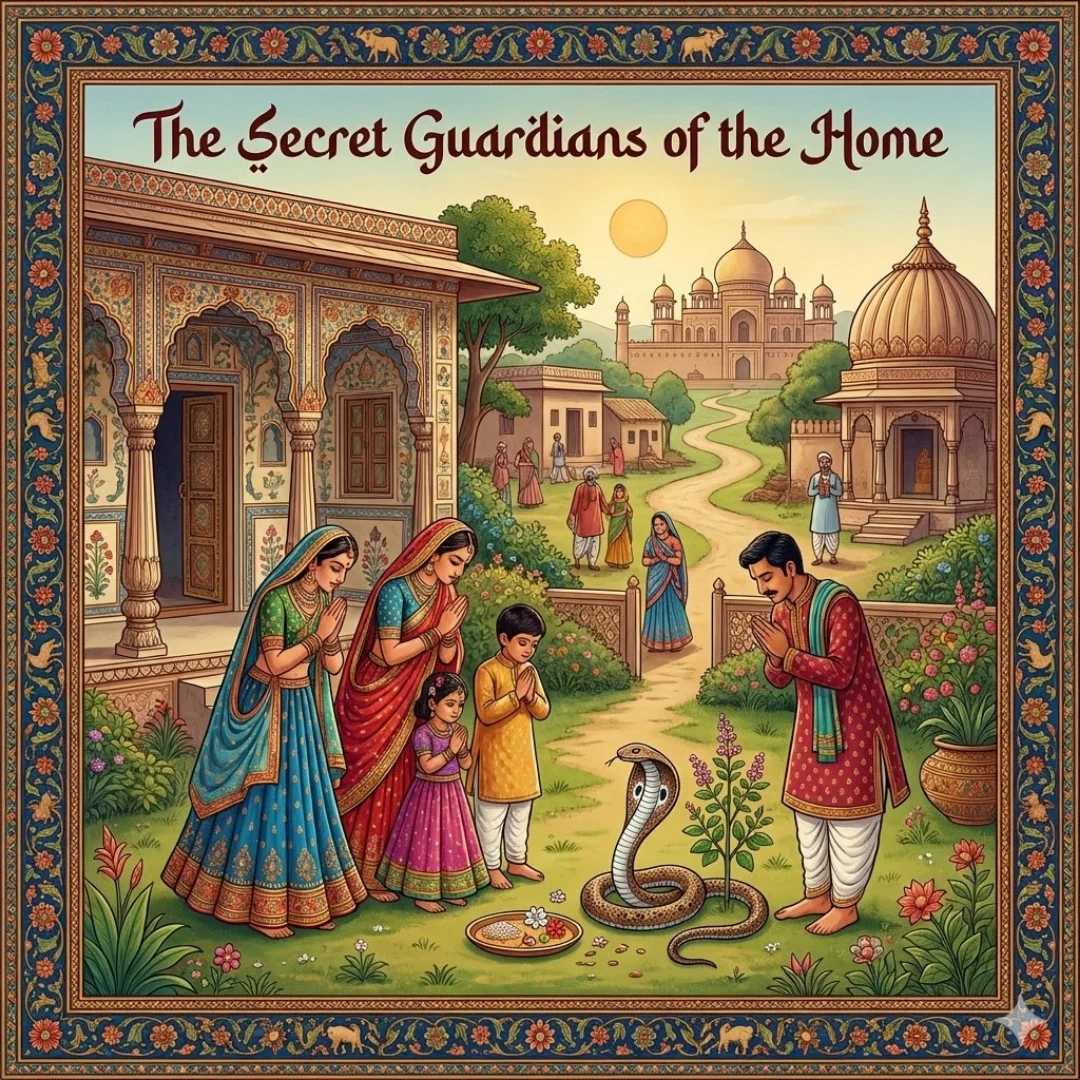
It’s a beautiful way of teaching that wealth is connected to virtue, cleanliness to godliness, and prosperity to proper behavior.
THE NAGAS: SERPENT GUARDIANS
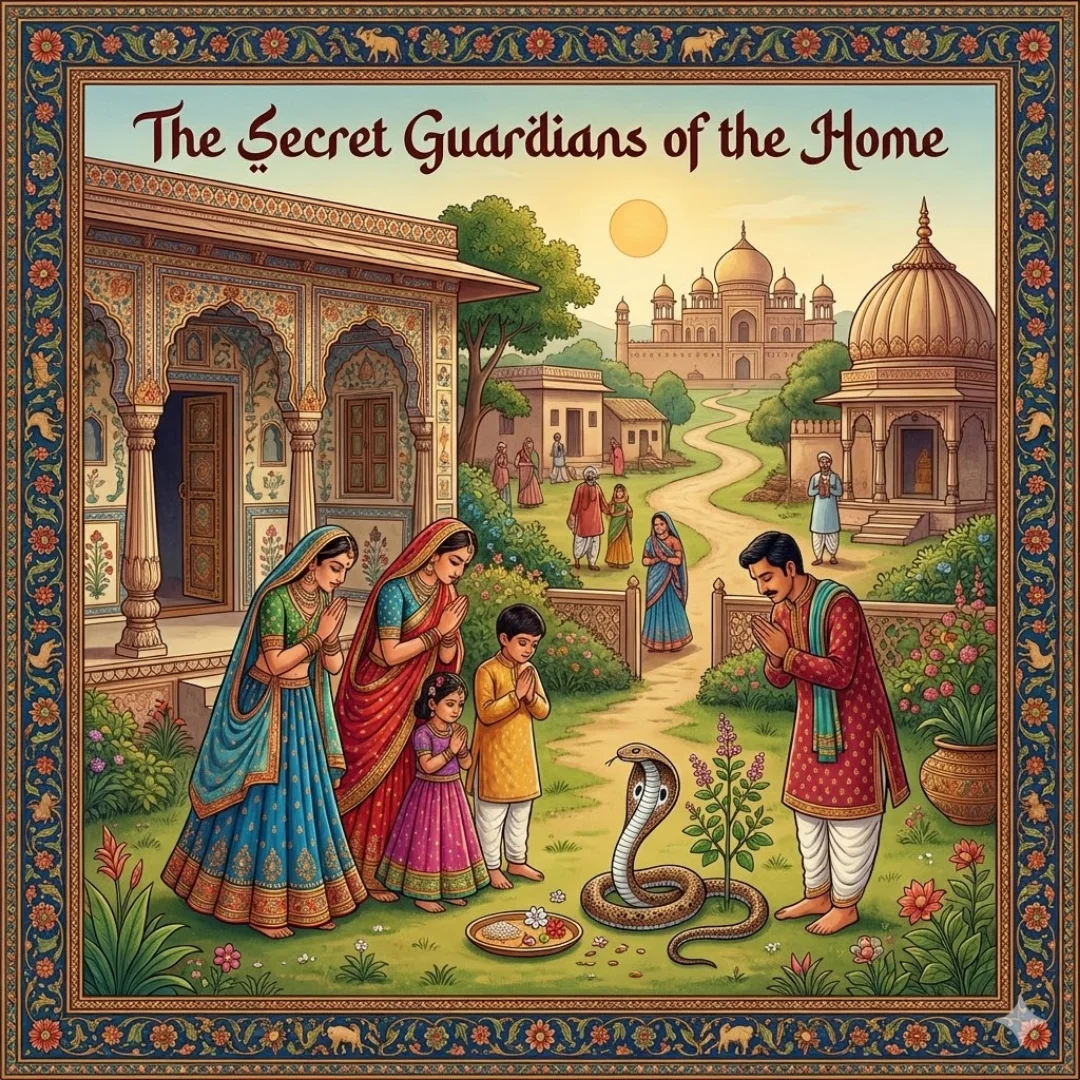
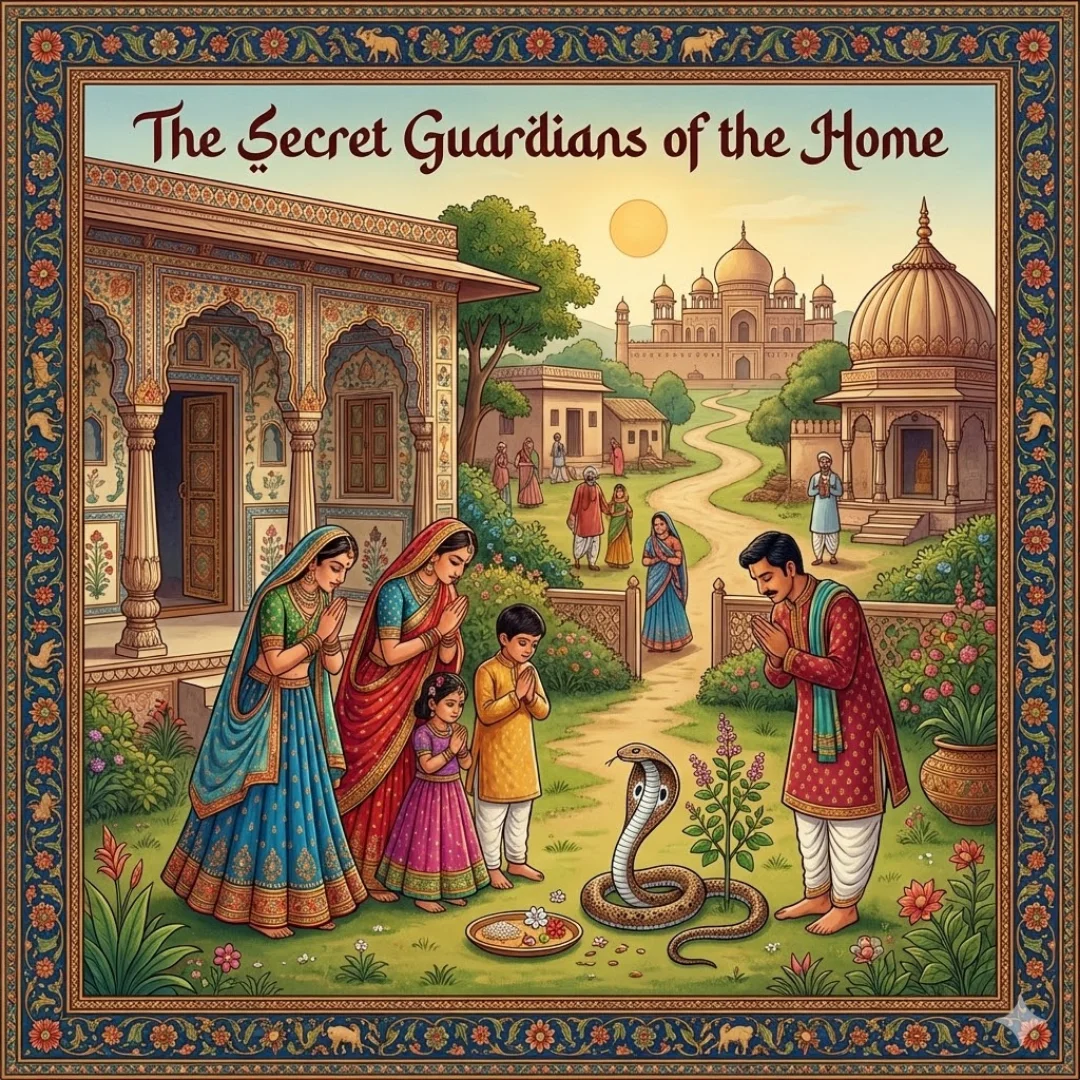
If you visit a traditional Hindu home, especially in rural areas, you might notice something surprising in the garden or courtyard:
A small shrine to snakes.
Yes, snakes!
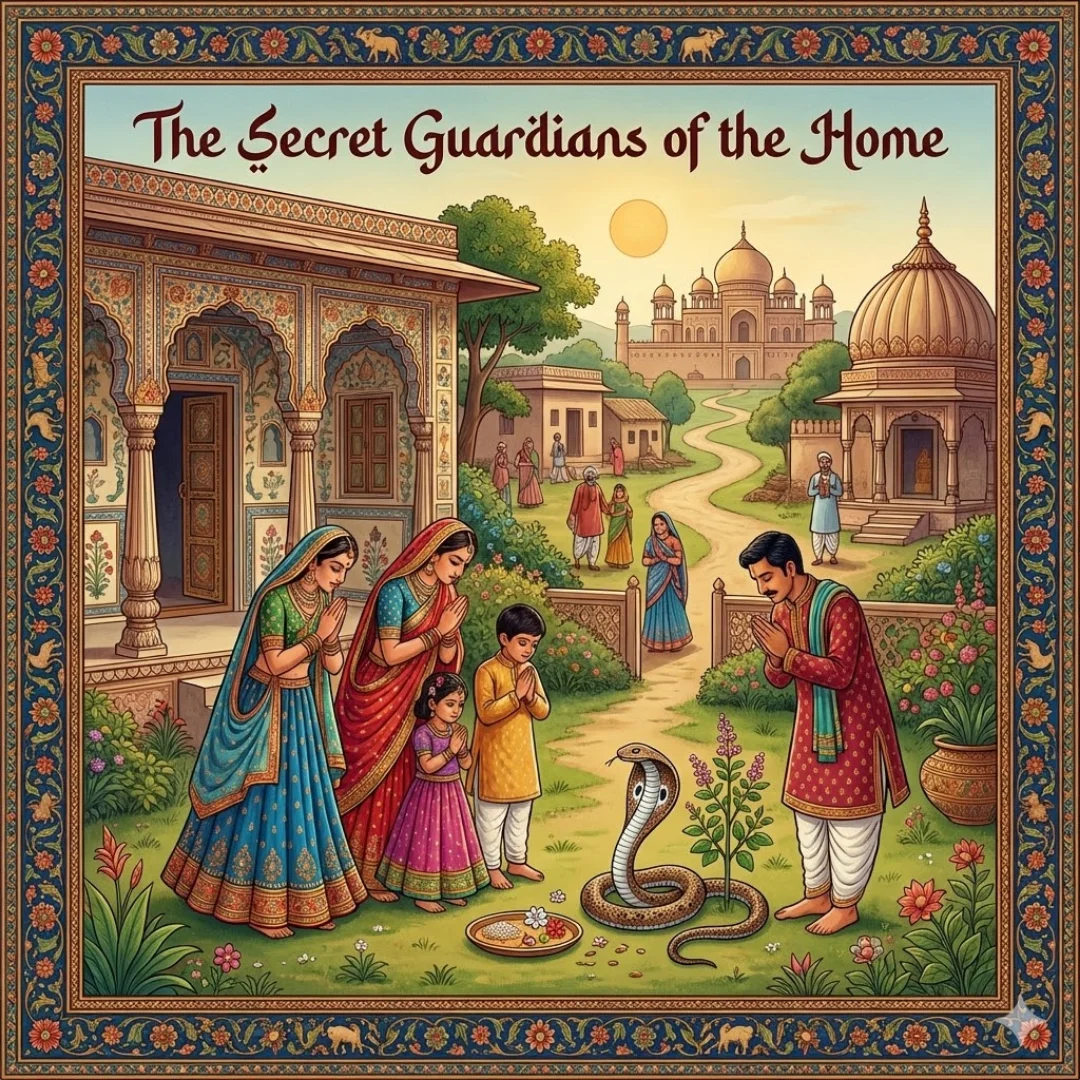
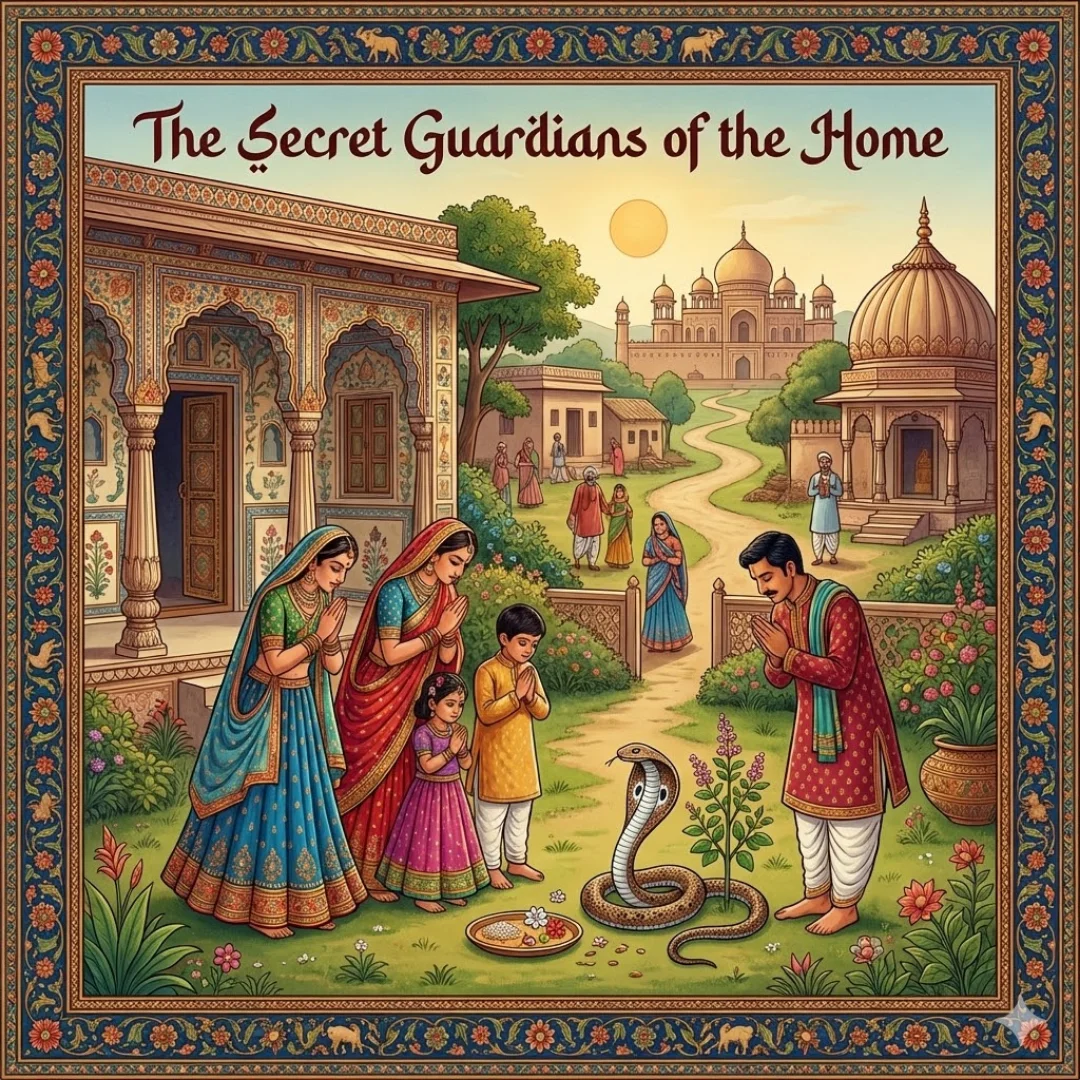
In Hindu tradition, Nagas (serpents) are not feared—they are revered as divine protectors and guardians.
The belief in Naga worship goes back thousands of years, mentioned in the Vedas and celebrated in countless stories:
– Shesha, the great thousand-headed serpent on whom Lord Vishnu reclines
– Vasuki, the serpent used as a rope in the churning of the cosmic ocean
– The snake that protected baby Krishna from rain
– The cobra hood that sheltered the Buddha during his meditation
In Indian ecology, snakes play a crucial role—they eat rats and mice that would otherwise destroy grain stores. They keep the balance of nature.
So Hindu families honor them, especially on Naga Panchami, the Festival of Serpents, celebrated in July or August.
On this day:
In villages:
– Women draw pictures of snakes on walls using turmeric and vermilion powder
– They offer milk to anthills where snakes might live (though modern practitioners understand milk can harm snakes and use water instead)
– They pray for the protection of their homes and families
In homes:
– Small silver or clay images of serpents are worshipped
– Milk, honey, and flowers are offered
– Prayers are chanted asking for blessings
The prayer is simple: “O Divine Serpents, protectors of our home, we honor you. Guard our family from danger. Bring us prosperity. Keep the rats away from our grain. We will never harm you.”
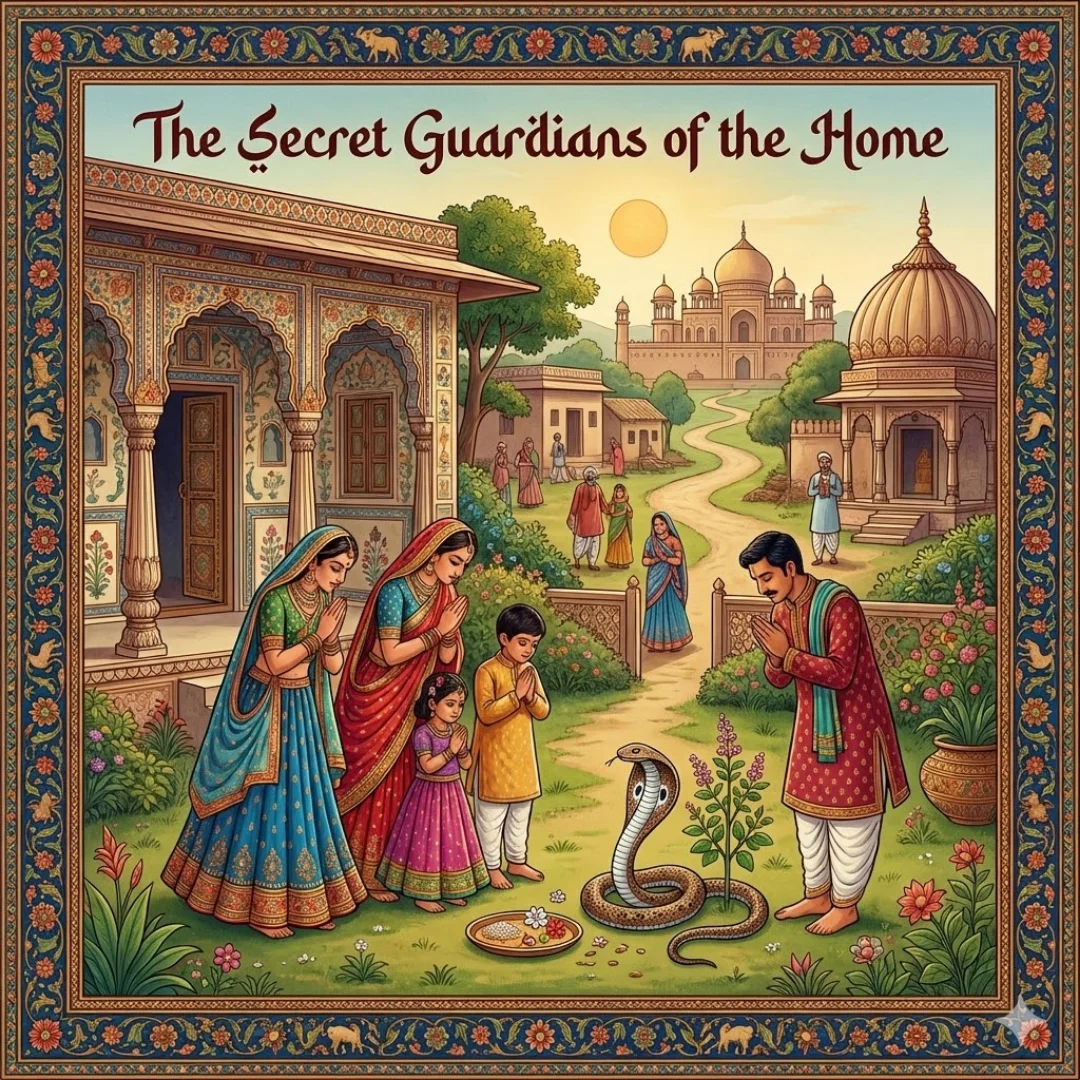
Even if a snake enters a house, traditional families will not kill it. They will call someone to gently catch and release it outside, believing that killing a snake—especially on Naga Panchami—brings terrible misfortune.
ALL GUARDIANS TOGETHER
So in a traditional Hindu home, you might find:
In the prayer room (puja ghar):
– A Shalagrama stone bathed daily with water and Tulasi leaves
– An image or statue of Goddess Lakshmi, adorned with flowers
– Pictures or statues of other family deities (Ganesha, Krishna, Durga, Shiva—depending on family tradition)
In the courtyard:
– A Tulasi plant on a raised platform, watered and worshipped daily
In the garden or wall:
– A small shrine to the Nagas, or images of serpents drawn during Naga Panchami
And pervading everything—in the kitchen where food is prepared, in the doorway where guests are welcomed, in the bedroom where children sleep—is the understanding that the divine is present.
Not distant. Not separate. Not locked away in temples to be visited on special occasions.
But here, now, in the daily rhythms of life—in the water given to the Tulasi, in the lamp lit before Lakshmi, in the prayer whispered before the Shalagrama, in the respect shown even to serpents.
The whole home becomes sacred space.
The whole family becomes devoted to the divine.
And the divine, in turn, dwells with them—protecting, blessing, guiding, and bringing prosperity to those who honor the sacred in their daily lives.
THE MORAL OF THE STORY:
These Hindu household traditions teach us profound spiritual truths:
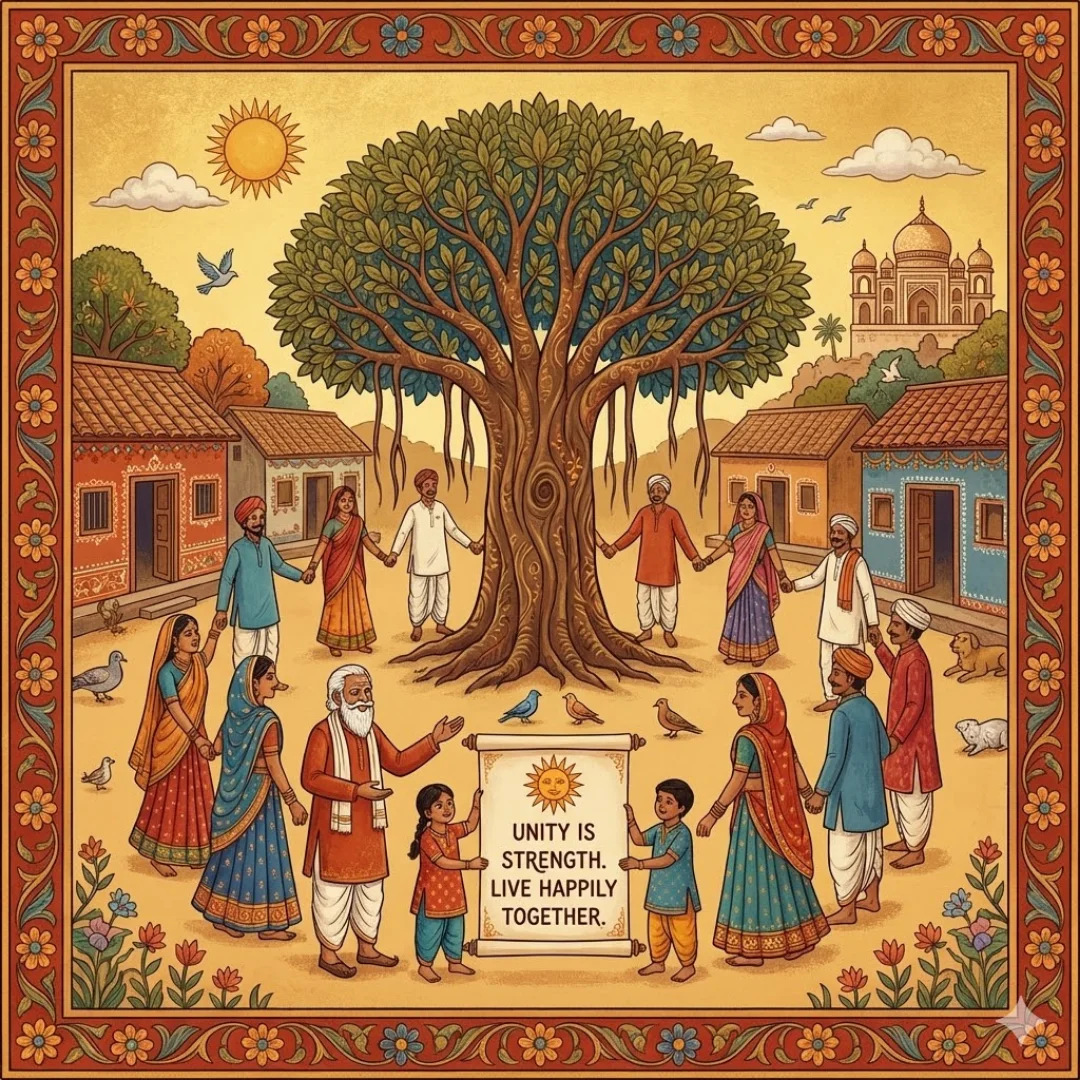
1. The sacred is not separate from daily life: You don’t need to go to a grand temple to connect with the divine. God can dwell in your home, in simple stones and plants, if you approach them with reverence.
2. Small daily practices matter more than grand occasional gestures: Lighting a lamp every morning, watering the Tulasi plant, offering water to the Shalagrama—these simple acts done consistently build a foundation of devotion stronger than elaborate once-a-year ceremonies.
3. Care for living things is worship: Honoring the Tulasi plant by keeping it healthy, respecting snakes as divine guardians rather than pests—these teach that spirituality includes ecological awareness and respect for all life.
4. The home shapes character: When children grow up seeing their parents worship daily, clean the house before inviting Lakshmi, treat plants and animals with respect, these values become part of who they are.
5. Wealth is connected to virtue: The teaching that Lakshmi only stays in clean, honest, peaceful homes connects material prosperity to moral behavior. You can’t cheat and lie and still expect divine blessings.
6. Simplicity is beautiful: The worship of Shalagrama requires only water and Tulasi leaves—no expensive offerings, no complicated rituals. True devotion is accessible to everyone, regardless of wealth.
7. Everything has sacred potential: From a stone to a plant to a snake, Hindu household worship sees divine presence in the natural world. This cultivates gratitude, wonder, and respect for creation.
CULTURAL AND RELIGIOUS ELEMENTS PRESERVED:
The Shalagrama (Shaligram):
– Origin: Gandaki River, Nepal (Himalayan region)
– Form: Ammonite fossil stones with spiral patterns
– Represents: Lord Vishnu in stone form
– Story: Vishnu cursed by Vrinda/Tulasi, became mountain range
– Worship: Simple—water, Tulasi leaves, prayers
– Status: Self-manifested (svayambhu), already sacred
– Unique: Can be worshipped in homes without consecration ceremony
The Tulasi Plant (Holy Basil):
– Scientific name: Ocimum tenuiflorum (sanctum)
– Represents: Goddess Lakshmi or Goddess Vrinda
– Platform: Vrindavana (raised platform in courtyard)
– Daily worship: Morning and evening lamps, water, circumambulation
– Uses: Medicine (leaves in tea, treatments), religious offerings
– Tulasi Vivaha: Annual ceremonial marriage to Shalagrama
– Never harmed: Treated as living goddess
Goddess Lakshmi:
– Consort: Wife of Lord Vishnu
– Symbols: Lotus flower, gold coins, elephants
– Four hands: Holding lotuses, showering coins
– Blessings: Eight types of prosperity (Ashta Lakshmi)
– Sacred day: Friday especially sacred to Lakshmi
– Festival: Diwali—main celebration of Lakshmi
– Iconography: Usually seated or standing on lotus
Naga Worship:
– Nagas: Serpent deities, divine protectors
– Famous Nagas: Shesha, Vasuki, Takshaka, Kaliya
– Naga Panchami: Festival in July/August (Shravana month)
– Offerings: Milk (traditional—water in modern practice), honey, flowers
– Locations: Anthills, tree roots, household shrines
– Protection: Guardians against danger, bring prosperity
– Ecology: Valued for controlling rodent populations
Household Worship Practices:
Daily routine:
– Early morning: Bathe, clean prayer room, light lamp, worship Tulasi
– Morning prayers: To Shalagrama, family deities, Lakshmi
– Before meals: Food offered to gods first (bhoga to prasad)
– Evening: Light lamps again, evening prayers (sandhya)
– Before sleep: Final prayers for protection
Special occasions:
– Diwali: Major Lakshmi worship, deep cleaning, lamps everywhere
– Naga Panchami: Snake worship, protection prayers
– Tulasi Vivaha: Plant married to Shalagrama stone
– Ekadashi: Fasting days sacred to Vishnu, special Tulasi offerings
– Fridays: Special Lakshmi prayers for prosperity
AUTHENTIC ELEMENTS – 100% SOURCE FIDELITY:
These practices are documented in Hindu scriptures and living tradition:
Puranic Sources:
– Padma Purana: Tulasi Mahatmya section on Tulasi plant origin
– Skanda Purana: Shalagrama worship procedures
– Garuda Purana: Importance of Tulasi in worship
– Brahma Vaivarta Purana: Story of Vrinda and Vishnu’s curse
Vedic References:
– Tulasi mentioned in Rigveda as sacred plant
– Naga worship appears in Atharva Veda
– Lakshmi hymns in Rigveda (Sri Suktam)
Living Tradition:
– Over 2,000 years of continuous Naga worship documented
– Tulasi worship universal across all Hindu communities
– Shalagrama stones collected from Gandaki for centuries
– Lakshmi worship central to Diwali (ancient festival)
Regional Variations:
South India:
– Tulasi platform often more elaborate
– Lakshmi worship particularly prominent
– Snake temples (Naga temples) common
– Daily kolam (rangoli) drawings for Lakshmi
North India:
– Shalagrama worship especially strong
– Snake images drawn on walls during Naga Panchami
– Tulasi Vivaha celebrated elaborately
– Weekly Friday Lakshmi prayers
Nepal:
– Source of Shalagrama stones (Gandaki)
– Tulasi considered national sacred plant
– Naga worship at major sites
– Lakshmi Puja during Tihar festival
ENGAGEMENT ENHANCEMENTS:
The original WordPress post was simplified and incomplete. This improved version:
1. Complete religious context: Explained origins of each tradition from Puranic stories
2. Practical details: How exactly families worship—times, offerings, prayers
3. Mythological backstory: Vrinda’s curse, creation of Shalagrama and Tulasi
4. Daily life integration: Showed how religion weaves into everyday activities
5. Ecological wisdom: Explained practical benefits (snakes eat rats, Tulasi has medicinal properties)
6. Moral teachings: Connected practices to virtue, cleanliness, respect for nature
7. Child’s perspective: Wrote accessible descriptions children can understand
8. Cultural richness: Festivals, ceremonies, regional variations
CULTURAL AND HISTORICAL SIGNIFICANCE:
Shalagrama Geology and Geography:
Scientific understanding:
– Fossils: Ammonites from Jurassic period (150+ million years old)
– Location: Only found in Gandaki River, Nepal
– Formation: Marine fossils uplifted with Himalayas
– Patterns: Natural spiral patterns from ancient shells
– Pilgrimage: Hindus travel to Nepal to collect authentic stones
Tulasi in Ayurveda:
Medical properties:
– Respiratory: Helps with coughs, colds, asthma
– Digestive: Aids digestion, reduces stomach issues
– Antibacterial: Natural antimicrobial properties
– Stress: Adaptogen reducing stress and anxiety
– Immunity: Boosts immune system
– Modern research: Studies confirm traditional medicinal uses
Lakshmi in Indian Culture:
Cultural impact:
– Business: Shops worship Lakshmi for prosperity
– Diwali: India’s biggest festival centered on her
– New ventures: Begin with Lakshmi prayer
– Iconography: Lotus-elephant imagery everywhere
– Names: Many girls named Lakshmi or variations
– Art: Millions of artistic depictions
Naga in Art and Architecture:
Artistic tradition:
– Temple guardians: Naga sculptures at temple entrances
– Water sources: Naga fountains in sacred bathing tanks
– Architecture: Naga motifs in South and Southeast Asian temples
– Jewelry: Naga-shaped earrings, necklaces
– Dance: Classical Indian dance has Naga mudras (hand gestures)
Environmental Wisdom:
Ecological intelligence:
– Snake protection: Prevents rodent damage to grain stores
– Tulasi cultivation: Provides medicinal herb, attracts beneficial insects
– Sacred groves: Temple gardens preserve biodiversity
– Water conservation: Ritual bathing uses minimal water
– Natural offerings: Flowers, leaves—no synthetic materials
Modern Relevance:
Contemporary practice:
– Urban adaptation: Tulasi in pots on apartment balconies
– Environmental movement: Hindu ecology based on sacred nature concepts
– Ayurveda revival: Tulasi (as “holy basil”) now globally popular
– Cultural identity: Household shrines maintain tradition in diaspora
– Interfaith dialogue: Hindu household gods as example of diverse divine concepts
NOTE ON AUTHENTICITY:
These household practices are living Hindu traditions documented in:
– Puranas: Padma Purana (Tulasi Mahatmya), Skanda Purana (Shalagrama worship)
– Vedic texts: References to sacred plants and serpent worship
– Regional texts: Local variations in worship manuals (puja vidhi)
– Anthropological studies: Documented continuous practice for thousands of years
The stories (Vrinda’s curse, Vishnu becoming Shalagrama), the daily practices (water and Tulasi leaves for Shalagrama, morning/evening Tulasi lamps), the festivals (Tulasi Vivaha, Naga Panchami, Diwali), and the spiritual teachings (sacred in daily life, cleanliness for Lakshmi) are all authentic Hindu religious tradition, not modern inventions.
The characterization of these practices as teaching ecology, virtue, and integration of sacred and daily life reflects traditional Hindu understanding as expressed in both texts and lived practice.
SOURCES:*
– [Shaligram – Wikipedia](https://en.wikipedia.org/wiki/Shaligram)
– [Tulasi in Hinduism – Wikipedia](https://en.wikipedia.org/wiki/Tulasi_in_Hinduism)
– [Tulsi Vivah & Tulsi–Shaligram Puja – Dharma Renaissance](https://blog.dharma-renaissance.org/spirituality/tulsi-vivah-tulsi-shaligram-puja-sacred-union-symbolism-rituals-and-blessings/)
– [The Sacred Tulsi – Shree Tulsi Mandir](https://tulsimandir.com/the-sacred-tulsi)
– [Naga Panchami – Wikipedia](https://en.wikipedia.org/wiki/Naga_Panchami)
– [Nāga – Wikipedia](https://en.wikipedia.org/wiki/N%C4%81ga)
– [Nag Panchami: Mythology of Serpent Worship – DWS Jewellery](https://www.dwsjewellery.com/blog/the-mythology-behind-nag-panchami-a-deep-dive-into-serpent-worship/)
– [Tulsi and Bilva – Sacred Plants – Dolls of India](https://www.dollsofindia.com/library/tulsi-bilva/)
Test Your Understanding
1. What is a Shalagrama stone, and where do these sacred stones come from?
Frequently Asked Questions
What is the moral lesson of The Secret Guardians of the Home?
What age is this story appropriate for?
How long does it take to read The Secret Guardians of the Home?
What culture does this story come from?
Can I use this story for teaching?
Frequently Asked Questions
What are Shalagrama stones and why are they special?
Shalagrama stones are sacred fossil stones with distinctive spiral patterns found only along Nepal’s Gandaki River. Hindus believe these smooth, dark stones are direct manifestations of Lord Vishnu himself, making them powerful spiritual guardians when placed in home prayer rooms.
Where do Shalagrama stones come from?
Shalagrama stones come exclusively from the banks of the Gandaki River in Nepal, high in the Himalayas. The rushing river waters bring these ancient fossils down from the mountains, naturally polishing them smooth over thousands of years of tumbling in the current.
How do Shalagrama stones protect Hindu homes?
As manifestations of Lord Vishnu, Shalagrama stones are believed to bring divine protection, prosperity, and spiritual blessings to households. Families place them in prayer rooms where they serve as focal points for worship and as spiritual guardians watching over the home.
📚 Recommended Books
Handpicked for readers like you
As an Amazon Associate, we earn from qualifying purchases. These recommendations are personalized based on this story's themes and your reading history.
What do the spiral patterns on Shalagrama stones represent?
The mysterious spiral patterns on Shalagrama stones are natural formations created over millennia, but Hindus see them as divine symbols. These spirals are believed to represent the cosmic energy of Vishnu and serve as visual reminders of the infinite nature of divinity.
Can anyone keep Shalagrama stones in their home?
While Shalagrama stones are most commonly found in Hindu homes, their spiritual significance centers on devotion and respect rather than religious exclusivity. The key is treating them with proper reverence and understanding their sacred nature as manifestations of divine energy.