Share this engaging bedtime story with kids ages 6-12 to teach valuable life lessons.
In the mid-18th century, across the plains of Punjab and the mountain passes connecting India to Afghanistan, a remarkable drama was unfolding. The year was 1761, and the dust had barely settled from Ahmad Shah Abdali’s victory at the Third Battle of Panipat. The Afghan emperor was returning to Lahore with a massive caravan – thousands of prisoners, cartloads of plundered treasures, and an army exhausted from months of warfare.
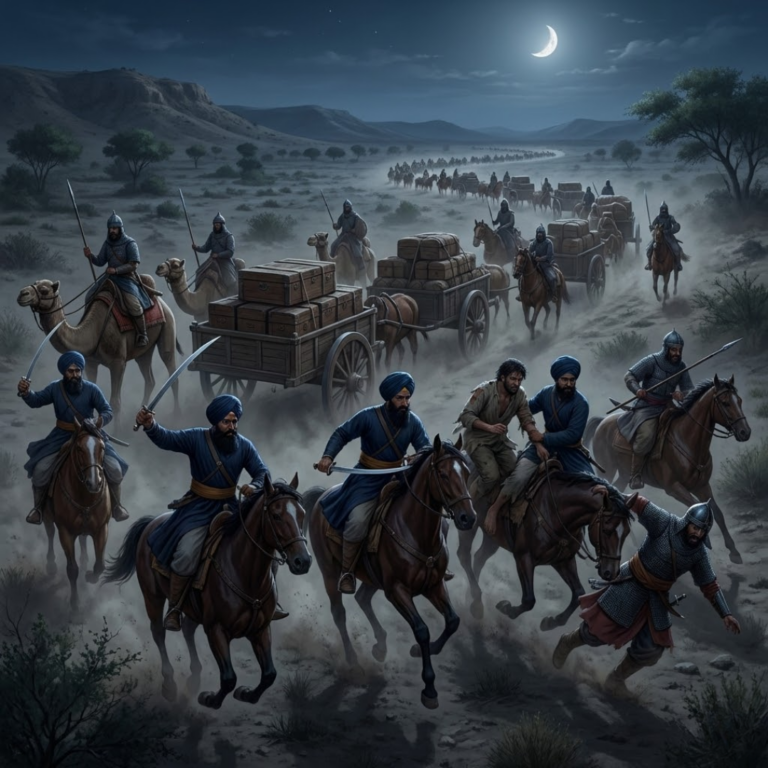
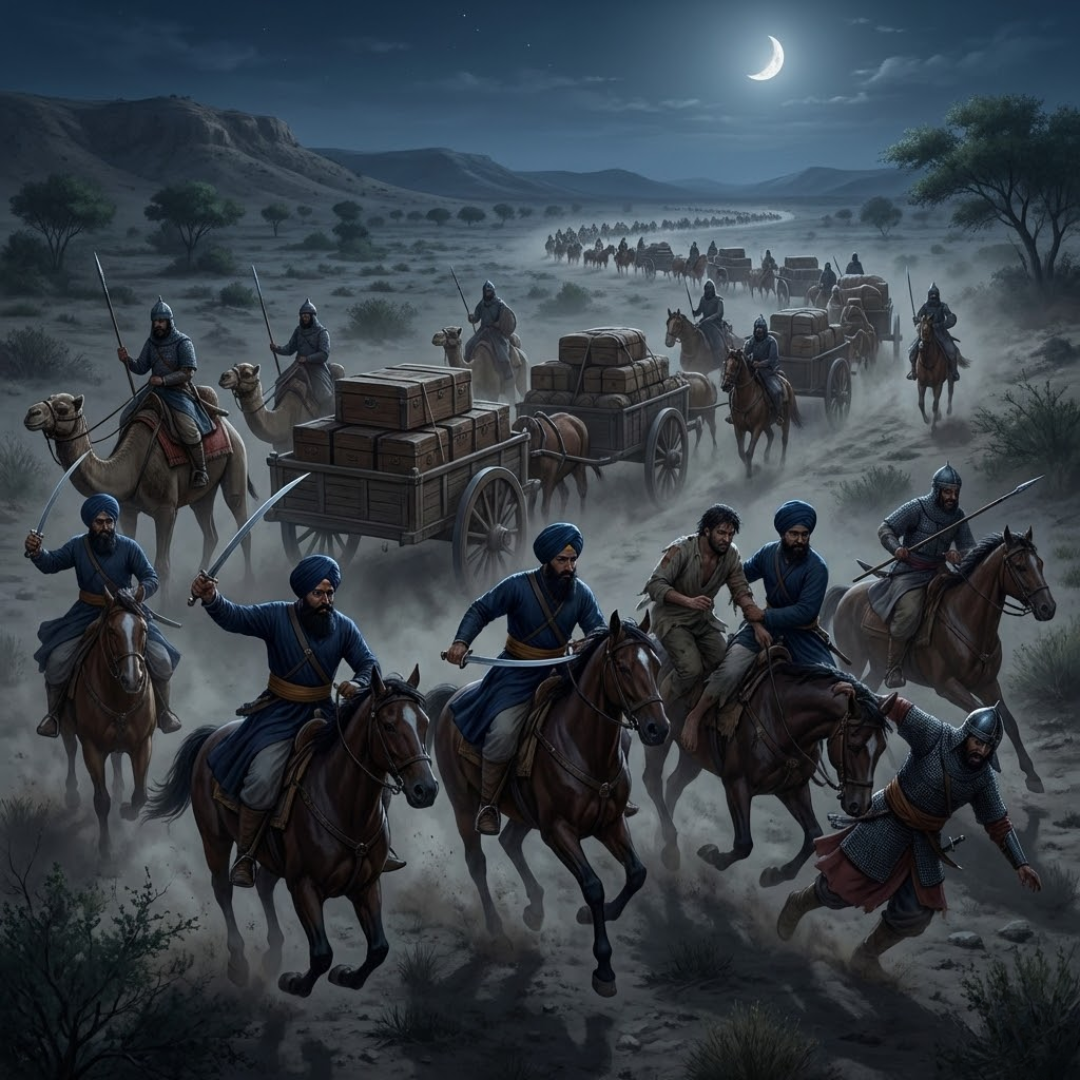
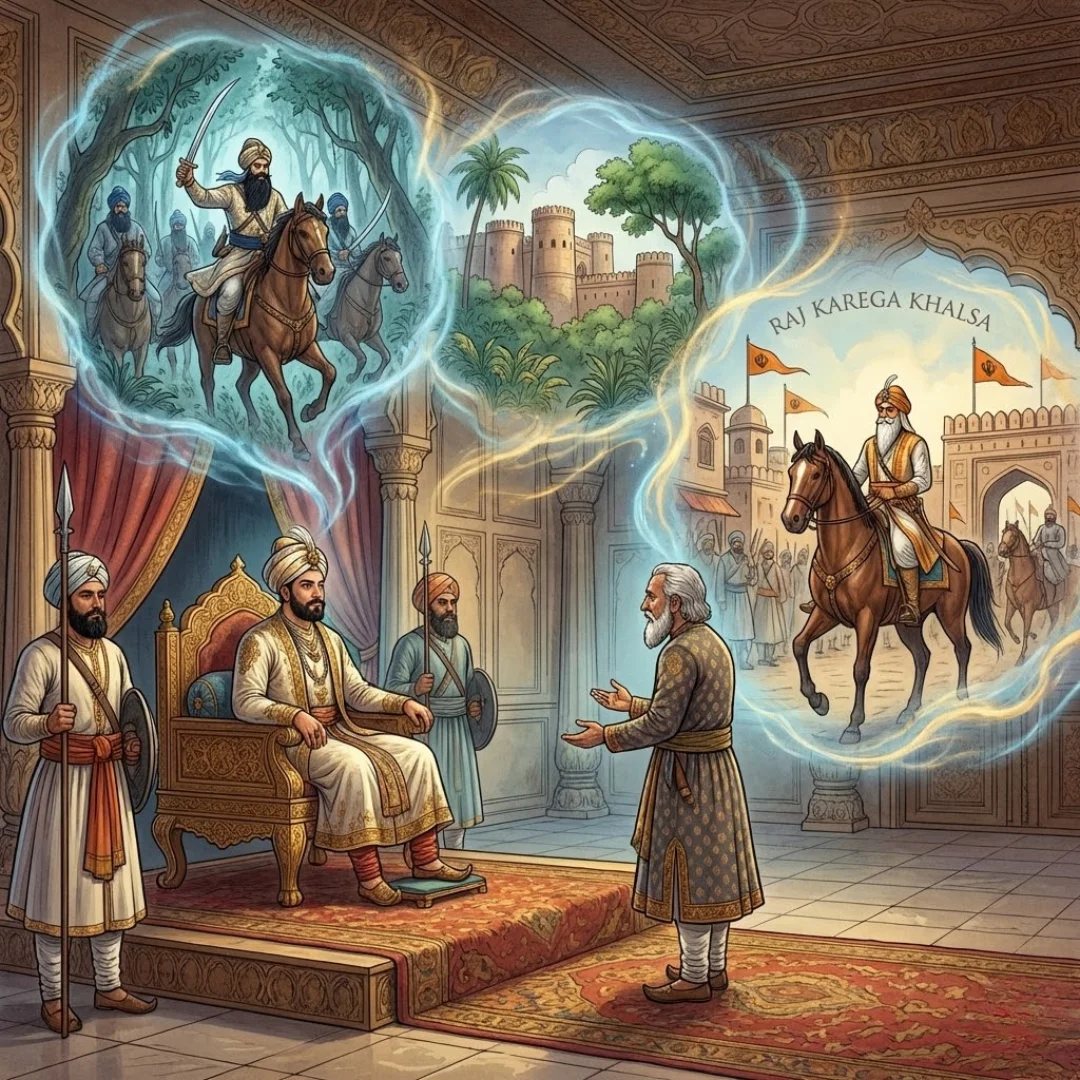
But something strange kept happening. Each night, as his army camped on the long road back to Kabul, mysterious horsemen would appear from nowhere. They struck with lightning speed under the cover of darkness, freed prisoners, recovered stolen wealth, and vanished into the wilderness before Abdali’s soldiers could mount a proper defense. These phantom warriors wore blue robes, carried swords and spears, and fought with a ferocity that seemed to transcend mortal limits.
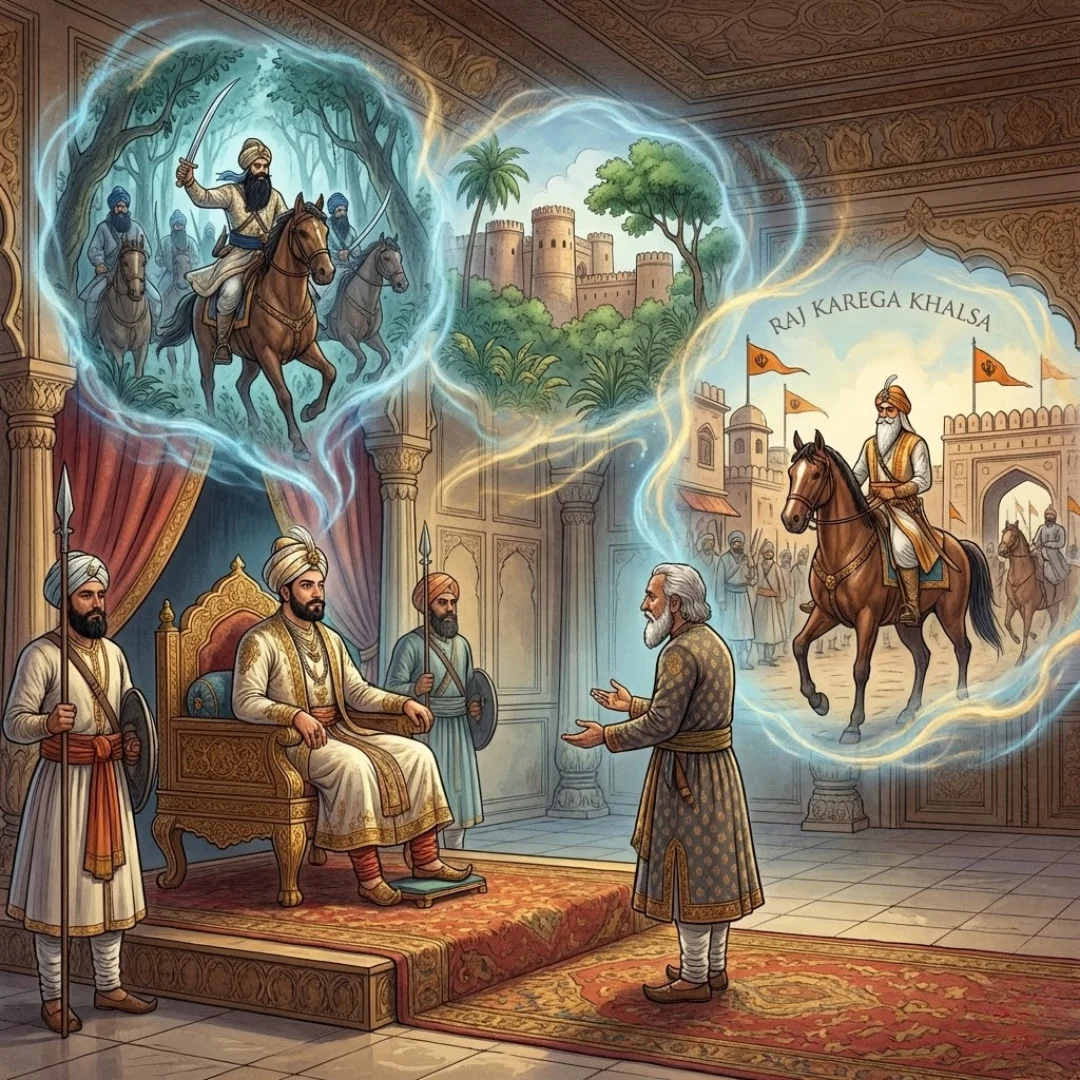
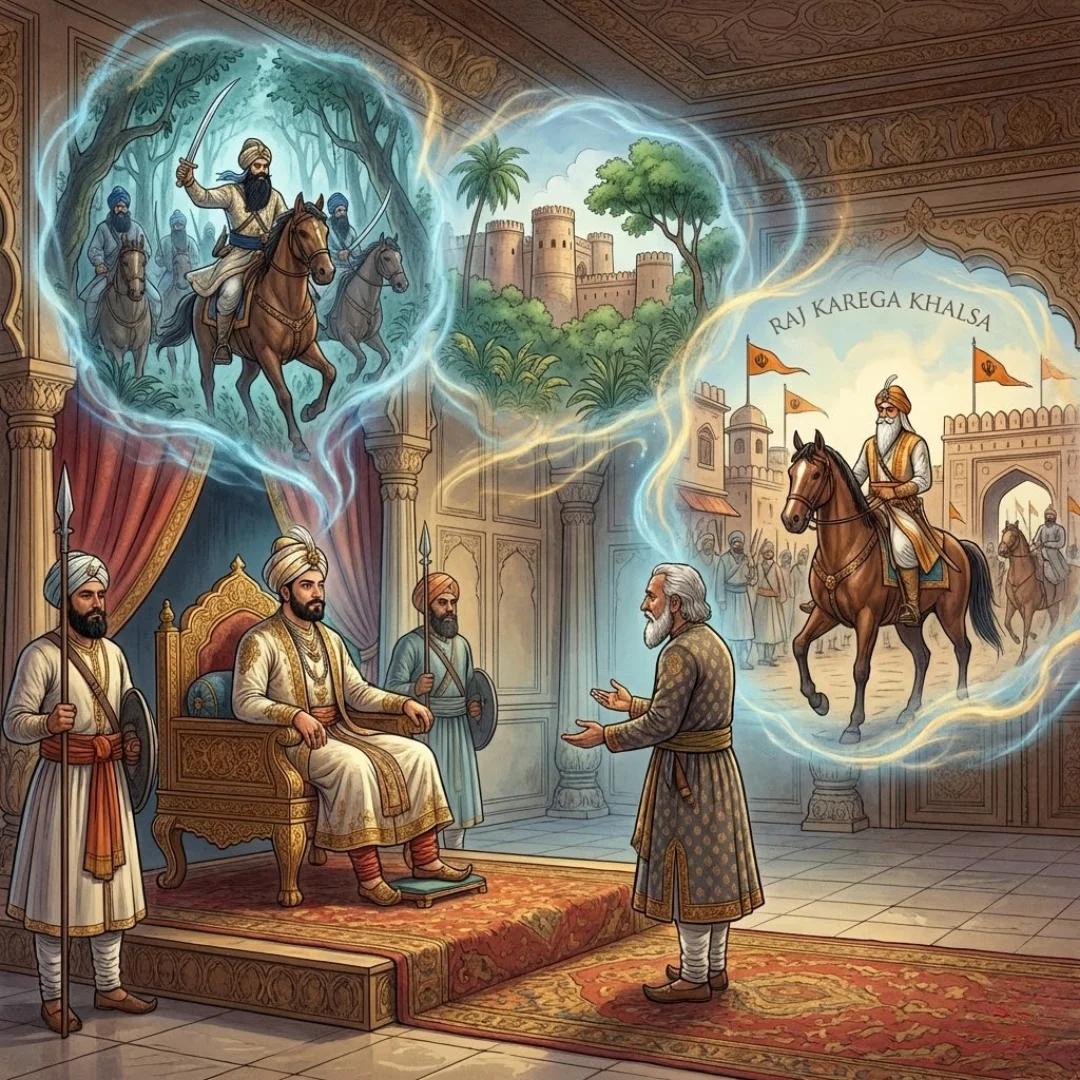
Ahmad Shah Abdali was furious. Who were these audacious fighters who dared to challenge the emperor of Afghanistan? What army did they serve? As he entered Lahore and took residence in the fort, he summoned the Subedar of Lahore, Jahan Khan, to his court.
“Explain to me,” Abdali demanded, his voice echoing through the durbar hall, “who are these warriors who keep raiding my army? Every night they strike, liberating the prisoners I have captured, taking back the treasures my soldiers have rightfully won in battle. They fight without fear, as if death means nothing to them. What manner of army opposes me?”
The Subedar, an older man who had witnessed much turmoil in Punjab, bowed respectfully before responding. “Shahenshah-e-Ghazi (victorious emperor), these are not soldiers of any king’s army. They are the Sikhs – the disciples of Guru Nanak and followers of Guru Gobind Singh. Each one considers himself sovereign, bound to no earthly throne, yet united in purpose.”
Abdali’s eyes narrowed with interest. “No king? Then who commands them? Every army must have a general, every campaign a commander. Who leads these Sikhs?”
The Subedar chose his words carefully. “Your Majesty, this is what makes them different from any force you have encountered. Every Sikh sees himself as a member of the Khalsa – the pure ones. Guru Gobind Singh Ji taught them that when they take amrit (baptism), they are freed from the bondage of earthly kings. They say ‘Raj Karega Khalsa’ – the Khalsa shall rule. In their eyes, each one is a king, each one a leader. When they gather to make decisions, they do so in the presence of their eternal Guru, the Granth Sahib, and through consensus reached in the Gurmatta – the council’s collective wisdom.”
This concept puzzled Abdali deeply. In his world, power flowed from the emperor downward. Armies followed commanders, subjects obeyed rulers. An army where everyone claimed sovereignty seemed impossible. “But where do they live?” he asked. “Where are their forts, their cities?”
“They have no permanent dwellings, Your Majesty,” Jahan Khan replied. “Since your first invasion in 1747, and especially after the great massacres of the Ghallughara, they live in the jungles, the Lakhi Jungle near Bathinda, in the Shivalik hills, wherever they can find shelter. They are always on horseback, always ready to move, always prepared for battle. They have turned the wilderness into their fortress.”
Abdali leaned forward on his throne. “How can an army survive without cities to sustain them? What do they eat? How do they live?”
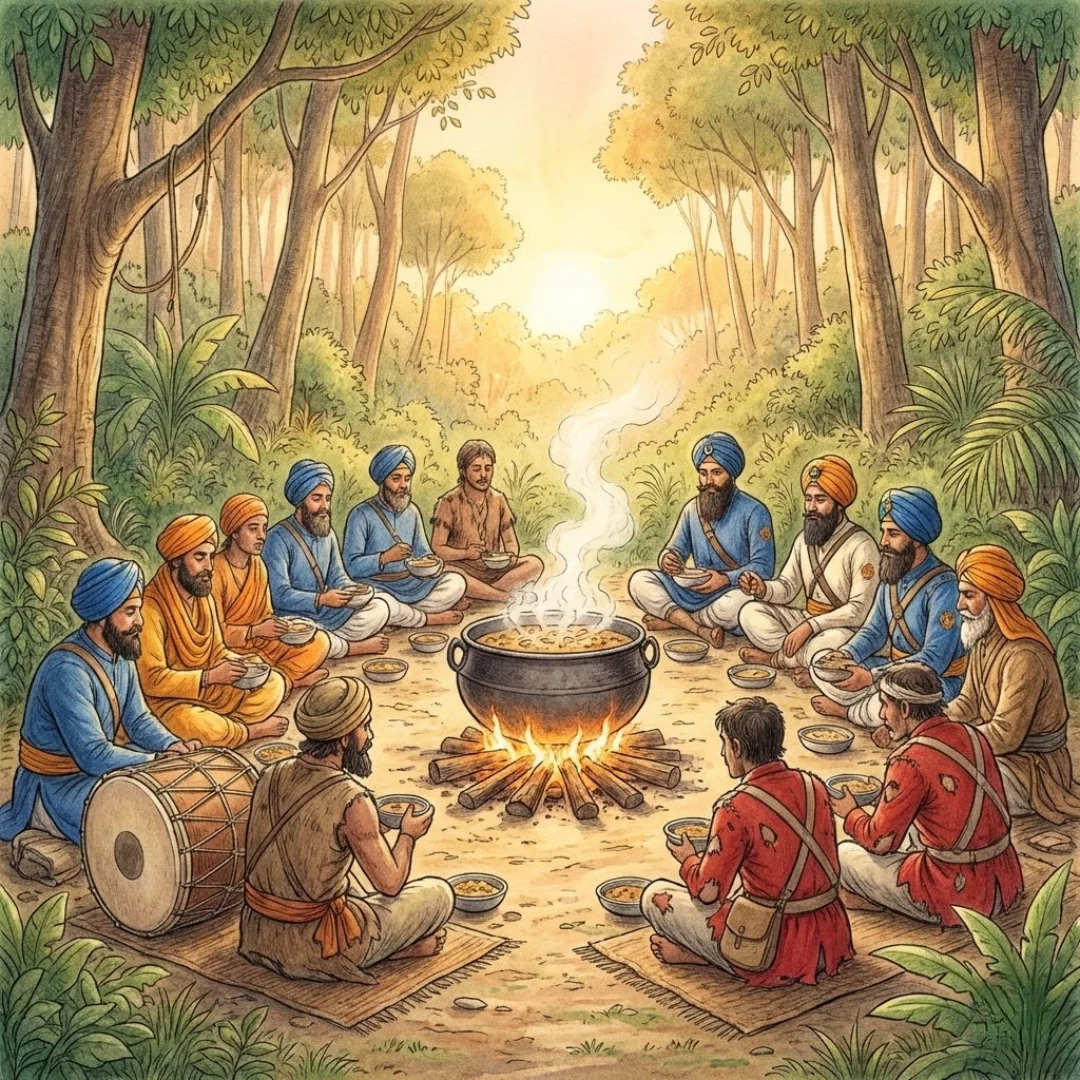
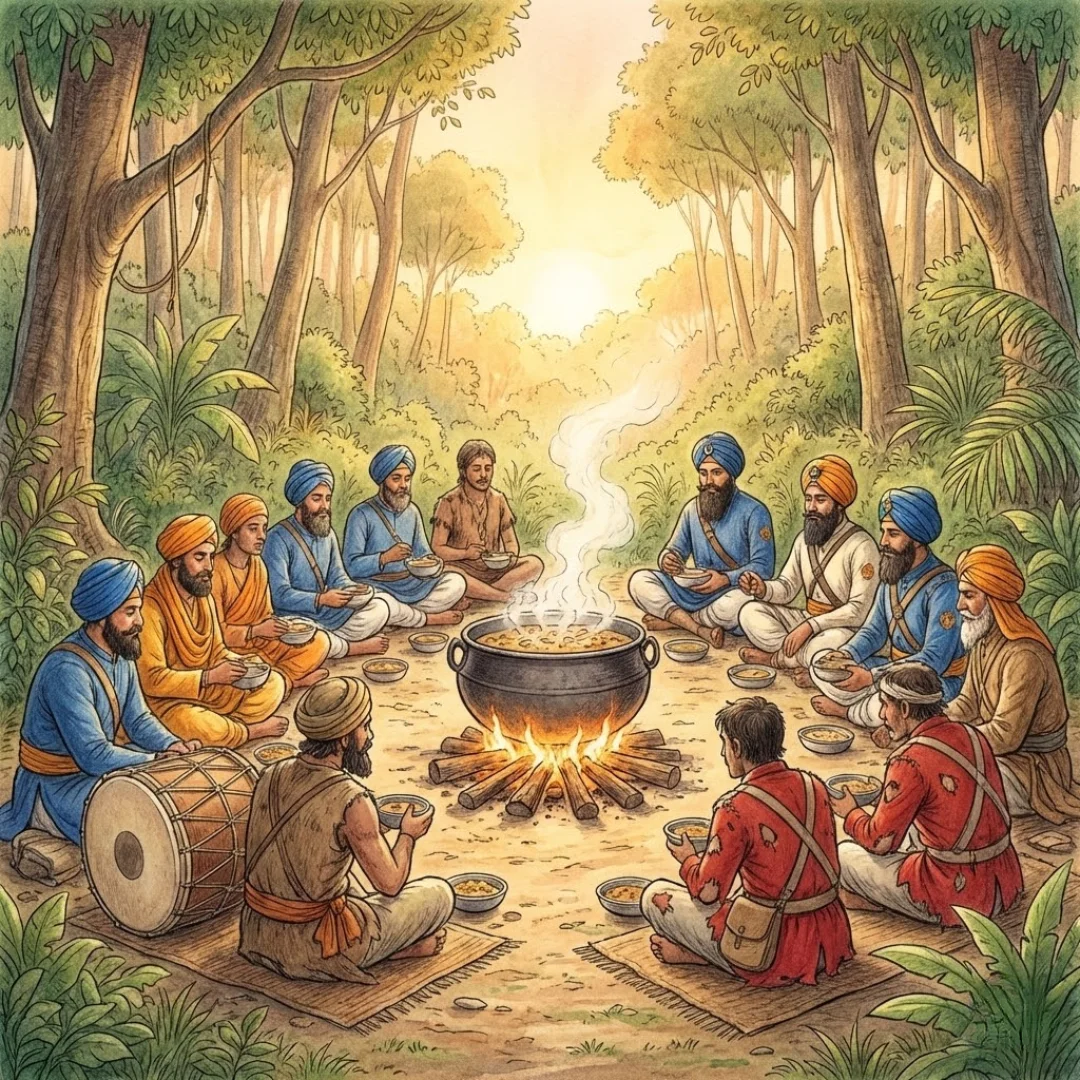
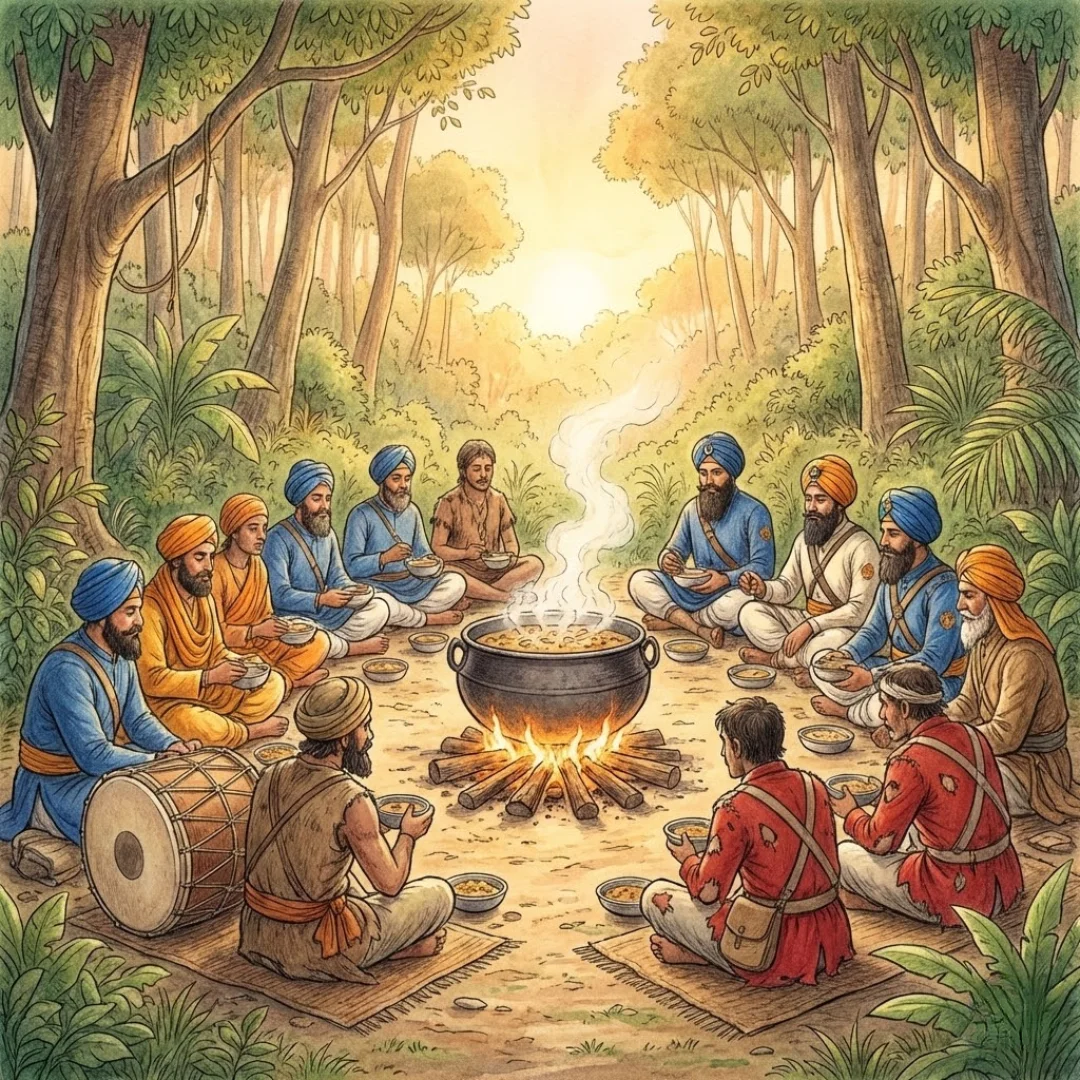
The Subedar’s expression softened with what might have been admiration. “This is perhaps the most remarkable thing about them, Maharaj. Wherever they make camp, they prepare langar – a communal kitchen. They pool whatever food they have, whether it’s wheat flour, lentils, or vegetables they’ve gathered. When the meal is ready, they beat the war drum – the nagara – and one of them calls out loud enough for all to hear: ‘Degh Tegh Fateh! Bhookha aaya koi? Guru ka langar tayar hai!’ (Victory to charity and arms! Is anyone hungry? The Guru’s kitchen is ready!)”
“And?” Abdali prompted.
“And anyone who is hungry can come and eat, Your Majesty. Anyone at all. They do not ask if you are friend or enemy, Hindu or Muslim, high-born or low. They serve everyone equally, sitting together in pangats – rows on the ground – where no one is higher than another.”
Abdali sat back, astonished. “You mean to tell me that if my own soldiers, the very men trying to kill them, came hungry to their camp, these Sikhs would feed them?”
“Yes, Shahenshah. They have done so many times. They call it seva – selfless service. It is one of their highest principles.”


The emperor was silent for a moment, processing this information. Then he asked, “But surely… what prevents their enemies from eating all their food and leaving them with nothing? What stops people from taking advantage of this foolish generosity?”
The Subedar smiled slightly. “Some have tried, Your Majesty. But the Sikhs never complain. They believe that serving others is serving their Guru. If they feed someone and have nothing left for themselves, they recite their prayers – their path – and sleep content. They say that Waheguru – the Wonderful Lord – will provide. They express shukar, gratitude, for whatever they have, whether it is abundance or scarcity.”
“But how can such an army survive?” Abdali asked, genuinely puzzled. “I have sent thousands of soldiers against them. I have placed bounties on their heads – rewards for every Sikh killed. My orders were to wipe them out completely during the Chhota Ghallughara in 1746 and the Vadda Ghallughara in 1762. Yet they keep coming back, appearing from nowhere like they are immortal. How is this possible?”
Jahan Khan met the emperor’s gaze. “The Sikhs say that Guru Gobind Singh Ji gave them amrit – the nectar of immortality. Not in the sense that their physical bodies cannot be killed, but that their spirit cannot be destroyed. When one Sikh falls, ten more rise up to take his place. You can kill the individual, but you cannot kill the Khalsa. Their faith makes them fearless. They have a saying: ‘Chirrion se main baaj ladaun, Sava lakh se ek ladaun’ – I shall make sparrows fight hawks; I shall make one fight against 125,000. This was Guru Gobind Singh Ji’s promise, and they live it every day.”
Abdali stood and walked to the balcony, looking out over Lahore. “And what sustains this faith? What keeps them fighting when any rational army would have surrendered long ago?”
“Three things, Your Majesty,” the Subedar explained. “Sardari – they believe in their sovereignty, their right to stand with dignity regardless of what any emperor decrees. Sabar – they practice patience, enduring suffering without losing their purpose. And Shukar – they remain grateful, thanking Waheguru for every breath, every moment of life, every opportunity to stand for justice. These three principles make them unbreakable.”
“They also have their daily practice,” he continued. “Every morning before dawn, they rise and recite Japji Sahib and the other morning prayers. They do simran – remembering the Divine Name throughout the day. Their minds stay focused on Waheguru even in the midst of battle. This is why they seem fearless. They have already surrendered their lives to their Guru, so death holds no terror for them.”
Ahmad Shah Abdali was quiet for a long time. He was a conqueror, a military genius who had defeated the mighty Maratha Empire at Panipat. But these Sikhs presented a different kind of challenge – not an army to defeat on a battlefield, but an idea, a way of life that seemed to grow stronger with each attempt to crush it.
“Tell me,” he finally said, “what is their ultimate goal? What do they want?”
“They want to establish the Khalsa Raj, Your Majesty – a kingdom where the Guru’s wisdom governs, where the weak are protected, where justice prevails, where no one is oppressed because of their religion or birth. Guru Gobind Singh Ji prophesied it, and they believe it will come to pass. They are willing to wait, to suffer, to sacrifice everything to see that day.”
As Abdali prepared to return to Afghanistan, he gave orders to leave the Sikhs alone during his march back through Punjab. He had realized something that few conquerors ever understood: some things cannot be defeated with swords. The Sikhs, living by their principles of Sardari, Sabar, and Shukar, sustained by seva and simran, anchored in their faith in Waheguru and the kirpa (grace) that flowed through their Guru’s teachings, were one of those things.
Decades later, in 1799, just thirty years after Abdali’s last invasion, Maharaja Ranjit Singh would unite the Sikh misls and establish the Khalsa Raj in Lahore – the very city where this conversation had taken place. The prophecy of “Raj Karega Khalsa” would be fulfilled, not through mere military conquest, but through the unbreakable spirit of a people who never surrendered their values, even in their darkest hours.
The lesson the Sikhs taught was profound: True leadership doesn’t require a crown or title. True courage isn’t the absence of fear, but the presence of purpose. True wealth isn’t measured in treasures held, but in service given. And true victory isn’t always won on the battlefield, but in the hearts of those who refuse to compromise their principles, no matter the cost.
Moral Lessons
- True leadership comes from inner sovereignty and commitment to principles, not from titles or positions. Even in the darkest times, those who maintain their values – practicing patience, expressing gratitude, and serving others selflessly – can never truly be defeated.
Test Your Understanding
1. Why was Ahmad Shah Abdali frustrated with the Sikhs during his invasion?
Frequently Asked Questions
What is the moral lesson of The Brave Sikhs and the Test of True Leadership?
What age is this story appropriate for?
How long does it take to read The Brave Sikhs and the Test of True Leadership?
What culture does this story come from?
Can I use this story for teaching?
Frequently Asked Questions
What is the story of the Brave Sikhs and the Test of True Leadership about?
This story is set in 1761 Punjab and follows Sikh warriors who secretly freed prisoners and recovered stolen wealth from Afghan emperor Ahmad Shah Abdali’s caravan. It’s a bedtime story for kids ages 6-12 that teaches valuable lessons about courage, true leadership, and standing up for others even against overwhelming odds.
Is the Brave Sikhs story based on real historical events?
Yes, the story is rooted in real 18th-century history. It references the Third Battle of Panipat in 1761, Ahmad Shah Abdali’s invasion, and the Sikh resistance that followed. Sikh warriors historically conducted daring raids to rescue captives from Abdali’s forces, making this tale both an engaging story and a lesson in actual history.
What leadership lessons does this Sikh story teach children?
The story explores true leadership through the actions of Sikh warriors who risked their lives for others without seeking fame or reward. Children learn that real leaders act with courage and selflessness, protect the vulnerable, and stay committed to their values even when facing far more powerful opponents.
📚 Recommended Books
Handpicked for readers like you
As an Amazon Associate, we earn from qualifying purchases. These recommendations are personalized based on this story's themes and your reading history.
What age group is this bedtime story suitable for?
The story is recommended for children ages 6 to 12. It uses adventurous storytelling with historical context to hold kids’ attention while delivering meaningful moral lessons about bravery and leadership, making it a great choice for parents who want engaging yet educational bedtime reading.
Who were the mysterious horsemen challenging Ahmad Shah Abdali’s army?
The mysterious horsemen were Sikh warriors dressed in blue robes, armed with swords and spears. They launched swift nighttime raids on Abdali’s caravan to free prisoners and reclaim stolen treasures before disappearing into the wilderness. Their identity puzzled Abdali himself, setting up the story’s central conflict and moral themes.