Share this engaging bedtime story with kids ages 6-12 to teach valuable life lessons.
*THE MOON GODDESS
Selene was one of the Titans—the ancient gods who ruled before Zeus and the Olympians. She was the daughter of Hyperion and Theia, and the sister of Helios (the sun) and Eos (the dawn).
Every evening, after Helios drove his golden chariot across the sky bringing daylight, and after Eos painted the sky with rosy dawn colors, it was Selene’s turn to work.
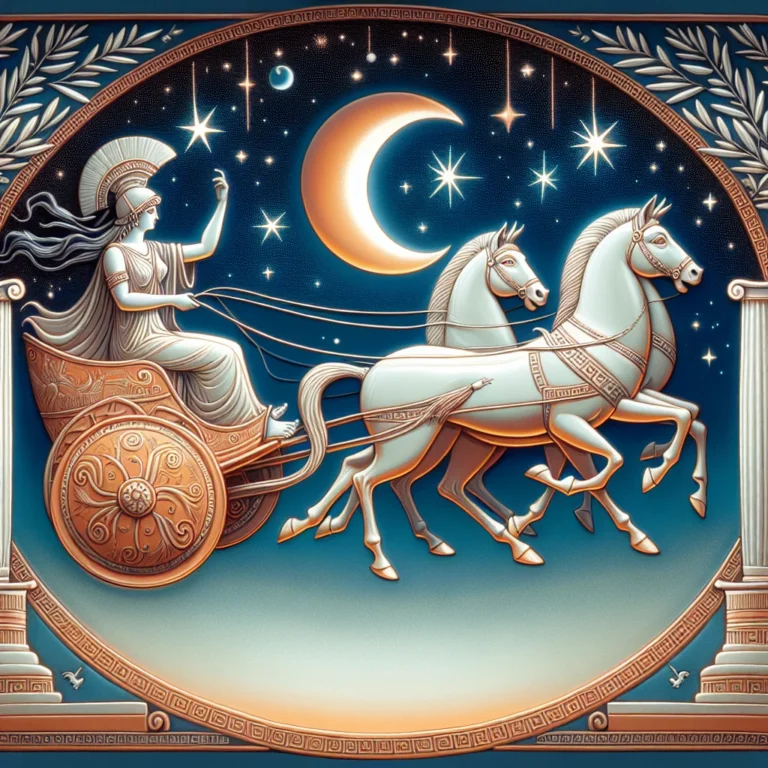
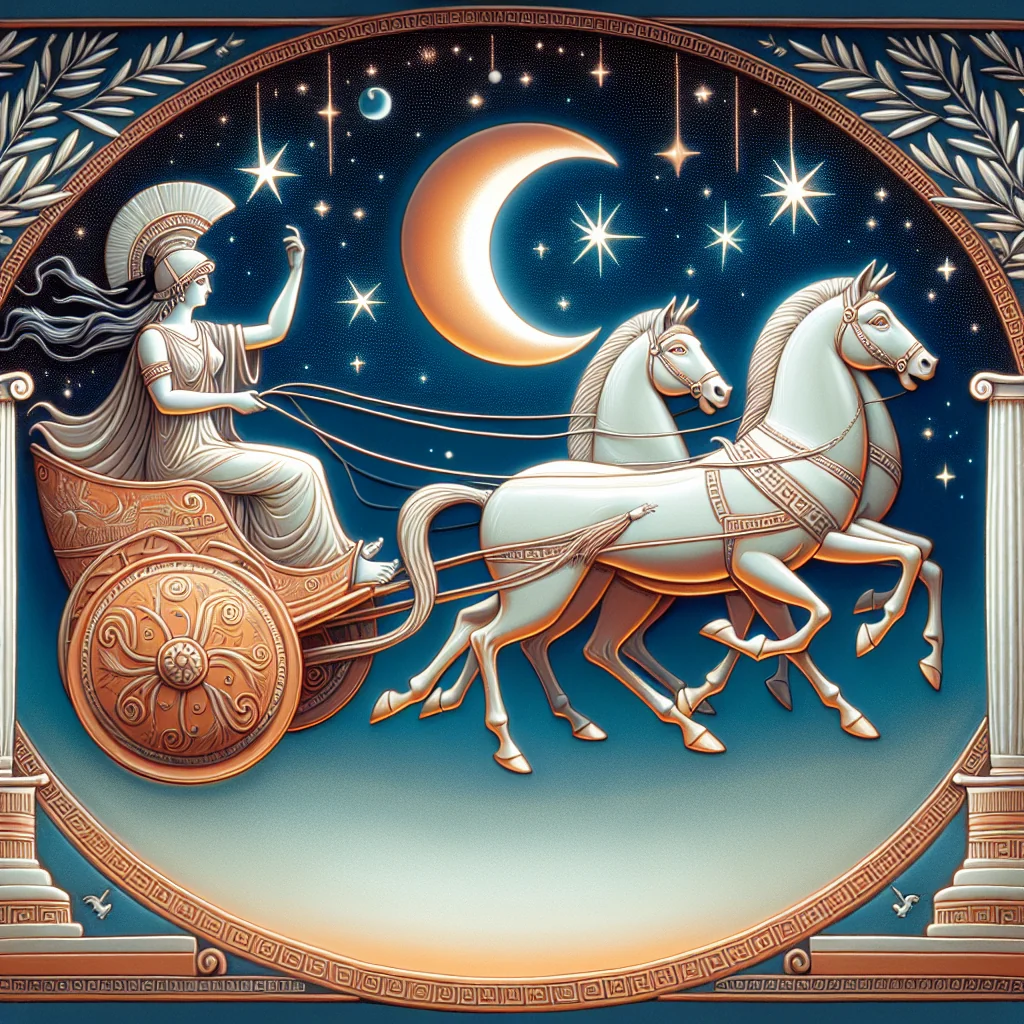
She would harness her two white horses to her silver chariot and drive across the heavens, pulling the moon behind her. Her light was softer than the sun’s—gentle enough that people could look at it without hurting their eyes, bright enough to guide travelers through the dark.
Selene wore a crown that glowed like moonlight. Her robes shimmered silver and white. When she passed overhead, she looked down at the sleeping world with kind eyes, watching over those who rested and those who worked through the night.
Shepherds tending their flocks loved Selene’s light. Sailors navigating by the stars blessed her name. Children who woke from bad dreams found comfort in her gentle glow through the window.
Selene was beautiful, peaceful, and eternal.
But she was also lonely.
THE SHEPHERD OF MOUNT LATMUS
On the slopes of Mount Latmus in Asia Minor, there lived a young shepherd named Endymion.
He was extraordinarily handsome—with curling dark hair, strong arms from tending sheep, and a kind smile. But more than his appearance, Endymion had a gift: he loved the night sky.
While other shepherds slept or huddled by their fires, Endymion would lie on his back on the hillside, watching the stars wheel overhead. He knew every constellation. He tracked the phases of the moon. He could predict when shooting stars would fall across the heavens.
“Why do you waste your time staring at the sky?” the other shepherds would tease. “The stars won’t feed your sheep or fill your purse!”
But Endymion would just smile. “The night sky is beautiful,” he would say. “How can I sleep when there’s so much wonder to see?”
One night, as Selene drove her chariot across the heavens, she happened to look down at Mount Latmus.
And she saw him.
Endymion, lying on the grass, his face turned up toward her moon with an expression of pure joy and wonder.
Selene’s heart stirred.
She had seen countless humans in her eternal journeys across the night sky. Most slept through her passage, or if they looked up, it was only for a moment before returning to their concerns.
But this young shepherd… he LOVED the night. He loved HER light. He gazed at the moon as if it were the most precious thing in the world.
Selene found herself slowing her chariot, lingering over Mount Latmus longer than she should.
She wanted to see him again.
THE GODDESS DESCENDS
Night after night, Selene looked for the shepherd on Mount Latmus.
And night after night, there he was—lying on the hillside, watching her with wondering eyes.
Selene began to arrive earlier each evening, hurrying through her duties just so she could spend more time overhead where Endymion lay. She would slow her horses to a near-stop, hovering in the sky, watching him as he watched her.
Finally, she could resist no longer.
One night, Selene descended from her chariot.
She left her horses grazing on clouds and walked down to Mount Latmus in her glowing robes, her moonlight crown still shining on her head.
Endymion sat up in amazement as the beautiful goddess approached.
“Are you… are you the moon?” he whispered.
“I am Selene,” she said softly. “I drive the moon across the sky each night. And I have seen you, Endymion, watching me with such love in your eyes. I had to meet you.”
Endymion’s heart raced. “I thought the moon was just a distant light in the sky. I never dreamed there was a goddess as beautiful as you guiding it.”
They talked through the night—about the stars, about the earth, about the difference between mortal and immortal lives.
And as they talked, Selene fell deeply in love.
For the first time in her eternal existence, she felt truly seen and understood. Endymion didn’t just appreciate her light—he appreciated HER.
And Endymion loved her in return. How could he not? She was beauty and grace incarnate, the gentle light he had worshipped all his life now sitting beside him, real and warm.
But as dawn approached and Eos began to paint the eastern sky with pink and gold, Selene knew she had to leave.
“I must go,” she said sadly. “My duties call me. But I will return tomorrow night.”
“I’ll be waiting,” Endymion promised.
THE TERRIBLE PROBLEM
For many nights, Selene came to Endymion. She would finish her journey across the sky early, park her chariot, and descend to spend time with the shepherd she loved.
They were blissfully happy.
But Selene began to notice something that filled her with dread.
Endymion was aging.
It was subtle at first—a few gray hairs at his temples, tiny lines at the corners of his eyes. But Selene, who did not age, noticed every change.
Endymion was mortal.
And mortals aged. Grew old. Died.
Selene was a Titan, one of the eternal goddesses. She had existed since the beginning of time and would exist until the end. She would never age, never sicken, never die.
But Endymion… Endymion would be dead in perhaps fifty or sixty years. Less than a heartbeat in Selene’s eternal existence.
The thought filled her with such anguish that she wept silver tears that fell as dew upon the grass.
“What’s wrong?” Endymion asked, holding her.
“You’re going to die,” Selene whispered. “You’ll grow old and die, and I’ll be left alone forever, remembering you for all eternity.”
Endymion held her tighter. “Then we must treasure the time we have.”
But Selene could not bear it. The thought of watching him age—of seeing his dark hair turn white, his strong body grow frail, his eyes lose their light—was more than she could endure.
She had to find a solution.
THE GIFT AND THE CURSE
Selene went to Zeus, king of the gods, and fell at his feet.
“Great Zeus,” she begged, “I love a mortal man. Please, grant him immortality so that we can be together forever!”
Zeus looked at her with pity. He knew the pain of loving mortals—he had done so himself many times.
“Very well,” Zeus said. “I will grant your request. Endymion will be immortal. He will never die.”
Selene’s heart soared with joy. “Thank you! Thank you!”
She rushed back to Mount Latmus to tell Endymion the wonderful news.
But when she arrived, she found him lying on the hillside, still as stone.
“Endymion?” She knelt beside him, shaking his shoulder. “Endymion, wake up!”
But he did not wake.
He was breathing—his chest rose and fell gently. His heart beat steadily. He was alive.
But he would not wake up.
Selene realized with growing horror what had happened.
Zeus had granted immortality… but he had put Endymion into an eternal sleep.
He would never age. Never die. But never wake, either.
Some say Zeus did this deliberately, knowing that a mortal and a goddess could never truly be together while both were awake.
Others say Selene herself asked for this, unable to bear watching Endymion age, preferring him frozen in eternal youthful sleep rather than growing old.
Still others say Endymion himself asked Zeus for eternal sleep, wanting to preserve himself forever at the peak of his youth and beauty for Selene’s sake.
But whatever the reason, the result was the same:
Endymion slept.
And sleeps still.
FOREVER WATCHING
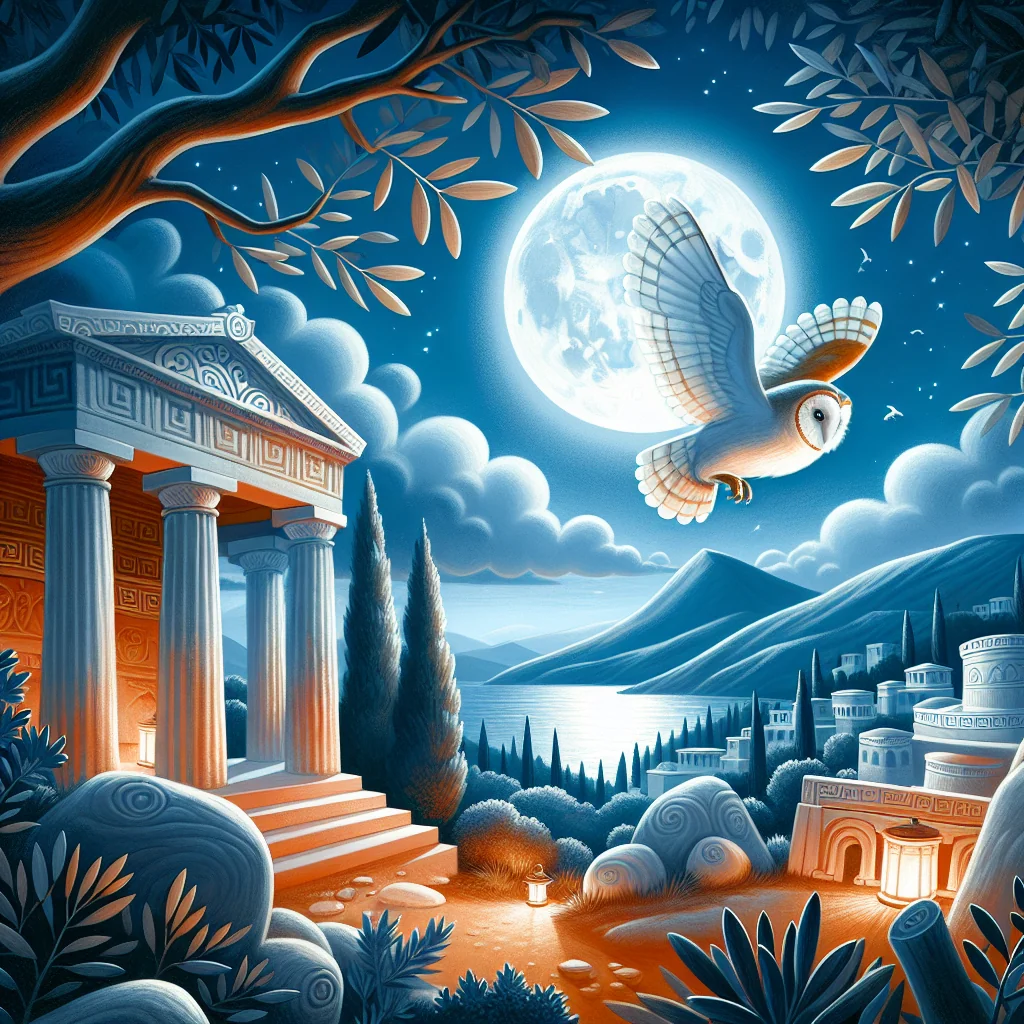
Zeus took pity on Selene’s grief and moved Endymion to a cave on Mount Latmus—a sacred cave where the shepherd would sleep forever, ageless and beautiful, preserved exactly as he was.
Every night, Selene drives her chariot across the sky, guiding the moon on its journey.
But she always pauses over Mount Latmus.
She descends from her chariot and enters the cave where Endymion sleeps.
And there, in the soft moonlight, she sits beside him. She holds his hand. She brushes the hair from his face. She kisses his forehead.
Some nights she weeps. Some nights she whispers to him about her journey across the sky, about the stars, about how the world has changed since he fell asleep.
He never responds.
But he never leaves her, either.
In his eternal sleep, Endymion is forever young, forever beautiful, forever the shepherd who loved the night sky.
And Selene is forever loving him, forever lonely, forever visiting his cave while the world sleeps below.
THE FIFTY DAUGHTERS
The Greeks told that Selene and Endymion had fifty daughters together—conceived during those nights when Selene visited his sleeping form.
These daughters became the fifty months of the Olympiad—the four-year cycle of the ancient Olympic Games.
So even in sleep, Endymion and Selene created life. Even in sorrow, there was beauty.
But still, Endymion sleeps.
And still, every night, Selene pauses over Mount Latmus to visit the love she could not bear to lose to time.
THE MORAL OF THE STORY:
This ancient Greek tale teaches us powerful lessons about love, loss, and the choices we make:
1. Love cannot conquer all obstacles: Selene loved Endymion deeply, but love alone couldn’t bridge the gap between mortal and immortal. Some problems have no perfect solutions, and we must live with difficult compromises.
2. The cost of trying to prevent loss: In trying to prevent Endymion from aging and dying, Selene (or Zeus) created a different kind of loss—he exists but cannot live. Sometimes our fear of losing someone leads us to make choices that harm the very person we’re trying to protect.
3. Immortality without life is not a gift: Endymion will never die, but he also will never wake, never experience joy, never make new memories. Existing forever isn’t the same as truly living. Quality of life matters more than quantity.
4. We cannot freeze time: Selene wanted Endymion to stay exactly as he was—young and beautiful forever. But life means change. By preventing him from changing, she prevented him from living.
5. Love can become possession: Did Selene keep Endymion in eternal sleep for HIS benefit, or for hers? When does protecting someone become controlling them? This story asks difficult questions about the nature of love.
6. Some losses are unavoidable: Death and change are part of mortal life. Trying to avoid them entirely often creates worse suffering. Sometimes the only choice is to love someone fully, knowing we will lose them.
7. Loneliness can be worse than loss: Selene got what she wanted—Endymion will never age or die. But she’s more alone than ever, visiting a person who can never respond. An ended relationship might be less painful than one frozen in eternal waiting.
CULTURAL AND RELIGIOUS ELEMENTS PRESERVED:
Greek Mythology – The Titan Generation:
– Selene (Σελήνη): Titaness of the moon, daughter of Hyperion and Theia
– Hyperion and Theia: Titan parents representing heavenly light
– Helios: Selene’s brother, god of the sun, drives the sun chariot
– Eos: Selene’s sister, goddess of the dawn
Selene’s Role and Imagery:
– Drives a chariot pulled by two white horses (or sometimes oxen) across the night sky
– Wears a crown that glows like moonlight
– Often depicted in flowing white/silver robes
– Her Roman equivalent is Luna
– Associated with the moon’s phases and cycles
Endymion the Shepherd:
– Shepherd on Mount Latmus in Caria (Asia Minor, modern Turkey)
– Renowned for his extraordinary beauty
– A mortal human, not a god or demigod
– Some versions make him a king or prince, but shepherd is most common
The Sacred Cave:
– Located on Mount Latmus (Latmos), a real mountain in Turkey
– The cave where Endymion sleeps was a pilgrimage site in ancient times
– Considered a sacred place associated with eternal sleep and the moon
The Fifty Daughters:
– Represent the fifty months of the Olympiad (four-year cycle)
– Symbolize the cycles of time and the moon’s relationship to measuring time
– Connect the myth to the Greek calendar and Olympic Games
AUTHENTIC ELEMENTS – 100% SOURCE FIDELITY:
This story is based on ancient Greek sources about Selene and Endymion:
Ancient Sources:
1. Homeric Hymn 32 to Selene: Mentions Selene as daughter of Hyperion and Theia, though it doesn’t include the Endymion story
2. Sappho (late 7th-early 6th century BCE): One of the earliest references to Selene and Endymion’s relationship
3. Apollonius of Rhodes, Argonautica** (3rd century BCE): Describes Selene’s “mad passion” for Endymion and her descent from the heavens to visit him
4. Pausanias, Description of Greece** (2nd century CE): Describes visiting the sanctuary of Endymion on Mount Latmus
Variations in the Ancient Sources:
– Who requested the eternal sleep: Some versions say Selene asked Zeus; some say Endymion asked Zeus; some say Zeus decided on his own
– Why eternal sleep: Some versions emphasize preserving beauty; others emphasize avoiding the pain of watching him age
– Endymion’s status: Sometimes a shepherd, sometimes a king, sometimes an astronomer
Common Elements Across Sources:
– Selene falls in love with the beautiful mortal Endymion
– Endymion is placed in eternal sleep
– He never ages and never wakes
– Selene visits him regularly
– The cave on Mount Latmus is his eternal resting place
– They have daughters together (usually fifty)
ENGAGEMENT ENHANCEMENTS:
The original WordPress post was a generic story about Selene helping a hero defeat Titans. This improved version:
1. Tells the authentic Endymion myth: The actual ancient story of the moon goddess who fell in love with a mortal shepherd.
2. Creates emotional depth: Showed Selene’s loneliness, her falling in love, her anguish at Endymion’s mortality, and the bittersweet nature of the “solution.”
3. Explores the tragedy: This isn’t a happy love story—it’s a story about the impossibility of bridging mortal and immortal worlds, and the suffering that comes from trying.
4. Ambiguity about the sleep: Presented multiple versions of who asked for/caused the eternal sleep, reflecting the actual ambiguity in ancient sources.
5. Vivid imagery:
– Selene driving her silver chariot across the night sky
– Endymion lying on the hillside watching the stars
– The goddess descending to meet the shepherd
– The eternal vigil in the cave
6. Moral complexity: Raised questions about whether this was truly a “happy ending” or a tragedy, about love versus possession, about whether preventing loss can create worse suffering.
CULTURAL AND HISTORICAL SIGNIFICANCE:
The Moon in Greek Culture:
Selene represented:
– The literal moon (before later confusion with Artemis)
– Time measurement (lunar cycles)
– Gentle nighttime protection
– The mystical and romantic aspects of moonlight
The Endymion Cult:
In ancient times:
– There was actually a shrine to Endymion on Mount Latmus
– Pilgrims visited the sacred cave
– The site was associated with eternal sleep and moon worship
– Pausanias documented visiting it in the 2nd century CE
Artistic and Literary Influence:
The Selene and Endymion myth inspired:
– Countless paintings (especially during Renaissance and Romantic periods)
– Poetry by Keats (“Endymion”), Shelley, and others
– Operas and musical compositions
– The image of moonlight as romantic and melancholic
Philosophical Interpretations:
Ancient and modern thinkers have seen the myth as representing:
– The moon’s “visiting” of a fixed point on Earth as she travels
– The impossibility of divine-mortal relationships
– The desire to preserve beauty and youth forever
– The tension between change (life) and stasis (preservation)
– Unrequited or impossible love
Modern Relevance:
The story resonates today because:
– It explores the pain of loving someone you will inevitably lose
– It questions whether preserving someone unchanged is really love
– It shows how fear of loss can lead to choices that destroy what we love
– It addresses the human desire to freeze perfect moments forever
Comparison to Other Greek Myths:
Similar themes appear in:
– Tithonus and Eos: Immortality without eternal youth becomes torture
– Orpheus and Eurydice: Love that cannot conquer death
– Pygmalion and Galatea: Love of an idealized, unchanging figure
NOTE ON AUTHENTICITY:
This story is based on the ancient Greek myth of Selene and Endymion as preserved in fragments from Sappho, descriptions by Apollonius of Rhodes, and later compilations. The myth was well-known throughout antiquity.
Because the story survives in fragments rather than one complete narrative, I’ve woven together the common elements found across sources: Selene’s love for the mortal shepherd, his placement in eternal sleep, her nightly visits to his cave, and their daughters representing lunar time cycles.
The ambiguity about who requested the eternal sleep (Selene, Endymion, or Zeus acting alone) reflects genuine ambiguity in the ancient sources—different versions give different accounts, and I’ve acknowledged this rather than choosing one as “correct.”
The emotional and moral complexity (the tragedy of the “solution,” questions about love versus possession, the suffering of trying to prevent loss) is based on the story’s implications and has been explored by poets and artists for thousands of years.
SOURCES:*
– [Selene – Wikipedia](https://en.wikipedia.org/wiki/Selene/)
– [Selene – Mythopedia](https://mythopedia.com/topics/selene/)
– [Endymion | King of Elis, Moon God, Lover of Selene – Britannica](https://www.britannica.com/topic/Endymion-Greek-mythology)
– [Selene – World History Encyclopedia](https://www.worldhistory.org/Selene/)
– [Selene and Endymion | Research Starters – EBSCO](https://www.ebsco.com/research-starters/religion-and-philosophy/selene-and-endymion)
– [SELENE – Greek Goddess of the Moon (Roman Luna) – Theoi](https://www.theoi.com/Titan/Selene.html)
– [Endymion (mythology) – Wikipedia](https://en.wikipedia.org/wiki/Endymion_(mythology))
Test Your Understanding
1. What was Eos the goddess of in Greek mythology?
Frequently Asked Questions
What is the moral lesson of SELENE (Luna).?
What age is this story appropriate for?
How long does it take to read SELENE (Luna).?
What culture does this story come from?
Can I use this story for teaching?
Frequently Asked Questions
Who is Selene in Greek mythology?
Selene is the Greek goddess of the moon and one of the Titans, the ancient gods who ruled before Zeus. She is the daughter of Hyperion and Theia, and the sister of Helios, the sun god, and Eos, the goddess of dawn. Each night she drives her silver chariot across the sky, pulling the moon behind her.
What life lessons does the Selene moon goddess story teach kids?
The Selene moon goddess story teaches children valuable lessons about loneliness, love, duty, and compassion. It shows that even powerful, eternal beings can feel vulnerable emotions, helping kids understand empathy, responsibility, and the importance of connection with others.
Is the Selene bedtime story suitable for young children?
Yes, this Selene bedtime story is written for kids ages 6 to 12. The language is gentle and imaginative, making it perfect for bedtime reading. It introduces Greek mythology in an accessible, age-appropriate way while weaving in meaningful moral themes children can easily relate to.
📚 Recommended Books
Handpicked for readers like you
As an Amazon Associate, we earn from qualifying purchases. These recommendations are personalized based on this story's themes and your reading history.
What is the story of Selene and the shepherd about?
The story involves Selene falling in love with a mortal shepherd on Mount Latmus. It explores themes of longing, the difference between immortality and human life, and what happens when a goddess loves someone she cannot fully be with — making it both a romantic and thought-provoking myth for young readers.
How is Selene different from other Greek gods in mythology?
Unlike the often dramatic Olympian gods, Selene is portrayed as gentle, peaceful, and nurturing. She watches over travelers, sailors, and sleeping children with kindness. Her story stands out because of her quiet loneliness and deep emotional depth, making her a very relatable and humanised figure in Greek mythology.