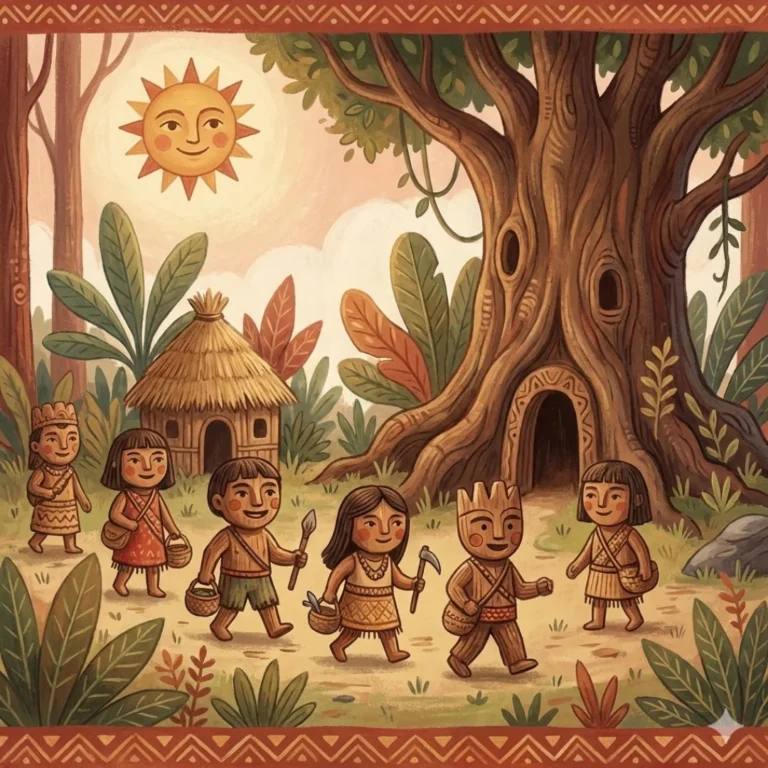
This bedtime story for kids, ‘The Wooden People’, teaches children ages 6-12 about important moral values.
The Creator Gods—Heart of Sky and Heart of Earth—sat together in the darkness before the first dawn, planning their greatest work.
“We must create beings who will honor us,” said Heart of Sky, his voice like wind through ancient trees. “Beings who will speak our names and give thanks for the gifts of life.”
“Let us begin,” said Heart of Earth.
Their first attempt was made from soft clay. The gods shaped figures from wet earth, but when the rains came, the mud people melted like sand castles in the surf. They couldn’t speak clearly or turn their heads. The gods sighed and tried again.
“This time, we will carve them from wood,” Heart of Sky decided.
The gods shaped men from the coral tree’s strong wood and women from hollow reeds. These wooden people could walk and talk. They built houses, had children, and spread across the land like a growing forest.
At first, the gods watched with hope. But soon they realized something was terribly wrong.
The wooden people had no hearts. When they spoke, their voices rang hollow as drums. They never looked up at the sky with wonder. They never whispered thanks for rain or sunshine. They used the forests and animals without gratitude, taking everything and giving nothing back.
“They have faces but no joy,” Heart of Earth said sadly. “They have hands but no kindness.”
“They are empty inside, like the dead trees from which they were carved,” Heart of Sky agreed. “This creation has failed. We must begin again.”
The gods sent a great flood. Rain fell in sheets, and the waters rose higher and higher. But the flood wasn’t the wooden people’s only enemy.
The animals rose up in rebellion. Dogs they had kicked now bit them. Turkeys they had roasted chased them through the streets.
“You never fed us!” barked the dogs.
“You caused us pain!” clucked the turkeys.
Even the household objects joined the fight. Grinding stones crushed the wooden people’s faces. Cooking pots struck them. Hearthstones leaped from fires.
“You burned us every day!” cried the pots. “You scorched us without care! Now feel what we felt!”
The wooden people ran for their lives. They climbed trees, but the branches shook them off. They ducked into caves, but the caves closed their mouths. They scrambled onto rooftops, but the houses collapsed.
Most were destroyed in the flood and chaos. But a few escaped into the deepest forests, where they became monkeys. This is why monkeys look almost human and can mimic people’s actions—they are descended from that failed creation, the wooden people who had bodies but no hearts.
The Creator Gods learned from their mistake. Their next creation would be made from sacred maize, the golden corn that grew from the earth. These new humans would have hearts that could feel, souls that could give thanks, and wisdom to honor the gods.
And so the true humans came to be—not perfect, but real. They could feel joy and sorrow. They could love and create. They could look up at the stars and wonder at the mystery of it all.
When Heart of Sky and Heart of Earth saw these new creations, they smiled. At last, they had made beings who understood the greatest truth: that all gifts come with responsibility, and gratitude is what makes us truly human.
Frequently Asked Questions
What is the moral lesson of The Wooden People?
What age is this story appropriate for?
How long does it take to read The Wooden People?
What culture does this story come from?
Can I use this story for teaching?
Frequently Asked Questions
What is ‘The Wooden People’ bedtime story about?
The Wooden People is a bedtime story for kids that retells a creation myth about gods who tried to make the perfect beings. It follows the Creator Gods as they experiment with clay and wood, discovering that people without hearts lack gratitude and compassion. The story teaches children important moral values about empathy and appreciation for life.
What age group is The Wooden People story suitable for?
The Wooden People is written for children ages 6 to 12. The language is accessible and engaging for early readers, while the moral themes are rich enough to spark meaningful conversations with older kids. It works great as a bedtime story parents can read aloud together with their children.
What moral values does The Wooden People teach children?
The Wooden People teaches kids the importance of gratitude, empathy, and having a kind heart. Through the story of beings who could walk and talk but lacked true feeling, children learn that real humanity means appreciating life’s gifts and showing thanks. It encourages kids to be thoughtful and emotionally aware.
📚 Recommended Books
Handpicked for readers like you
As an Amazon Associate, we earn from qualifying purchases. These recommendations are personalized based on this story's themes and your reading history.
Is The Wooden People based on a real myth or folktale?
Yes, The Wooden People is inspired by the Mayan creation story found in the Popol Vuh, an ancient K’iche’ Maya text. In that tradition, the Creator Gods made several attempts to craft humans, including figures from clay and wood, before succeeding. The story reimagines this myth in a child-friendly, morally focused way.
Why did the Creator Gods consider the wooden people a failure?
Although the wooden people could walk, talk, and build homes, the Creator Gods saw they had no hearts. Their words rang hollow, and they showed no gratitude or love for the life they were given. This emptiness made the gods realize that intelligence and ability alone aren’t enough — true humanity requires feeling and compassion.