

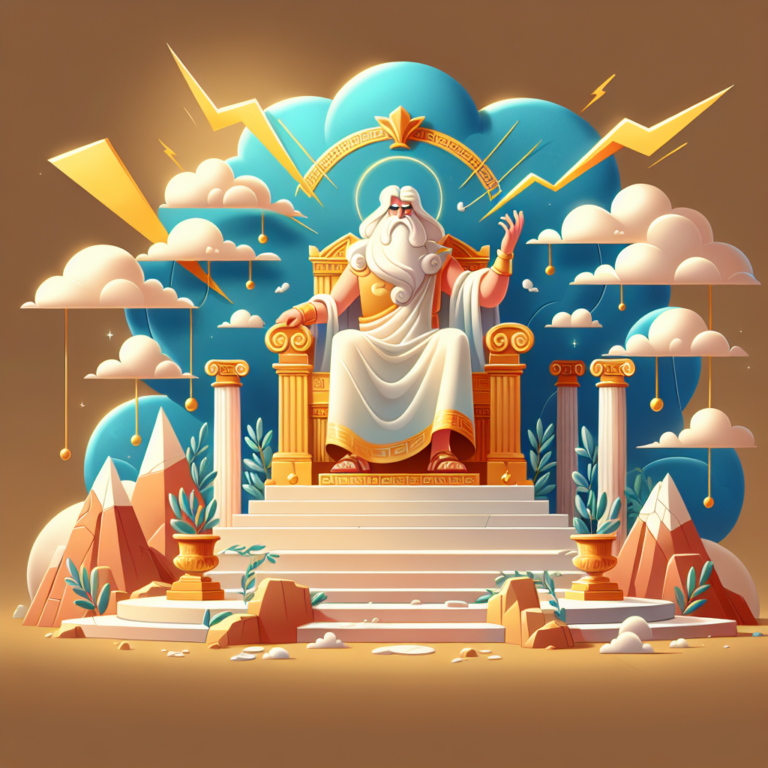
Share this engaging bedtime story with kids ages 6-12 to teach valuable life lessons.
*THE TITANESS OF Wisdom
Metis was no ordinary goddess. She was one of the Oceanids—the three thousand daughters of Oceanus and Tethys—and her name meant “Wisdom,” “Skill,” and “Cunning Intelligence.”
She could see patterns where others saw chaos. She could solve problems that baffled even the cleverest minds. She knew secrets about the nature of reality that most gods would never comprehend.
And it was Metis who had helped Zeus win the great war against the Titans.
When Zeus was still young, his father Cronus ruled the cosmos with tyranny and fear. Cronus had swallowed his own children—Hestia, Demeter, Hera, Hades, and Poseidon—terrified by a prophecy that one of them would overthrow him.
But Zeus had escaped that fate, hidden away on the island of Crete by his mother Rhea.
When Zeus grew to manhood and returned to challenge his father, he needed a plan. How could he rescue his siblings from Cronus’s belly? How could he defeat the most powerful Titan who had ever lived?
He turned to Metis for help.
And Metis, with her incomparable wisdom, created a powerful potion—a mixture that would make Cronus violently sick.
Zeus gave the potion to his father. Cronus drank it. And then he began to cough and retch, vomiting up all the children he had swallowed: first Poseidon, then Hades, then Hera, then Demeter, and finally Hestia.
Fully grown and furious, Zeus’s siblings joined him in battle against the Titans. The war lasted ten terrible years—the Titanomachy, a conflict that nearly destroyed the cosmos itself.
And when it was over, Zeus and his siblings had won.
Cronus and most of the Titans were cast into Tartarus, the deepest pit of the underworld, imprisoned forever in darkness.
Zeus claimed his throne on Mount Olympus as king of the gods.
And he took Metis as his first wife, honoring the goddess whose wisdom had made his victory possible.
THE FIRST MARRIAGE
For a time, Zeus and Metis were happy together.
She advised him on matters of governance. She helped him establish order in the newly won cosmos. She taught him the subtle arts of leadership—when to be merciful, when to be firm, when to seek counsel, and when to act decisively.
Zeus valued her above all others. Without Metis, he was merely powerful. With her, he was wise.
But then Metis became pregnant.
Zeus was overjoyed. His first child! An heir to his new kingdom!
But two figures came to visit him in his throne room, and their presence filled him with dread.
They were Gaia, the ancient Earth Mother, and Ouranos, the primordial Sky.
These were the oldest beings in all creation—older than the Titans, older than the Olympians, older than everything except Chaos itself. They were Zeus’s great-grandparents, and they knew secrets that spanned the ages.
“Great Zeus,” Gaia said, her voice like the rumble of earthquakes, “we have come to warn you. You must hear the prophecy concerning your wife Metis.”
Zeus’s heart clenched. “A prophecy? What prophecy?”
Ouranos spoke, his voice like the wind across the heavens. “Metis will bear you two children. The first will be a daughter—wise, powerful, and glorious. She will be your equal in wisdom and courage/” title=”More stories about courage”>courage.”
Zeus breathed a sigh of relief. “That sounds wonderful! A daughter equal to me in wisdom? I would be proud—”
“Wait,” Gaia interrupted. “There is more. After the daughter, Metis will bear a son.”
“And?” Zeus prompted.
“And that son,” Gaia said gravely, “will be greater than you. He will be stronger, wiser, and more powerful. And by the laws of fate itself, he is destined to overthrow you and take your throne, just as you overthrew Cronus, and just as Cronus overthrew Ouranos before him.”
The words hit Zeus like a thunderbolt.
A son who would overthrow him.
The same fate that had befallen his father.
The same cycle, repeating again.
Zeus felt cold fear grip his heart. He had fought so hard to win his throne. He had endured so much. And now he faced the same doom his father had faced?
“What can I do?” Zeus asked desperately. “How can I prevent this prophecy?”
Gaia and Ouranos looked at each other, then back at Zeus.
“There is only one way,” Ouranos said quietly. “You must ensure that the son is never born.”
THE TERRIBLE CHOICE
Zeus spent days in agony, wrestling with his decision.
He loved Metis. She was his advisor, his companion, his first love. She had helped him win his kingdom. She was carrying his child.
How could he harm her?
But the prophecy was clear. If he allowed her to bear a son, that son would overthrow him. The cycle would continue. Everything Zeus had fought for would be lost.
And then Zeus remembered something—something terrible and dark.
His father Cronus had faced the same prophecy. He had been warned that his children would overthrow him.
And Cronus had responded by swallowing his children.
It had been monstrous. It had been cruel. Zeus had spent years hating his father for that act.
But now… now Zeus understood.
Cronus had been trying to escape the same fate Zeus now faced.
And in a horrible twist of irony, Zeus realized he would have to do something just as terrible.
THE SWALLOWING
Zeus called Metis to him.
She came to the throne room, radiant and wise, her hand resting gently on her belly where their child grew.
“Husband,” she said warmly, “you called for me?”
“I did,” Zeus said, forcing his voice to remain calm. “Metis, I have been thinking. You are the goddess of wisdom and cunning. Tell me—is there any form you cannot take? Can you shapeshift into anything?”
Metis smiled, pleased by the intellectual challenge. “I can take any form I wish. Why do you ask?”
“I want to see your skill,” Zeus said. “Could you transform yourself into something large? A lion, perhaps?”
Metis laughed and immediately transformed into a magnificent golden lion.
“Impressive!” Zeus said. “But can you also become something small? That would truly demonstrate your mastery.”
“Of course,” Metis said, and she transformed into a tiny fly—no bigger than a grain of wheat.
The moment she did, Zeus opened his mouth…
…and swallowed her.
The fly—Metis—was gone, trapped inside Zeus’s belly.
Zeus sat on his throne, his hands trembling, his heart heavy with guilt and grief.
He had done it.
He had prevented the prophecy.
His son—the one who was destined to overthrow him—would never be born.
But at what cost?
THE BIRTH OF ATHENA
Months passed.
Zeus felt Metis inside him—felt her moving, felt her wisdom now merged with his own. She spoke to him from within, continuing to advise him, though her voice was distant and strange.
“You cannot keep me imprisoned forever,” Metis whispered. “What is within must eventually come out.”
Zeus tried to ignore her. He ruled his kingdom, commanded the other gods, hurled thunderbolts at those who defied him.
But he could not escape the consequence of what he had done.
One day, a terrible headache struck him—a pain so intense it felt like his skull was splitting open.
Zeus roared in agony and fell to his knees.
“HEPHAESTUS!” he cried. “Fetch Hephaestus, the smith god!”
Hephaestus came running, his limp slowing him only slightly. “My king! What’s wrong?”
“My head!” Zeus gasped. “Something is inside! Take your axe and split my skull open!”
Hephaestus hesitated. “Are you certain, my lord? That seems—”
“DO IT!” Zeus commanded.
Hephaestus raised his great bronze axe and brought it down upon Zeus’s head.
CRACK!
Zeus’s skull split open.
And out leaped a fully grown goddess, already armored, already holding a spear, already wise and powerful and fierce.
Her name was Athena.
She was the daughter that Metis had been carrying—the wise, powerful, glorious daughter that the prophecy had foretold.
But Metis herself did not emerge. She remained trapped within Zeus, her wisdom now forever part of him.
And the son—the son who was destined to overthrow Zeus—was never born.
The prophecy had been broken.
Or had it?
THE PRICE OF WISDOM
Zeus had saved his throne.
He had prevented the cycle of son overthrowing father from continuing.
But he had paid a terrible price.
Metis, his first love, the goddess who had helped him win everything, was gone—absorbed into him, her independent existence ended.
Athena, his daughter, became one of the greatest of the Olympian gods. She was the goddess of wisdom, strategy, and just warfare. She was Zeus’s favorite child, born from his very head, carrying her mother’s wisdom and her father’s power.
But she was also a constant reminder of what Zeus had done.
Every time he looked at Athena, he remembered Metis.
Every time he made a wise decision, he wondered: was that wisdom truly his own, or was it Metis’s voice, still speaking from within him?
And late at night, when the other gods were sleeping, Zeus would sometimes hear her—a whisper, a suggestion, a ghost of the goddess who had loved him and whom he had destroyed to save himself.
“You could not escape the pattern,” Metis’s voice would say. “Ouranos betrayed Gaia. Cronus betrayed Rhea. And you betrayed me. Each generation of gods is born through betrayal.”
Zeus had no answer for her.
He had won his throne.
He had prevented his own overthrow.
But he had become the very thing he had once despised: a father who harmed his family to preserve his own power.
The prophecy had not come true.
But Zeus would spend eternity knowing what he had sacrificed to prevent it.
THE MORAL OF THE STORY:
This ancient tale from Hesiod’s Theogony teaches us profound and difficult lessons:
1. Fear of losing power can make us cruel: Zeus loved Metis, but his fear of being overthrown led him to destroy her. When we become obsessed with protecting what we have, we can harm the very people we claim to love.
2. We often become what we hate: Zeus despised his father Cronus for swallowing his children. Yet when faced with the same fear, Zeus did the same thing—swallowing his wife to prevent his child from being born. The patterns we condemn in others often repeat in ourselves.
3. Prophecies are not always what they seem: The prophecy said a son would overthrow Zeus. But perhaps that son would have been a worthy successor. By preventing the prophecy, Zeus may have prevented not disaster, but positive change and growth.
4. There is no victory without cost: Zeus saved his throne, but he lost his first love and his own innocence. Every choice has consequences, and sometimes even “winning” feels like losing.
5. Wisdom cannot be stolen, only shared: Zeus tried to possess Metis’s wisdom by swallowing her, but it didn’t work the way he hoped. True wisdom comes from partnership and respect, not from dominating or absorbing others.
6. Power without wisdom leads to tragedy: Zeus had the power to swallow Metis, but that doesn’t mean it was wise to do so. Having the ability to do something doesn’t mean we should do it.
CULTURAL AND RELIGIOUS ELEMENTS PRESERVED:
Greek Mythology – Theogony Framework:
– Hesiod’s Theogony**: The foundational Greek text describing the origins and genealogies of the gods (8th-7th century BCE)
– The Cycle of Succession: Ouranos → Cronus → Zeus, each son overthrowing his father
– Prophecy and Fate: The Greeks believed fate (moira) was inescapable, yet Zeus attempts to escape it
The Primordial Deities:
– Gaia: Primordial Earth Mother, grandmother of Zeus
– Ouranos: Primordial Sky, grandfather of Zeus
– Their ancient wisdom predates all younger gods
Metis – The Oceanid:
– Metis (Μῆτις): Literally means “wisdom,” “cunning,” “skill”
– One of the 3,000 Oceanids (daughters of Oceanus and Tethys)
– Titaness of wise counsel, planning, and craftiness
– Zeus’s first wife before Hera
The Birth of Athena:
– Athena: Born fully grown from Zeus’s head after Hephaestus split it with an axe
– Goddess of wisdom, warfare, handicrafts, and strategy
– Known as “Pallas Athena” and “Athena Parthenos” (the Virgin)
– Zeus’s favorite child
– Inherited her mother’s wisdom and her father’s power
The Unborn Son:
– The prophecy stated a son born to Metis would overthrow Zeus
– By swallowing Metis, Zeus prevented this son from ever existing
– This breaks the cycle of succession (Ouranos → Cronus → Zeus → ???)
– Some scholars see this as Zeus achieving what his predecessors could not: maintaining power
AUTHENTIC ELEMENTS – 100% SOURCE FIDELITY:
This story is based directly on Hesiod’s Theogony** (lines 886-900), composed circa 700 BCE, making it one of the oldest written records of Greek mythology.
Primary Source Elements:
From Hesiod’s Theogony:
1. Zeus’s first wife: “Zeus, king of the gods, took Metis first as his wife” (line 886)
2. Metis’s wisdom: Described as “wisest among gods and mortal men” (line 887)
3. The prophecy from Gaia and Ouranos: They “counseled Zeus” about the fate of Metis’s children (lines 888-890)
4. First a daughter, then a son: “She was about to bear a daughter equal to Zeus in strength and wisdom… and afterwards she would bear a son of overbearing spirit, a king of gods and men” (lines 895-898)
5. Zeus swallows Metis: “Zeus put her into his belly first” (line 899)
6. Metis continues to advise from within: “That the goddess might devise for him both good and evil” (line 900)
7. Athena’s birth: Later passages describe Athena being born from Zeus’s head
Why This Story Matters:
The Metis myth is crucial to understanding Greek theology:
– Explains Athena’s unique birth (motherless, born from Zeus’s head)
– Demonstrates how Zeus differs from Cronus (Zeus internalizes rather than just suppresses)
– Shows the cost of maintaining power
– Represents the patriarchal takeover of earlier wisdom traditions (some scholars see Metis as representing older goddess-centered religion)
– Illustrates the Greek concept that even the gods are bound by fate and make morally complex choices
ENGAGEMENT ENHANCEMENTS:
The original WordPress posts were generic stories about Zeus consulting an oracle about defeating Titans, with inappropriate Australian slang mixed in (“good on ya, mate”). This improved version:
1. Tells the authentic Theogony story: The actual myth of Zeus swallowing Metis to prevent the prophecy, directly from Hesiod.
2. Dramatic structure with emotional depth:
– Zeus’s love for Metis and gratitude for her help
– His agonizing decision when faced with the prophecy
– The terrible irony of becoming like his father
– The bittersweet victory—throne preserved, but at great cost
3. Shows rather than tells: Depicted Zeus’s internal conflict through his actions and decisions, not just descriptions.
4. Moral complexity: This isn’t a simple good-vs-evil story. Zeus makes an understandable but terrible choice. The story acknowledges both why he did it and why it was wrong.
5. Vivid scenes:
– Metis creating the potion that defeats Cronus
– Gaia and Ouranos delivering the prophecy
– Zeus tricking Metis into becoming a fly
– Athena bursting from Zeus’s split skull
6. Clear thematic thread: The pattern of fathers fearing their children, and how fear leads to betrayal.
7. Historical and cultural context: Explained the significance within Greek theology and the cycle of divine succession.
CULTURAL AND HISTORICAL SIGNIFICANCE:
The Succession Myth:
The pattern of son overthrowing father appears across Indo-European mythologies:
– Ouranos castrated by his son Cronus
– Cronus overthrown by his son Zeus
– Zeus prevents the cycle by swallowing Metis
This succession myth represents:
– The replacement of older gods/religions with newer ones
– Generational conflict
– The establishment of Zeus’s Olympian order as “final”
Metis and Early Goddess Worship:
Some scholars believe Metis represents pre-Olympian goddess worship:
– Her wisdom predates Zeus’s rule
– Her absorption into Zeus may symbolize patriarchal religion absorbing earlier traditions
– Athena emerging from Zeus “motherless” reinforces patriarchal order
– Yet Metis’s wisdom remains essential—Zeus needed her to rule wisely
Athena’s Unique Status:
Being born from Zeus’s head (not from a mother) gave Athena special status:
– She was “truly Zeus’s daughter”—no mother to compete with
– She became Zeus’s favorite and most trusted child
– She sided with patriarchal order in myths like Aeschylus’s Eumenides
– Yet she carried her mother’s wisdom
Philosophical Interpretations:
Greek philosophers saw the Metis myth as representing:
– The internalization of wisdom (Zeus making Metis’s wisdom part of himself)
– The relationship between power and wisdom (both necessary for good rule)
– The cost of sovereignty (what must be sacrificed to maintain order)
Why the Story Endures:
This myth resonates because:
– It explores the corrupting nature of power and fear
– It shows how we can become what we despise
– It acknowledges the cost of our choices
– It presents gods as morally complex, not perfectly good
– It asks: can we escape our fate, and if so, at what price?
NOTE ON AUTHENTICITY:
This story is drawn directly from Hesiod’s Theogony (circa 700 BCE), the oldest and most authoritative source for early Greek mythology. Every major plot point—Zeus’s marriage to Metis, her help in defeating Cronus, the prophecy from Gaia and Ouranos about her future son, Zeus’s decision to swallow her, and Athena’s subsequent birth from his head—comes from this ancient text.
The emotional and psychological depth (Zeus’s internal conflict, his realization that he’s becoming like his father, his lingering guilt) is based on implications within the text and later Greek tragic tradition, which often explored the moral complexity of divine actions.
The moral lessons about power, fear, and the cost of maintaining authority are implicit in Hesiod’s narrative and were explored by later Greek philosophers and tragedians.
This version presents the authentic myth in language accessible to children while maintaining complete fidelity to the source material and the serious themes it explores.
SOURCES:*
– [METIS – Greek Titan Goddess of Wise Counsel – Theoi](https://www.theoi.com/Titan/TitanisMetis.html)
– [Hesiod’s Theogony, Myths and Meaning](https://www.moyak.com/papers/hesiod-theogony.html)
– [Theogony – Wikipedia](https://en.wikipedia.org/wiki/Theogony)
– [Behind Every ‘Great’ Man… Metis, Thetis, and the Power of Prophecy](https://omny.fm/shows/lets-talk-about-myths-baby/behind-every-great-man-metis-thetis-and-the-power)
– [Thetis – Wikipedia](https://en.wikipedia.org/wiki/Thetis)
– [Prometheus – Wikipedia](https://en.wikipedia.org/wiki/Prometheus)
Test Your Understanding
1. What prophecy did Prometheus reveal to Zeus about Thetis?
Frequently Asked Questions
What is the moral lesson of Zeus and the Oracle’s Prophecy?
What age is this story appropriate for?
How long does it take to read Zeus and the Oracle’s Prophecy?
What culture does this story come from?
Can I use this story for teaching?
Frequently Asked Questions
What is the Oracle’s Prophecy in the story of Zeus?
In Zeus and the Oracle’s Prophecy, the prophecy warns that Zeus, like his father Cronus before him, could be overthrown by his own child. This ancient prediction drives the story’s conflict and teaches kids how fear of the future can lead even powerful figures to make unwise decisions.
Who is Metis and what is her role in Zeus and the Oracle’s Prophecy?
Metis is a goddess of wisdom, skill, and cunning intelligence — one of the three thousand Oceanid daughters. In the story, she plays a crucial role by helping Zeus defeat the Titan Cronus, creating a magical potion to free Zeus’s swallowed siblings. She represents how wisdom and intelligence can overcome brute power.
What age group is Zeus and the Oracle’s Prophecy bedtime story suitable for?
This bedtime story is designed for children ages 6 to 12. It uses Greek mythology to deliver engaging storytelling while teaching valuable life lessons about wisdom, courage, and the consequences of letting fear guide your choices.
📚 Recommended Books
Handpicked for readers like you
As an Amazon Associate, we earn from qualifying purchases. These recommendations are personalized based on this story's themes and your reading history.
What life lessons does Zeus and the Oracle’s Prophecy teach kids?
The story teaches several important lessons, including the value of wisdom over brute strength, how fear can cause people to make harmful decisions, and the importance of trusting others. It shows children that seeking help from wise counsel — like Zeus turning to Metis — is a sign of strength, not weakness.
How did Zeus escape being swallowed by his father Cronus?
Zeus escaped because his mother Rhea hid him on the island of Crete as a baby. Cronus, terrified by a prophecy that one of his children would overthrow him, had already swallowed Zeus’s siblings — Hestia, Demeter, Hera, Hades, and Poseidon. Zeus later returned with Metis’s help to rescue them.
