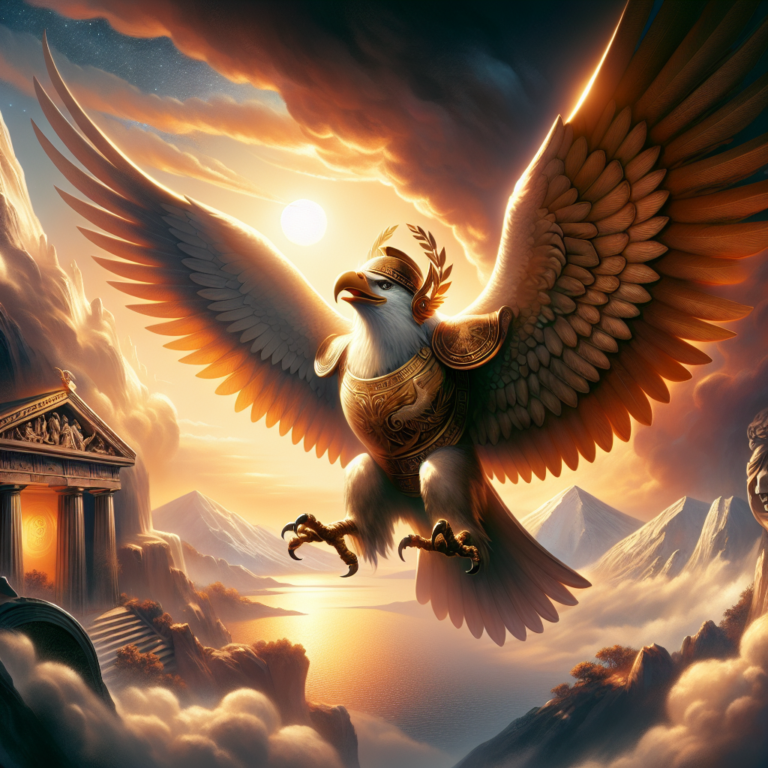
This bedtime story for kids, ‘NIKE (Victoria).’, teaches children ages 6-12 about important moral values.
Long before battles were fought, before swords were drawn, before armies marched—the ancient Greeks would pray to Nike.
Nike was the goddess of victory, and she was the one who decided who would win and who would lose.
She was the daughter of the mighty Titan Pallas and of Styx, the presiding nymph of that dark river in the lower world—the River Styx, which all the gods swore their most sacred oaths upon.
With such powerful parents, Nike herself had become a powerful force, one that every warrior hoped would be on their side.
* * *
If you had visited ancient Athens and climbed up to the Acropolis—that high rocky hill where the most sacred temples stood—you would have seen Nike’s celebrated temple, white and gleaming in the sunshine.
And inside (and outside too, in statues all around the city), you would have seen images of Nike herself.
At first glance, Nike somewhat resembled Athene, the goddess of wisdom and warfare. Both were tall and dignified, both were associated with battles and victories.
But Nike was easy to recognize because of her most distinctive features:
Large, graceful wings that swept up from her shoulders, capable of carrying her swiftly across any battlefield.
Flowing drapery that was negligently fastened on her right shoulder, the fabric cascading down in soft folds that only partially concealed her lovely form.
In her left hand, she held aloft a crown of laurel—the victor’s crown that she would place on the head of whoever won the battle.
And in her right hand, she carried a palm-branch—the ancient symbol of triumph.
In many of the most magnificent statues in Greece, Nike appeared alongside the colossal statues of Zeus or Pallas-Athene. In these sculptures, she was life-sized, standing gracefully on a ball that was held in the open palm of the great deity she accompanied—as if the mighty gods themselves were presenting Victory to the world.
Sometimes artists showed Nike engaged in her sacred duty: inscribing the name of a conqueror on his shield, her right foot slightly raised and delicately placed on a ball as she carved the record of his triumph for all eternity.
* * *
But Nike’s story doesn’t end in Greece.
When the Romans rose to power, they loved Nike so much that they adopted her as their own, giving her a new name: Victoria.
And if the Greeks had honored Nike, the Romans worshipped her.
You see, for the Romans, love of conquest was an all-absorbing characteristic. They built an empire by winning battle after battle, expanding their territory across the known world. Victory wasn’t just important to them—it was everything.
So the Romans built several sanctuaries dedicated to Victoria in their great city of Rome. The principal sanctuary stood on the Capitol, the most important hill in the city, right next to the temple of Jupiter himself.
And the Romans established a tradition:
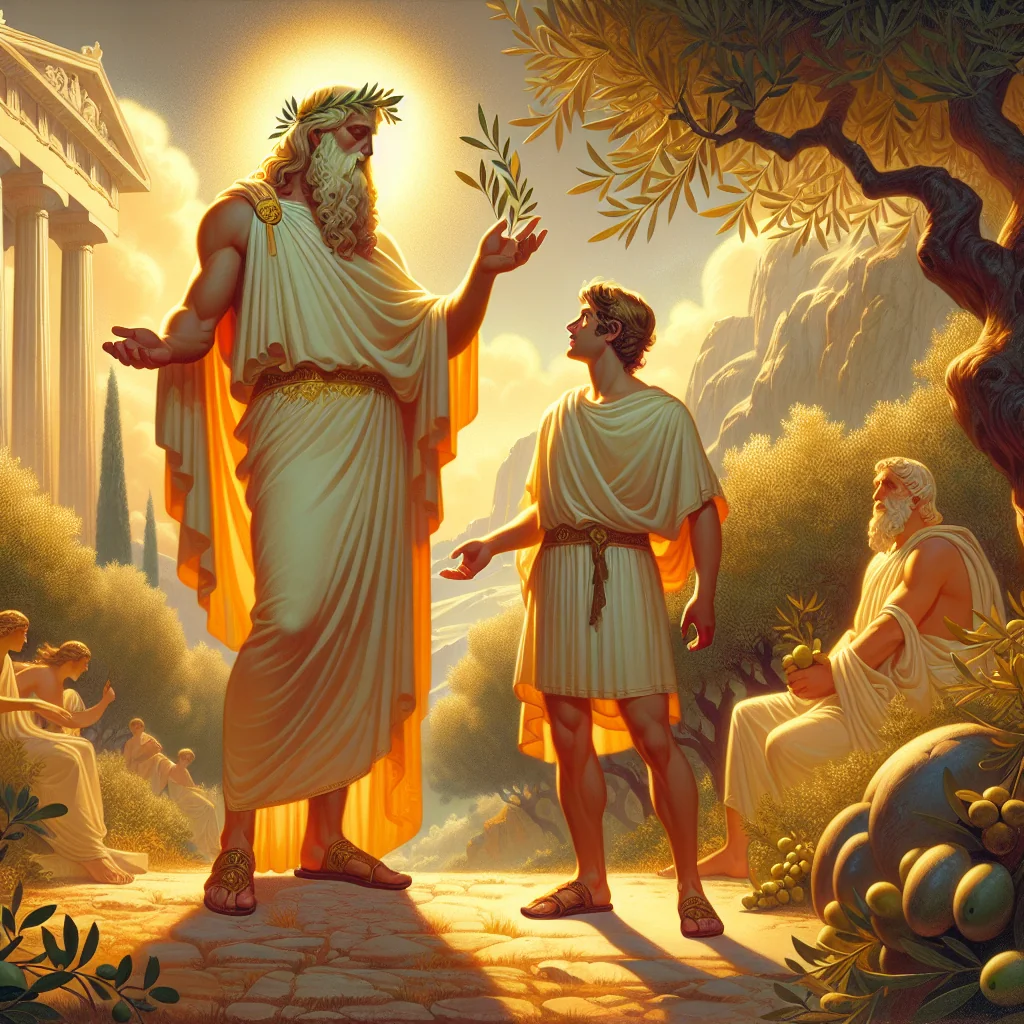
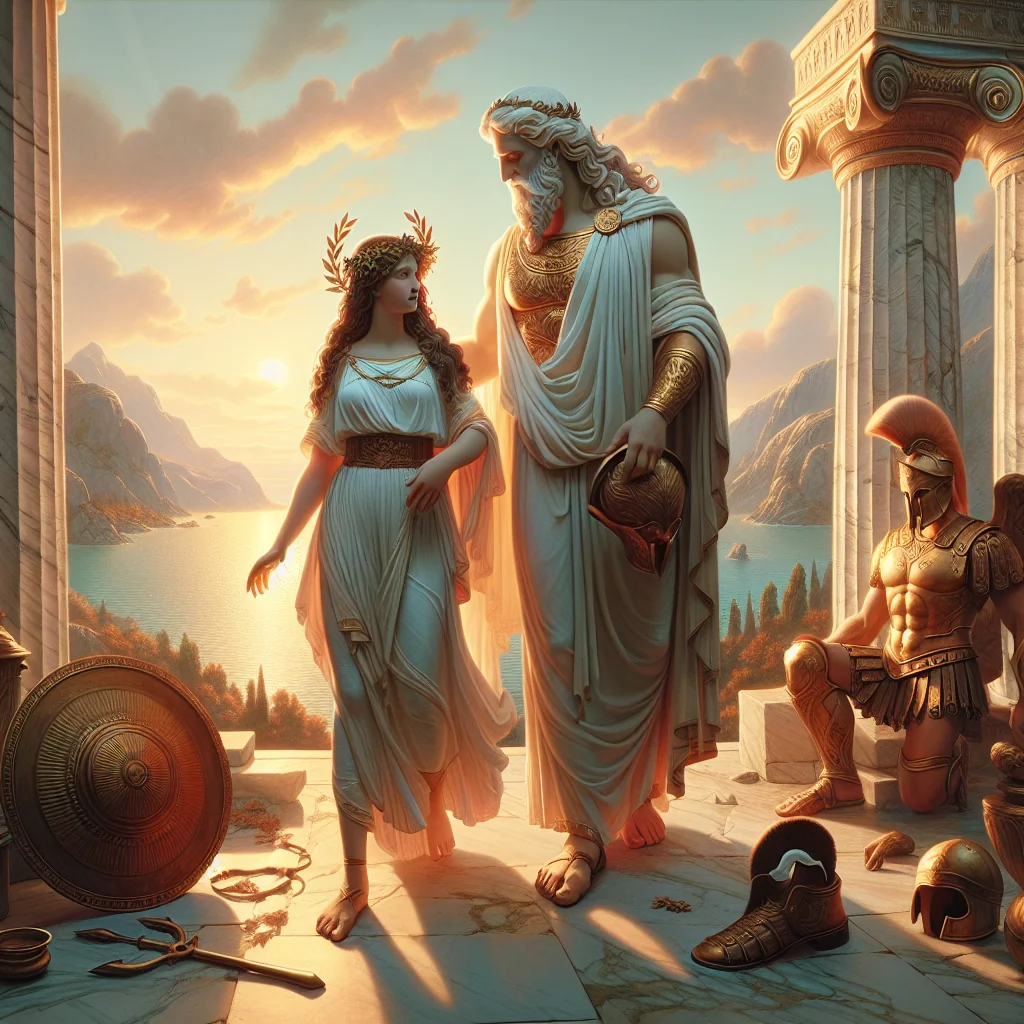
Whenever a Roman general won a great victory, he would return to Rome in triumph. He would parade through the streets with his army, showing off the spoils of war. The people would cheer, throwing flowers and shouting his name.
And then, to give thanks to the goddess who had granted him success, the general would climb up to the Capitol and erect a new statue of Victoria.
Over the years, dozens of these statues filled the sanctuary—each one a commemoration of a hard-won victory, each one a prayer of gratitude to the winged goddess.
* * *
The most magnificent statue of all was raised by Augustus, the first emperor of Rome, after he won the battle of Actium.
This battle changed the course of history. Augustus defeated his rivals and became the sole ruler of the Roman Empire, bringing an end to years of civil war and ushering in an age of peace and prosperity.
To honor Victoria for this greatest of victories, Augustus commissioned a statue unlike any that had come before. It was enormous, gleaming with gold leaf, showing the goddess with her wings spread wide, her laurel crown raised high, her palm-branch pointed toward the future.
When people came to the Capitol and saw this magnificent statue, they understood: Victory had chosen Augustus. Victoria herself had placed the crown on his head.
And so he would rule for over forty years, transforming Rome from a republic into an empire, all under the watchful eyes of the goddess who had granted him triumph.
* * *
Every year on the 12th of April, the Romans celebrated a great festival in honor of Victoria.
On that day, generals would come to the Capitol to offer prayers and sacrifices. Athletes would compete in races and wrestling matches, each one hoping to win Victory’s favor. Poets would compose verses praising the winged goddess. Musicians would play triumphant songs.
And parents would tell their children the stories of Nike—how she was born to Pallas and Styx, how she grew mighty wings, how she decided the fate of every contest, every battle, every competition.
“Remember,” the parents would say, “Victory favors the brave, the determined, and the just. If you work hard, if you never give up, if you fight for what is right—Nike may smile upon you too.”
* * *
To this day, if you travel to Athens, you can still see Nike’s temple on the Acropolis. It stands there in excellent preservation, white columns gleaming against the blue Greek sky, just as it did thousands of years ago.
And if you look carefully at ancient statues in museums around the world, you might see her: the beautiful goddess with large, graceful wings, flowing drapery, a laurel crown in one hand and a palm-branch in the other.
Nike. Victoria. The Winged Goddess of Victory.
Still reminding us that triumph comes to those who strive for it, still offering her crown to those who prove themselves worthy, still flying on those magnificent wings to wherever the next great victory is about to be won.
MORAL LESSONS:
– Victory comes to those who work hard and never give up
– Honor your triumphs with gratitude, not just pride
– Great achievements should be commemorated and remembered
– Success favors the brave, the determined, and the just
Test Your Understanding
1. Who were Nike’s parents according to Greek mythology?
Frequently Asked Questions
What is the moral lesson of NIKE (Victoria).?
What age is this story appropriate for?
How long does it take to read NIKE (Victoria).?
What culture does this story come from?
Can I use this story for teaching?
Frequently Asked Questions
Who is Nike the goddess of victory in Greek mythology?
Nike is the ancient Greek goddess of victory who was believed to decide the outcome of battles and competitions. She was the daughter of the Titan Pallas and the nymph Styx. Warriors and athletes prayed to her hoping she would favour their side, making her one of the most important figures in Greek religious life.
What moral values does the Nike goddess of victory story teach kids?
This bedtime story teaches children ages 6 to 12 important moral values such as perseverance, courage, and the meaning of true victory. By exploring Nike’s role in Greek mythology, kids learn that winning is about more than just competition — it also involves character, effort, and integrity.
Where was Nike worshipped in ancient Greece?
Nike had a celebrated temple on the Acropolis in ancient Athens, a sacred hilltop home to the city’s most important temples. Her image also appeared in statues throughout the city. Her worship was widespread because both warriors and ordinary people sought her favour before important challenges.
📚 Recommended Books
Handpicked for readers like you
As an Amazon Associate, we earn from qualifying purchases. These recommendations are personalized based on this story's themes and your reading history.
Who were Nike’s parents in Greek mythology?
Nike’s parents were the Titan Pallas and Styx, the powerful nymph of the River Styx — the dark underworld river upon which all the gods swore their most sacred oaths. This extraordinarily powerful parentage made Nike herself a formidable force respected by gods and mortals alike.
Is this Nike story suitable for children as a bedtime story?
Yes, this story about Nike, the Greek goddess of victory, is written specifically for children aged 6 to 12 and works wonderfully as a bedtime story. It uses engaging, age-appropriate language to bring Greek mythology to life while weaving in meaningful moral lessons that parents and kids can discuss together.