This moral story for children ages 6-12 combines entertainment with important values.
Chapter One: The Boy Who Could Not Sit Still
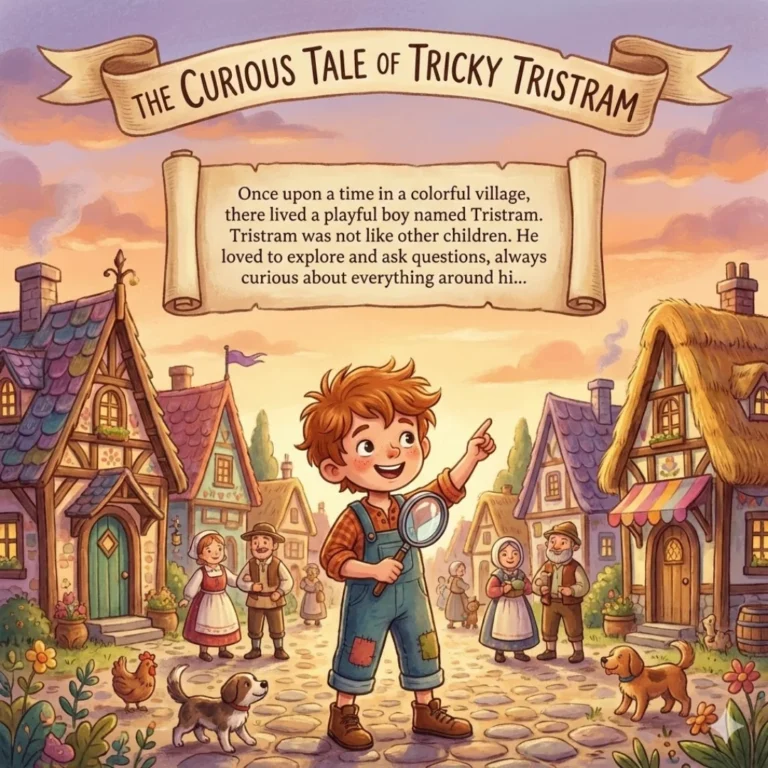
In the rolling green hills of a land far away and long ago, there lived a boy named Tristram. He had hair the color of autumn leaves, freckles scattered across his nose like constellations, and a mind that never stopped asking questions.
“Why does the river flow downhill?” he would ask his father, the village woodcutter.
“How do birds know where to go when winter comes?” he would wonder aloud to his mother.
“What lies beyond the mountains at the edge of the world?” he would demand of anyone who would listen.
Most people in the village of Thornhill found young Tristram exhausting. The baker wished he would stop asking about the mysteries of yeast. The blacksmith grew tired of explaining for the hundredth time how fire softened metal. Even the village elders, who were supposed to know everything, sometimes hid when they saw Tristram coming with that gleam of curiosity in his eye.
“That boy will wear himself out,” the villagers muttered. “Always rushing from one question to the next, never content with what he already knows.”
Only Tristram’s grandmother, old Marian, understood him.
“You have the heart of a seeker,” she would tell him as they sat together in her cottage, surrounded by herbs and old books. “But remember, child: the fastest stream misses the deepest pools. Sometimes the greatest discoveries come to those who are willing to wait and wonder.”
Tristram would nod impatiently and then rush off to his next adventure, her words already fading in his busy mind.
Chapter Two: The Mysterious Stranger
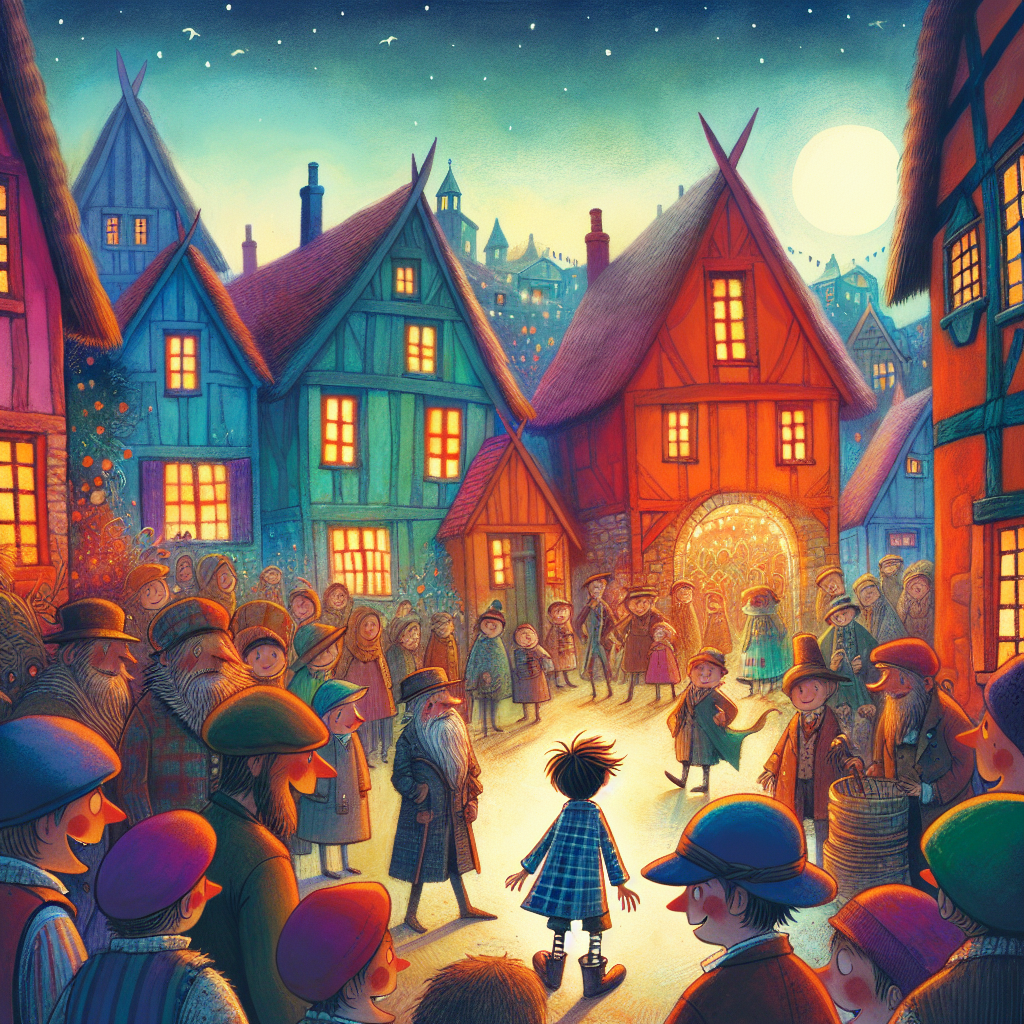
One summer evening, a stranger arrived in Thornhill. He came walking down the dusty road as the sun painted the sky in shades of orange and gold, carrying nothing but a gnarled walking stick and a leather satchel worn smooth with age.
The villagers gathered to stare, as they always did when someone new appeared. The stranger had a long gray beard, kind eyes that seemed to sparkle with hidden laughter, and a cloak decorated with strange symbols that caught the light in unusual ways.
“Good evening, friends,” the stranger said, his voice warm and melodious. “My name is Donan, and I am a collector of stories. I travel from village to village, gathering tales and sharing wisdom/” title=”More stories about wisdom”>wisdom. Might I trouble you for a meal and a place to rest?”
The village elder, a stern woman named Martha, stepped forward. “We are hospitable folk, stranger. But what can you offer in return?”
Donan smiled. “Tonight, after supper, I will share a story with your village. And tomorrow, I will teach any child who wishes to learn the art of listening, which is the beginning of all true wisdom.”
The villagers exchanged glances. This was an unusual offer. But there was something about Donan that inspired trust. They agreed, and the stranger was given a seat at the inn’s hearth.
Tristram, of course, was the first to volunteer for Donan’s lessons.
Chapter Three: The Story That Never Ended
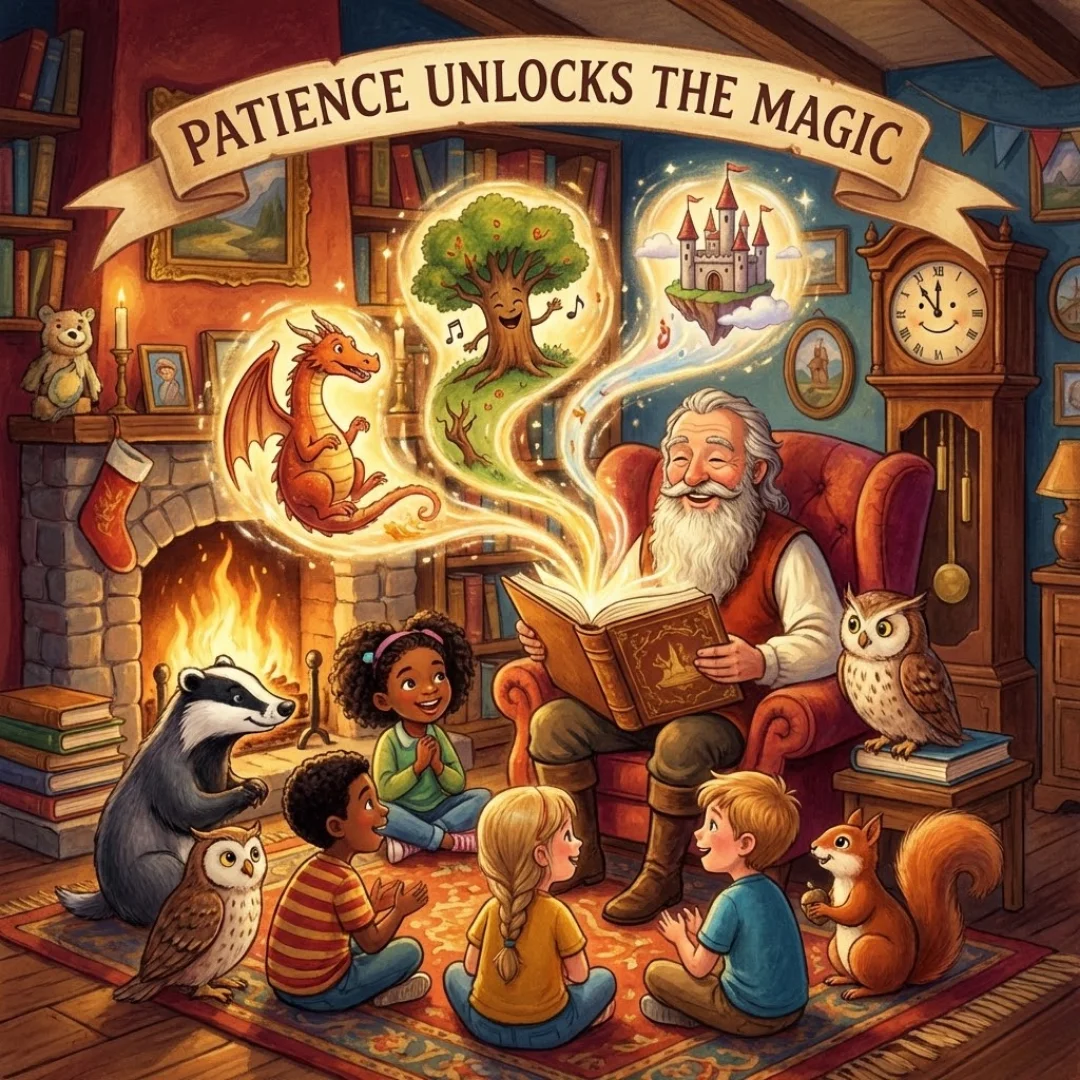
That night, the entire village gathered in the inn’s common room. Firelight danced on the walls as Donan settled into a chair and began to speak.
“Once upon a time,” he said, and his voice seemed to weave itself around the listeners like a soft blanket, “there was a young squirrel who wanted to gather all the acorns in the forest before winter came…”
The story was magical. Donan did not simply tell it; he made the listeners see the forest, feel the crisp autumn air, worry alongside the little squirrel as he raced from tree to tree. When he described the wise old owl who tried to help the squirrel, his voice deepened with gravity. When he mimicked the chatter of forest creatures, children laughed with delight.
But Tristram was not fully present. His mind kept racing ahead, trying to guess what would happen next, already thinking about the questions he would ask when the story ended. He fidgeted in his seat, mentally rushing through the tale toward its conclusion.
Then something strange happened. Just as Donan reached what seemed like the climax of the story, he paused.
“And what the squirrel discovered in that hollow tree,” Donan said, “will have to wait until tomorrow night. For tonight, we have reached the place where listening must turn into dreaming.”
“But what did he find?” Tristram burst out, unable to contain himself. “You can not stop there! What happened next?”
The villagers murmured their agreement. They too wanted to know how the story ended.
But Donan just smiled his mysterious smile. “Stories, like good meals, should be savored, not gulped down. The waiting is part of the gift. Now, off to bed with you all. Tomorrow, I will teach my lessons.”
Chapter Four: The Hardest Lesson
The next morning, a dozen village children gathered in the meadow where Donan had set up his teaching spot. Tristram was there first, practically vibrating with impatience.
“Today,” Donan announced, “I will teach you the three secrets of the storyteller’s art. They are also the three secrets of wisdom. Is everyone ready?”
The children nodded eagerly.
“The first secret is this: Listen not just with your ears, but with your whole heart.”
He handed each child a small object: a smooth stone, a feather, a dried leaf, a acorn. Tristram received a tiny shell, spiraled and delicate.
“Close your eyes,” Donan instructed. “Now, feel your object. What does it tell you? Not with words, but with sensation. What stories might it hold?”
Tristram closed his eyes and felt the shell’s ridges beneath his fingertips. He wanted to rush through the exercise, to move on to the next secret. But something made him pause.
The shell was cool and smooth. Its spiral wound inward toward a center he could not see. As he traced its curves, he began to imagine the creature that once lived inside, the ocean it had known, the journey that brought it all the way to this meadow.
When he opened his eyes, more time had passed than he realized. The sun had moved noticeably across the sky.
“Ah,” said Donan, watching Tristram’s surprised expression. “You found it, didn’t you? The stillness where stories live.”
Chapter Five: Patience and Its Rewards
Over the following days, Donan taught the children his remaining secrets.
“The second secret,” he said, “is this: Every story has layers, like an onion. Rush through it, and you taste only the surface. Take your time, and you discover depths within depths.”
He told them a simple tale about a farmer and a fox. Then he told it again, and again, each time revealing new meanings that the children had missed in their eagerness to reach the ending. The farmer was not just a farmer but a symbol of patience. The fox was not just clever but also lonely. The ending, which had seemed happy, contained within it a seed of sadness that made it richer and more true.
Tristram found himself listening differently than he ever had before. Instead of racing ahead, he tried to sink into each moment of the story, to notice the small details, the silences between words, the feelings beneath the facts.
“The third secret,” Donan revealed on the final day, “is the most important of all: The story never ends. Every tale you hear becomes part of your own story. You carry it forward, and one day, you will share it with others, changed and enriched by your own experience.”
He looked at each child in turn, and his gaze lingered longest on Tristram.
“You have a gift, young seeker. But remember: a gift used hastily is a gift half-wasted. The greatest storytellers are also the greatest listeners. They know that wisdom comes not from rushing to the end, but from treasuring each step of the journey.”
Chapter Six: The Magical Book
On his last evening in Thornhill, Donan finished the story of the squirrel. And what the squirrel found in the hollow tree was not a pile of acorns, as everyone expected, but a single seed from a tree that no longer existed anywhere in the forest.
“The squirrel had a choice,” Donan said. “He could plant the seed and wait many years for it to grow, or he could keep searching for the quick reward of acorns. What do you think he chose?”
“The seed,” the children said together, understanding now what the story had been teaching them all along.
“Yes. And that tree, grown from that single seed, still stands in a forest far from here. Its acorns feed a thousand squirrels every autumn.”
After the story, Donan approached Tristram.
“I have something for you,” the old man said. From his satchel, he withdrew a small book bound in leather so soft it felt like living skin. Strange symbols decorated its cover, symbols like those on Donan’s cloak.
“This book contains stories from every corner of the world,” Donan explained. “Tales of heroes and tricksters, wise animals and foolish kings, magical journeys and quiet moments of truth. But there is one condition for its use.”
“What condition?” Tristram asked, his heart racing.
“You must read only one story per day. No more. Each story must be given time to settle into your heart before you move to the next. Can you promise me this?”
Chapter Seven: The Test of Patience
At first, Tristram thought the promise would be impossible to keep. He opened the book that very night and found a tale about a princess who could speak to rivers. It was wonderful, enchanting, full of images that danced in his imagination.
When it ended, his fingers itched to turn the page. Surely one more story could not hurt? He had made a promise, but promises were meant to be bent, were they not?
He thought of Donan’s kind eyes. He thought of the spiral shell, the layers of the onion, the squirrel who had chosen to wait.
Slowly, Tristram closed the book.
The next morning, he woke early and spent the whole day thinking about the princess and the rivers. He noticed how the story connected to things he had seen in his own life: the stream behind his house, the way water always found a path around obstacles, the sound of rain speaking in its own liquid language.
By evening, when he was finally allowed to read the next story, he understood something he never had before. The waiting had not been a barrier to enjoyment. It had deepened his experience beyond anything a quick reading could have provided.
As the weeks passed, Tristram read story after story, each one carefully, lovingly, with full attention. He began to notice patterns and connections between tales from different lands. He discovered that a Chinese legend and a Welsh myth shared the same deep truth dressed in different clothes. He understood that stories were not just entertainment but maps to the human heart.
Chapter Eight: The Storyteller’s Gift
Years later, when Tristram had grown into a young man, he became known throughout the land as a storyteller of remarkable power. People traveled from distant villages to hear him speak. Kings invited him to their courts. Children gathered at his feet, eyes wide with wonder.
But Tristram never forgot Donan’s lessons. He always told his stories slowly, with pauses for the listeners to feel and wonder and imagine. He never rushed to the ending, because he knew that the journey mattered more than the destination.
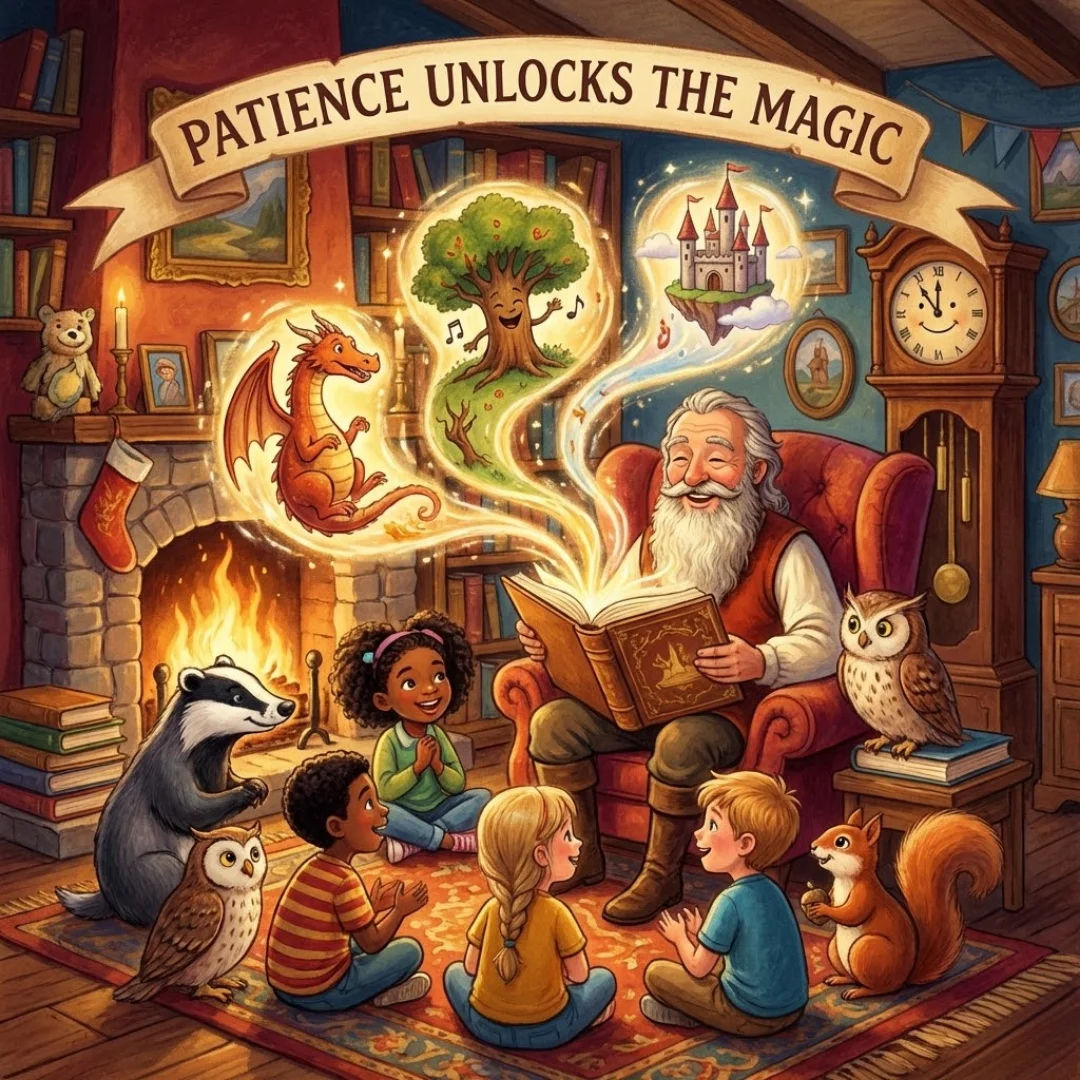
One day, a curious girl with questions sparkling in her eyes asked him the secret of his gift.
Tristram smiled, remembering himself at her age.
“The secret,” he said, “is patience. Every story is a treasure, and treasures must be examined carefully, turned over in the light, appreciated from many angles. If you rush through stories, you miss their hidden gifts. But if you take your time, if you listen with your whole heart and let each tale settle into your soul, then the stories will teach you everything you need to know.”
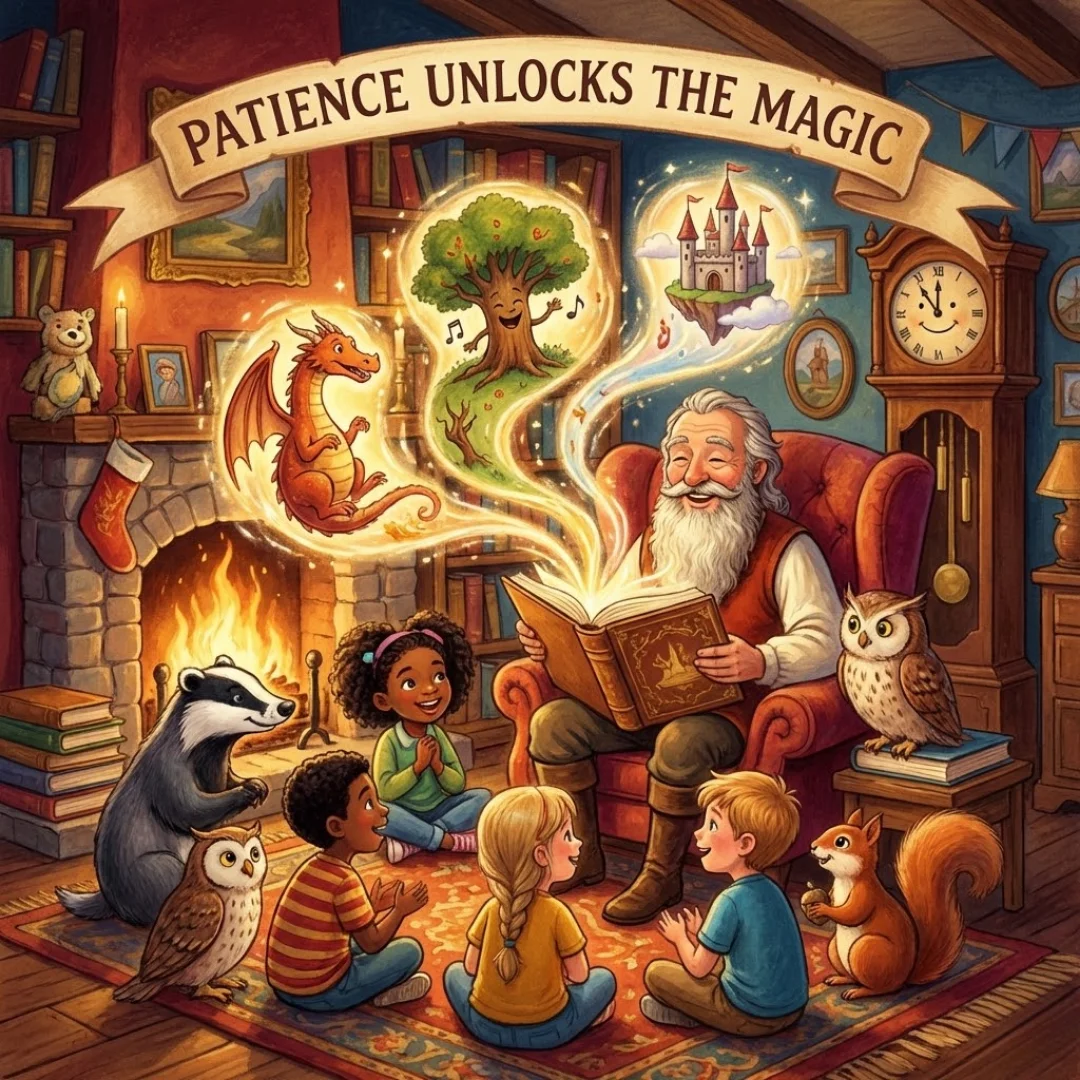
He handed the girl a small object: a spiral shell, worn smooth with years of handling.
“Keep this,” he said. “When you feel yourself rushing, hold it and remember: wisdom lives in stillness. The greatest adventures happen to those who take the time to truly see.”
And the girl, who would one day become a storyteller herself, tucked the shell carefully into her pocket and began to learn the art of patient listening.
Moral Lessons
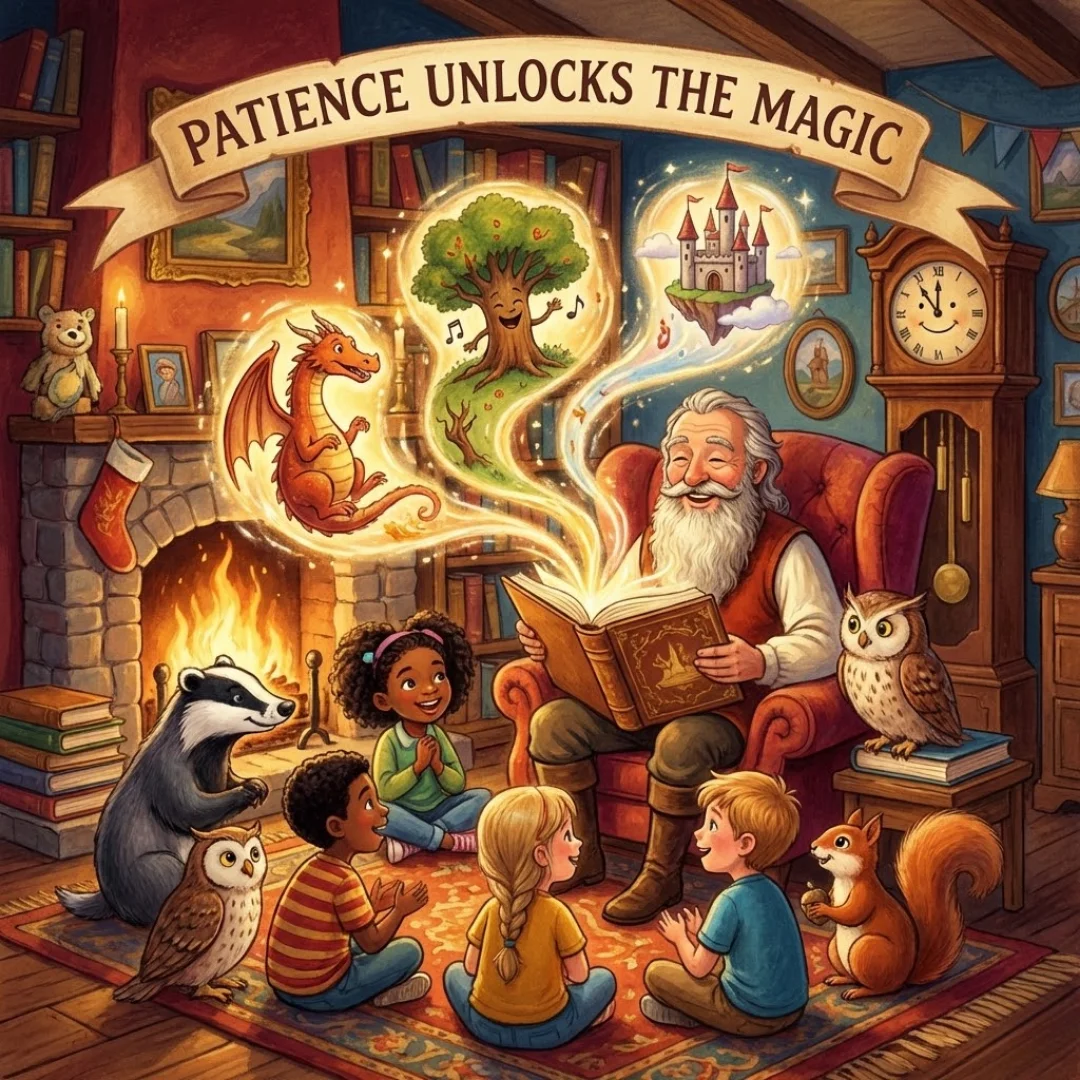
- The greatest experiences in life, whether stories, friendships, or adventures, are meant to be savored slowly. Rushing through life causes us to miss the richest treasures, which reveal themselves only to those who take time to truly see and listen.
Test Your Understanding
1. What was unusual about young Tristram compared to other villagers?
2. What three secrets of the storyteller’s art did Donan teach?
3. What was special about the magical book Donan gave Tristram?
4. What did the squirrel in Donan’s story choose to do with the seed?
5. What did Tristram discover about the waiting between stories?
6. What is the main moral lesson of this story?
Frequently Asked Questions
What is the moral lesson of The Curious Tale of Tricky Tristram?
What age is this story appropriate for?
How long does it take to read The Curious Tale of Tricky Tristram?
What culture does this story come from?
Can I use this story for teaching?
Frequently Asked Questions
What is The Curious Tale of Tricky Tristram about?
This moral story follows Tristram, a curious boy with red hair and freckles who lives in the village of Thornhill. He constantly asks questions about everything around him, from why rivers flow downhill to how birds know where to migrate. The tale explores his endless curiosity and what the villagers think of his questioning nature.
Is this a good bedtime story for kids?
Yes, this is an excellent bedtime story for kids ages 6-12. It combines entertainment with important values about curiosity and learning. The story has gentle pacing and relatable characters that make it perfect for bedtime reading while teaching children that asking questions is valuable.
What age group is The Curious Tale of Tricky Tristram designed for?
This moral story is specifically designed for children ages 6-12. The language, themes, and character development are age-appropriate for elementary school children who can relate to Tristram’s curious nature and understand the story’s deeper messages about learning and persistence.
📚 Recommended Books
Handpicked for readers like you
As an Amazon Associate, we earn from qualifying purchases. These recommendations are personalized based on this story's themes and your reading history.
What moral lesson does Tristram’s story teach children?
The story teaches children that curiosity and asking questions are valuable traits, even when others find them tiresome. It shows kids that being inquisitive about the world around them is important for learning and growth, encouraging them to embrace their natural curiosity rather than suppress it.
How long does it take to read this bedtime story for kids?
Based on the chapter structure and detailed storytelling style, this bedtime story appears to be a longer tale that would take about 15-20 minutes to read aloud. It’s perfect for parents who want an engaging story that will hold their child’s attention throughout bedtime.