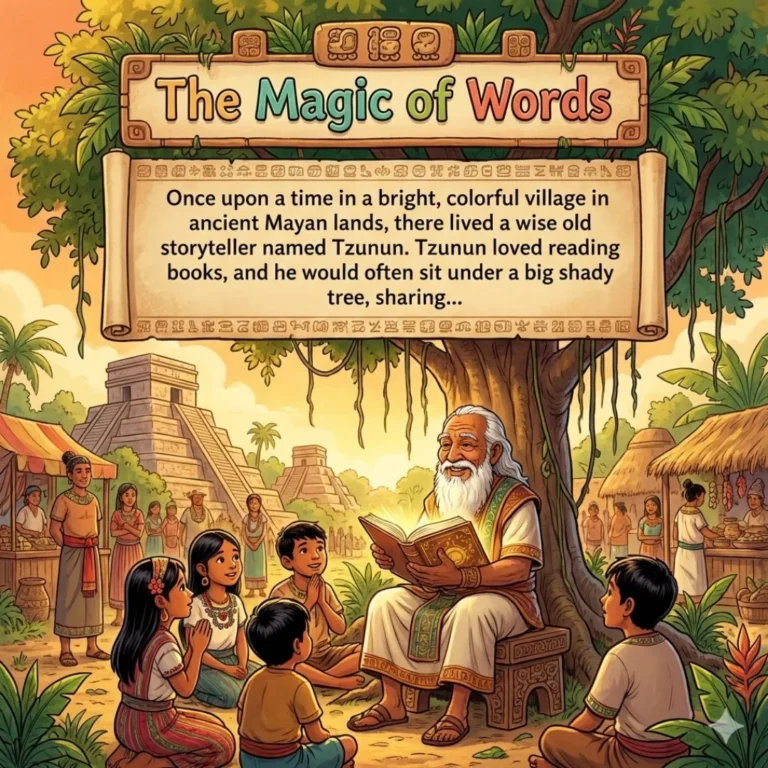
This bedtime story for kids, ‘The Magic of Words’, teaches children ages 6-12 about important moral values.
CHAPTER ONE: THE STORYTELLER’S TREE
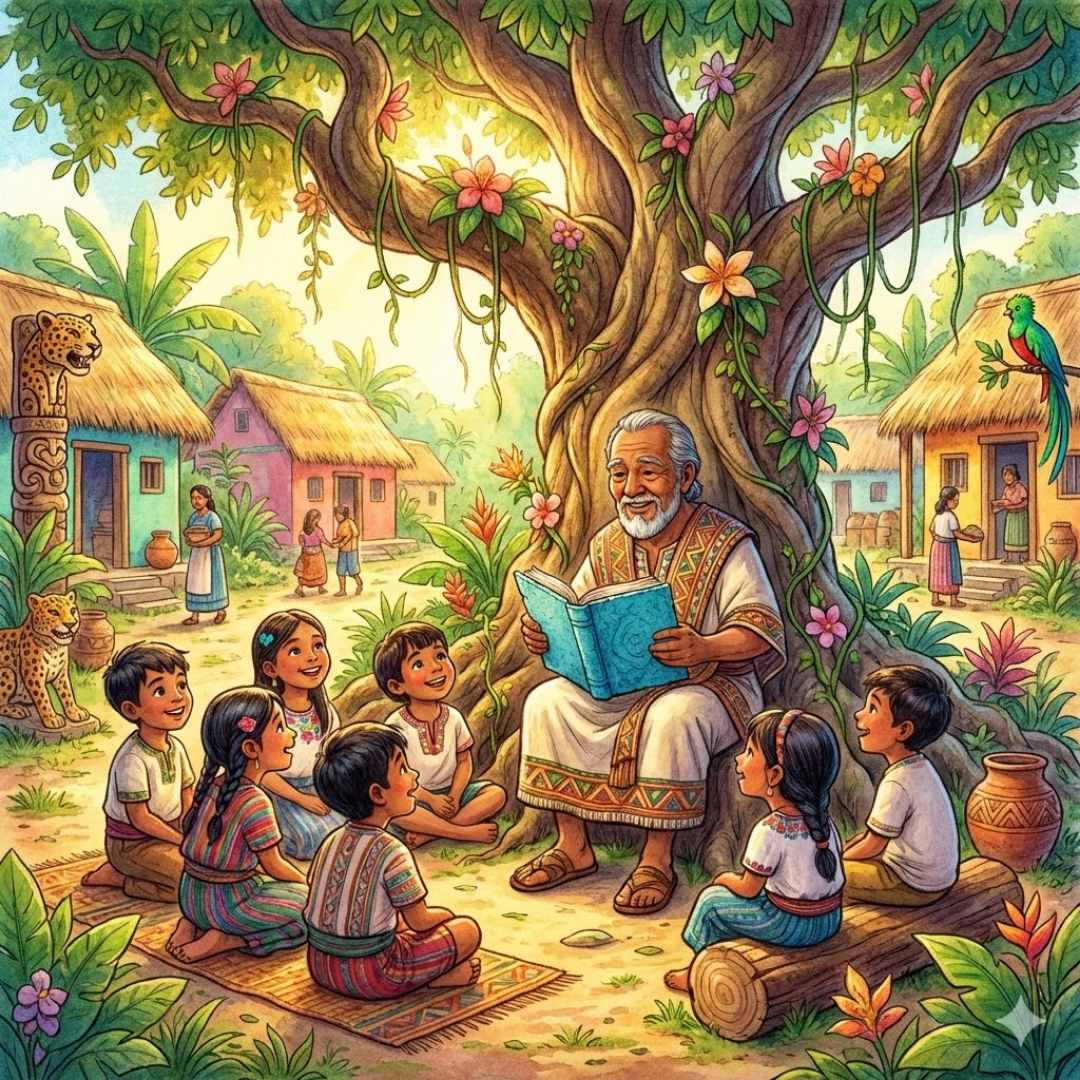
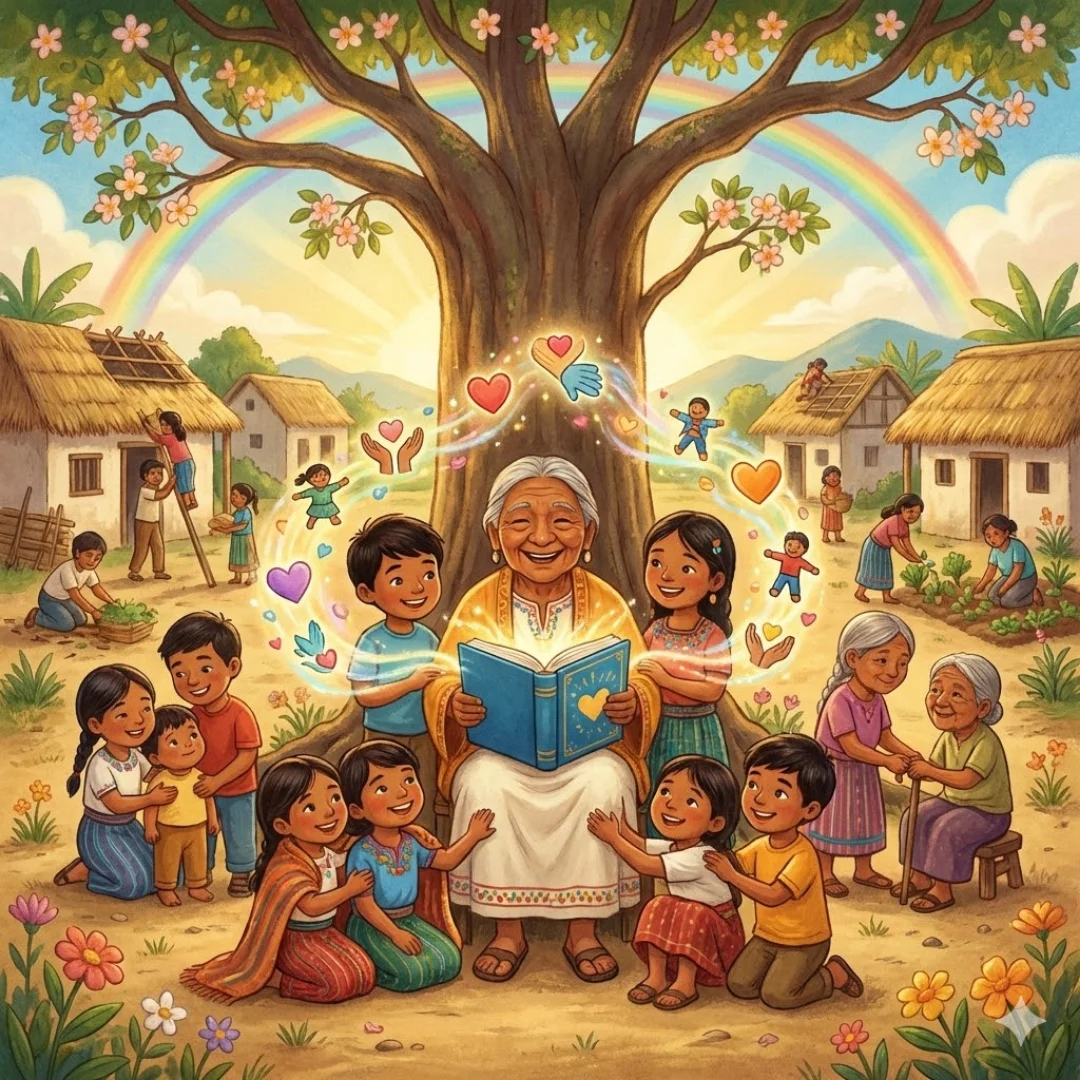
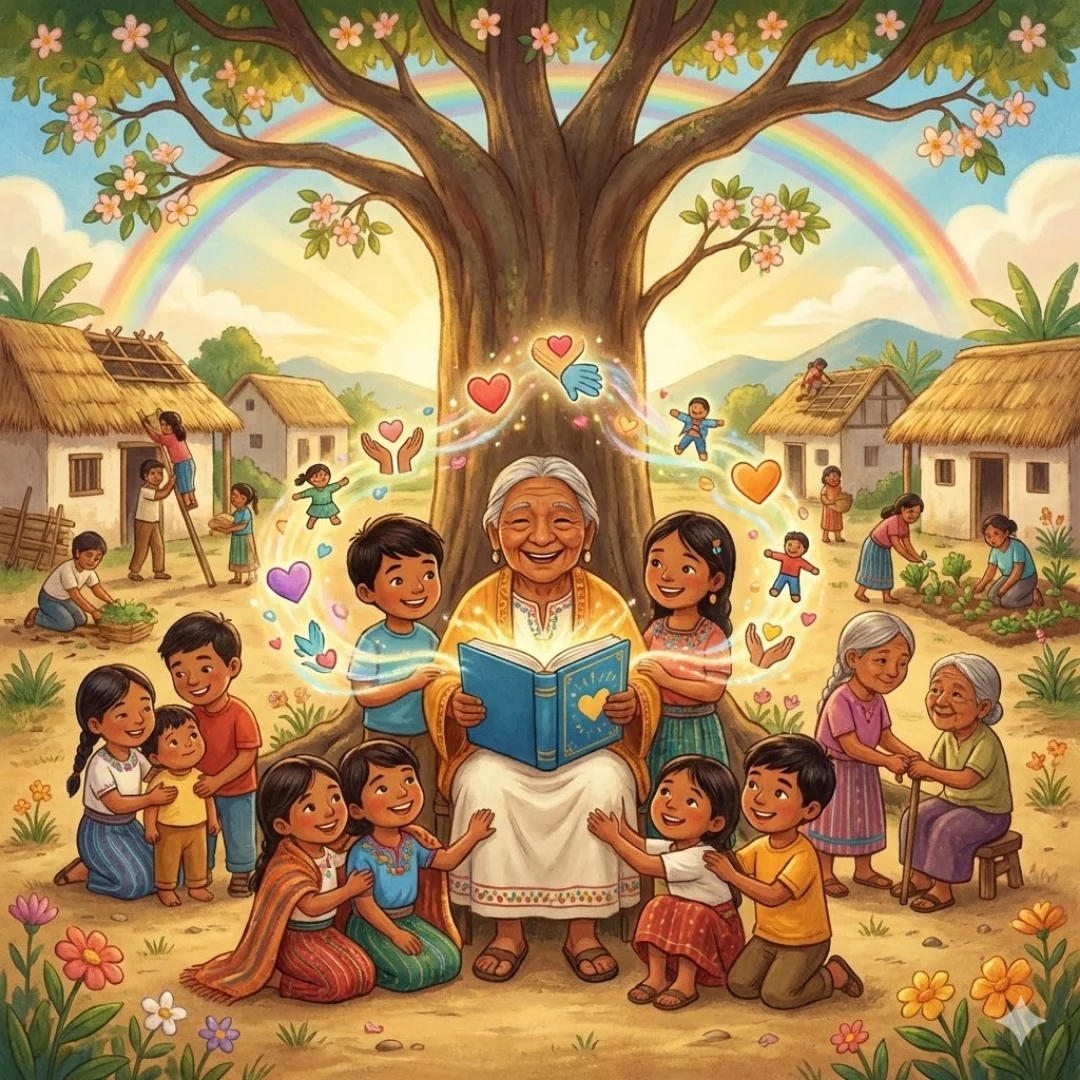
In the heart of an ancient Mayan village, where the jungle pressed close and colorful parrots called from the ceiba trees, there grew the most magnificent shade tree anyone had ever seen.
Its branches spread wide as the sky, its leaves so thick that not a single drop of rain could pass through. The villagers called it the Story Tree, because for as long as anyone could remember, storytellers had gathered beneath its branches to share their tales.
The most beloved storyteller of all was an old man named Tzunun, which means “hummingbird” in the Mayan tongue. Like the tiny bird he was named for, Tzunun seemed to hover between the world of humans and the world of spirits, drawing nectar from ancient memories and turning them into stories sweeter than honey.
His skin was weathered like old leather, his hair white as cloud cotton, but his eyes sparkled with the mischief of a child and the wisdom of centuries.
Every afternoon, as the sun began its descent toward the western sea, Tzunun would take his place beneath the Story Tree. And every afternoon, the children of the village would come running, their bare feet pattering like rain on the packed earth, their voices calling, “Tzunun! Tzunun! Tell us a story!”
And Tzunun would smile his mysterious smile and open the worn blue book that never seemed to end.
* * *
CHAPTER TWO: THE BOOK THAT BREATHED
The book was extraordinary. Its covers were made of soft blue paper—not the bark paper the Maya usually used, but something finer, something that seemed almost alive.
When Tzunun opened the book, the children swore they could feel a warm breeze flow from its pages, carrying the whispers of stories waiting to be told. The writing inside changed and shifted, as if the stories themselves were choosing which one Tzunun would read that day.
“This book,” Tzunun told the children, “was given to me by my grandfather, who received it from his grandfather, who received it from the First Storyteller at the very beginning of time. The stories inside are not just words. They are magic.”
A girl named Xochitl, with bright eyes and a quick mind, raised her hand. “What kind of magic, Grandfather Tzunun?”
“The best kind,” Tzunun replied. “The magic of transformation. When you truly hear a story—when you let it inside you and let it change you—you become part of the story, and the story becomes part of you.”
He settled back against the trunk of the Story Tree and opened the blue book to the first waiting page.
“Today,” he said, “I will tell you the story of how the Hero Twins defeated the Lords of Death. But remember—this is not just something that happened long ago. This is something that is still happening, inside each of you, every single day.”
* * *
CHAPTER THREE: THE POWER OF listening
As Tzunun read, his voice rose and fell like music. He spoke of Hunahpu and Xbalanque, the clever twins who descended into the underworld to avenge their father. He described the terrors of Xibalba—the House of Cold, the House of Jaguars, the House of Bats—and how the twins used their wit and courage to survive each test.
The children sat spellbound. Some leaned forward, mouths open. Others clutched their neighbors’ hands during the frightening parts. A few laughed out loud at the twins’ clever tricks against the Lords of Death.
When the story ended with the twins rising into the sky to become the sun and the moon, there was a long moment of silence. Then the children began to talk all at once.
“I want to be brave like Hunahpu!”
“I would have been scared in the House of Jaguars!”
“The twins were so clever! They never gave up!”
Tzunun listened to them, smiling. Then he asked a question that would change everything.
“How did the story make you feel?”
The children paused, considering.
“Happy,” said one boy. “Because the twins won.”
“Scared,” admitted a girl, “but also safe, because I knew it would end well.”
“Brave,” said Xochitl slowly, as if discovering something important. “The story made me feel like maybe I could be brave too.”
Tzunun nodded wisely. “That is the magic. The Hero Twins lived long ago, and perhaps they never lived at all—they may be just a story. But the courage inside them? That is real. And now, because you have truly listened, that courage lives inside you too.”
* * *
CHAPTER FOUR: THE CHILDREN’S STORIES
As the weeks passed, something remarkable began to happen. The children, inspired by Tzunun’s stories, began creating their own.
Little Pik, who was afraid of the dark, wrote a story about a boy who befriended the Night itself and learned that darkness was just light resting.
Quiet Chel, who rarely spoke, drew pictures of fantastic creatures and invented tales about their adventures that had everyone laughing and gasping.
And Xochitl—bright-eyed Xochitl who always asked the hardest questions—wrote a story about a girl who traveled to the edge of the world and discovered that the world had no edges, only new beginnings.
“Look, Grandfather Tzunun!” she said, presenting her carefully folded pages. “I made my own book!”
Tzunun examined her work with the serious attention of a master craftsman inspecting an apprentice’s creation.
“This is very good,” he said finally. “But do you know what would make it better?”
Xochitl shook her head.
“You must not only write brave stories,” Tzunun said. “You must become a brave story. Your life is a book too, Xochitl. Every choice you make, every kindness you show, every fear you face—these are the chapters of your story. Make it a story worth telling.”
* * *
CHAPTER FIVE: THE STORM
One autumn day, a great storm came to the village—the fiercest anyone had seen in many years. Rain fell in sheets, the river rose dangerously, and the wind howled like angry spirits.
The villagers gathered in the largest building, huddling together as the storm raged outside. Children cried with fear. Adults spoke in worried whispers. Everyone’s eyes kept returning to the walls, which creaked and groaned under the assault of the wind.
Tzunun sat calmly in the corner, the blue book in his lap.
“Grandfather,” a trembling boy asked, “aren’t you scared?”
“I have lived through many storms,” Tzunun replied. “And do you know what I have learned? The storm is just a story too—a story of the sky trying to become something new. It has a beginning, and it will have an end.”
But the children were still frightened. The thunder was so loud, the lightning so bright.
Xochitl suddenly stood up. “I know what we should do,” she said. “We should be like the Hero Twins!”
The other children looked at her uncertainly.
“The Hero Twins faced terrible things in Xibalba,” Xochitl continued, her voice growing stronger. “But they stayed together and used their cleverness to survive. We can do the same!”
She began organizing the children. The oldest ones comforted the youngest. Those who knew songs began to sing, their voices rising above the storm’s howl. Those who knew stories began to tell them, keeping everyone’s minds off the danger.
And slowly, the fear in the room began to change. Not disappearing, but transforming—into something that felt more like courage.
* * *
CHAPTER SIX: THE MORNING AFTER
When the sun rose the next morning, the storm had passed. The village was battered but standing. Trees had fallen, gardens were flooded, but no one had been hurt.
As the villagers emerged to assess the damage, they found the Story Tree had survived, its wide branches having protected the area beneath it from the worst of the wind and rain.
“It’s as if the stories protected us,” Xochitl whispered.
Tzunun smiled at her. “No, child. You protected yourselves. The stories only reminded you of the courage you already had inside.”
He looked around at all the children—at Pik, no longer afraid of the dark; at Chel, now sharing her voice with everyone; at Xochitl, who had led her friends through the storm.
“This is the true magic of stories,” Tzunun said. “Reading about bravery and kindness is not enough. You must live bravery and kindness. The Hero Twins did not just listen to stories about courage—they became stories of courage themselves.”
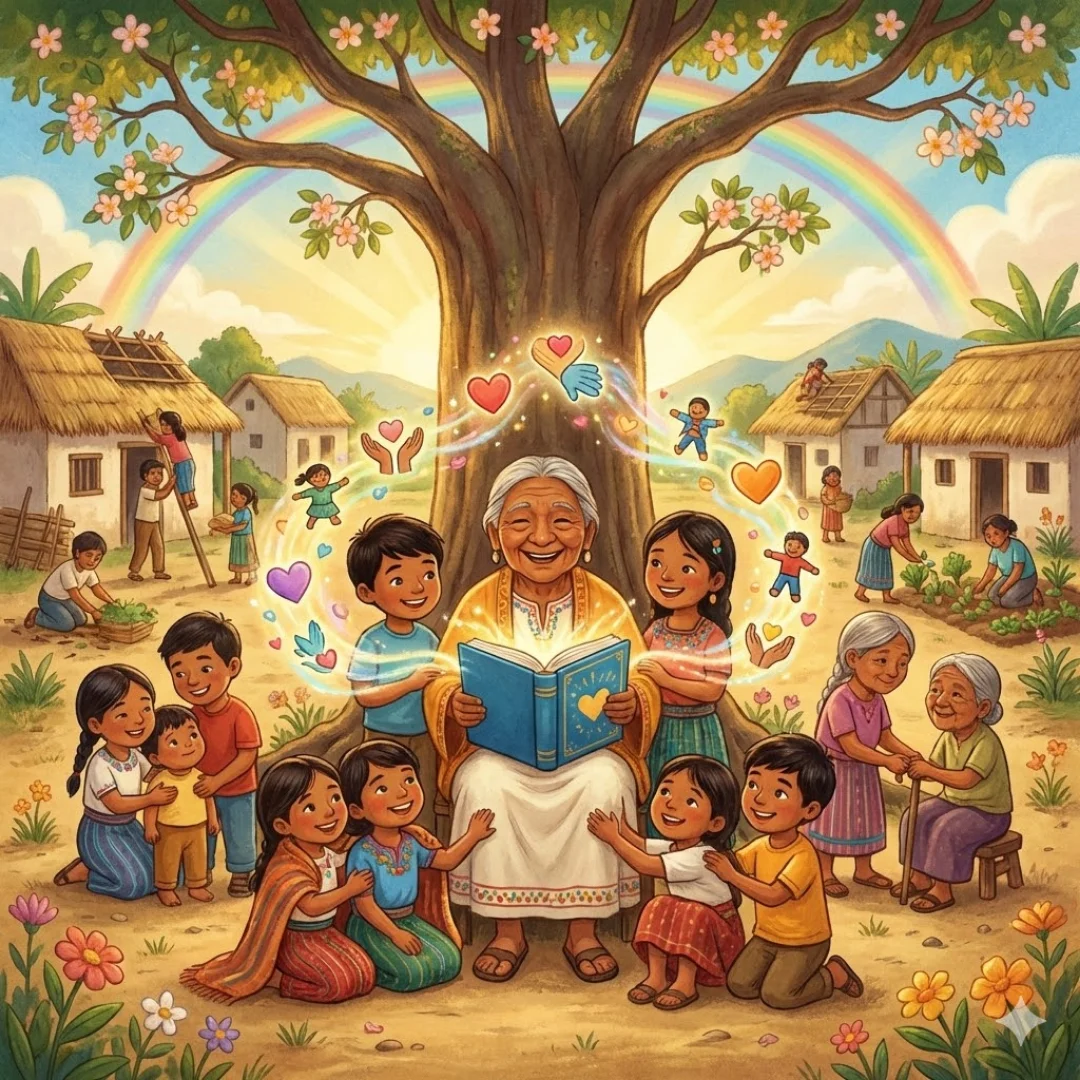
He opened the blue book one last time and showed them a new page—a page that had not been there before.
On it was written a new story. The story of a village of children who faced a great storm and found that the magic of the old tales lived inside them all along.
“Your story is part of the book now,” Tzunun said. “And one day, children who are not yet born will hear it and find their own courage, just as you found yours.”
* * *
CHAPTER SEVEN: THE GREATEST STORY
Many years passed. Tzunun eventually joined the ancestors, but his spirit lived on in the stories he had shared. The children grew up and had children of their own, and they continued the tradition of gathering beneath the Story Tree.
Xochitl became a storyteller herself—one of the greatest the village had ever known. She inherited Tzunun’s blue book, and she added her own stories to its magical pages.
But the story she told most often was not from the book at all.
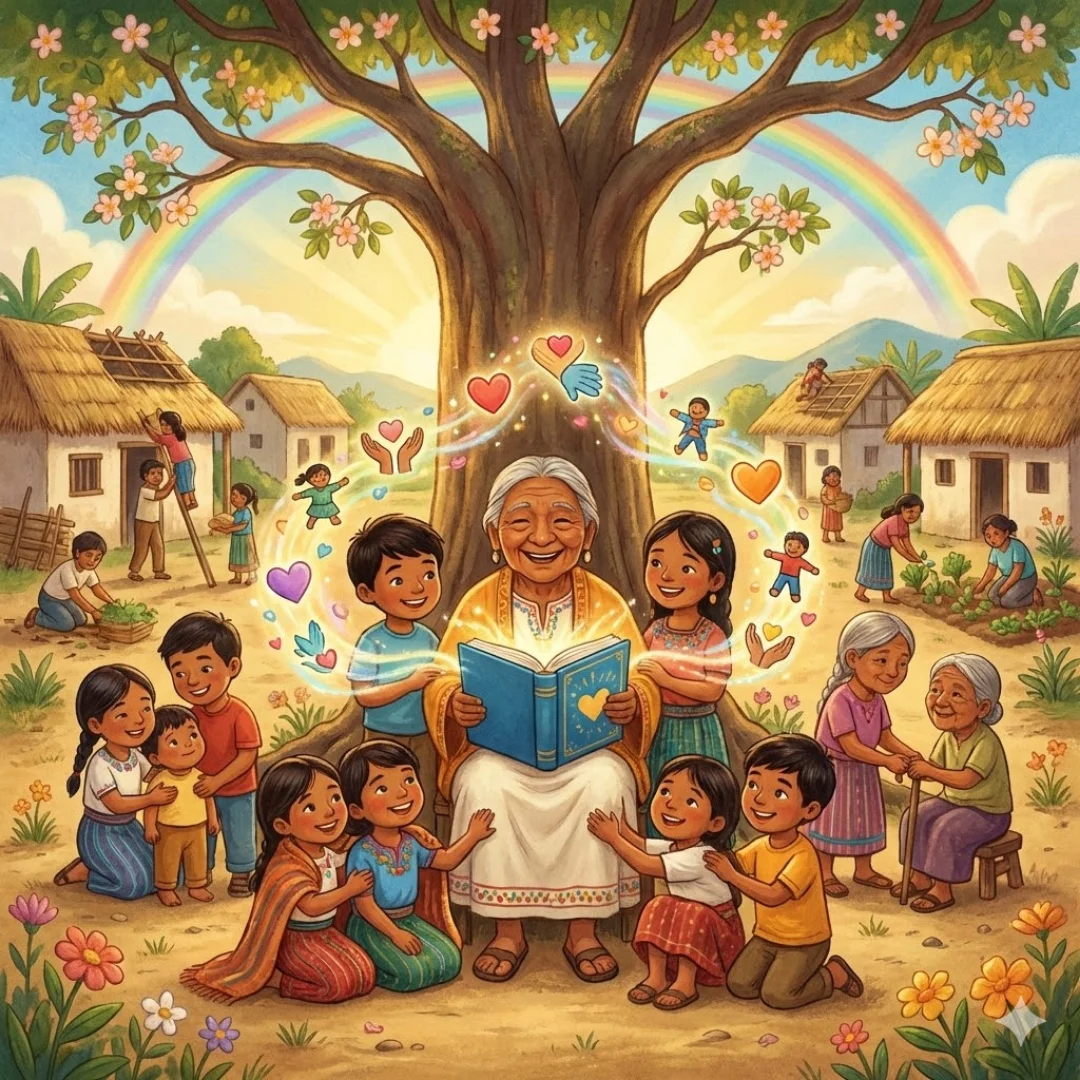
“Once upon a time,” she would begin, “there was an old man named Tzunun who taught the children that stories are not just for listening. Stories are for becoming.”
She would look out at the bright, eager faces gathered around her.
“You are all stories, waiting to be written. Every kind word you speak, every brave choice you make, every person you help—these are the chapters of your story.”
And then she would open the blue book and share another tale of heroes and magic. But always, always, she ended the same way:
“Now go and write your own story. Make it one worth telling.”
And the children would run off into the sunlight, ready to face their own adventures, carrying the magic of words in their hearts.
For that is the true magic of stories—they remind us who we can become.
Moral Lessons
- Stories can inspire us to be brave and kind in our everyday lives. But we must not only read about courage—we must become courageous ourselves.
Test Your Understanding
1. What was special about the old storyteller Tzunun’s blue book?
2. What famous Mayan story did Tzunun tell the children about?
3. According to Tzunun, what is the true magic of stories?
4. What happened during the great storm that tested the children?
5. What did Tzunun tell Xochitl about making her stories better?
6. What is the main moral lesson of this story?
Frequently Asked Questions
What is the moral lesson of The Magic of Words?
What age is this story appropriate for?
How long does it take to read The Magic of Words?
What culture does this story come from?
Can I use this story for teaching?
Frequently Asked Questions
What age group is The Magic of Words story appropriate for?
The Magic of Words is a bedtime story designed for children ages 6-12. It teaches important moral values through an engaging tale set in an ancient Mayan village, making it perfect for elementary school-aged kids who can appreciate both the adventure and the deeper lessons about storytelling.
What is The Magic of Words bedtime story about?
This story follows Tzunun, an elderly Mayan storyteller who gathers villagers under the magnificent Story Tree. Set in an ancient jungle village, it explores how words and stories have magical power to connect people, preserve culture, and teach important life lessons through the art of storytelling.
What moral lessons does this story teach children?
The story teaches kids about the power and responsibility that comes with words. Through the character of Tzunun, children learn how stories can preserve wisdom, connect generations, and inspire others. It emphasizes the importance of using words thoughtfully and the magical impact storytelling has on communities.
📚 Recommended Books
Handpicked for readers like you
As an Amazon Associate, we earn from qualifying purchases. These recommendations are personalized based on this story's themes and your reading history.
How long does this bedtime story take to read?
This appears to be a chapter-based story, with Chapter One introducing the storyteller and his village setting. As a bedtime story for kids ages 6-12, each chapter is likely designed to be read in 5-10 minutes, making it perfect for nightly reading sessions.
Is this story based on authentic Mayan culture?
Yes, the story incorporates authentic Mayan cultural elements including the ancient village setting, ceiba trees, traditional names like Tzunun (meaning hummingbird), and references to Mayan spiritual beliefs. It respectfully weaves educational cultural details into an engaging fictional narrative for children.