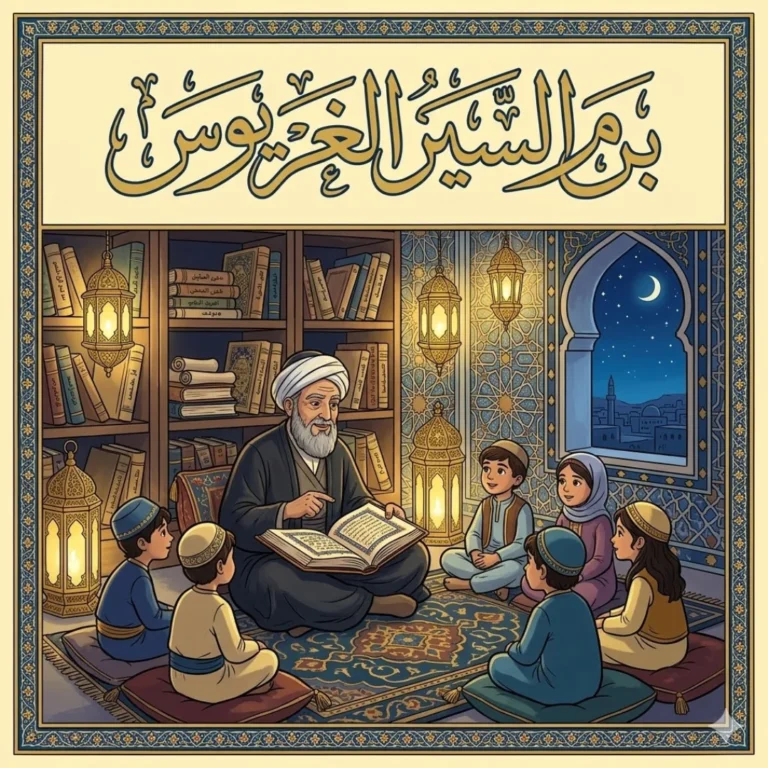
Share this engaging bedtime story with kids ages 6-12 to teach valuable life lessons.
Chapter One: The Scholar Who Collected Laughter
In the ancient city of Malatya, nestled between mountain and plain in what we now call Turkey, there lived a most unusual bishop. His name was Gregory, but everyone called him Bar-Hebraeus, which meant “Son of the Hebrew” in the Syriac language.
Now, Bar-Hebraeus was one of the wisest men in all the world. He could speak a dozen languages, he had read more books than most libraries contained, and he had written works on medicine, history, astronomy, and theology. Kings and scholars sought his counsel.
But what made Bar-Hebraeus truly special was not his great learning. It was his laughter.
While other bishops frowned and spoke in somber tones, Bar-Hebraeus believed that God had given humans the gift of humor for a reason. “A good laugh,” he would say, “can open a closed heart faster than a hundred sermons.”
And so, alongside his serious scholarly works, Bar-Hebraeus collected funny stories. He gathered them from traveling merchants, from old books, from village storytellers, from everywhere. He called his collection “Laughable Stories,” and it became one of his most beloved works.
Chapter Two: The Children of Mosul
One autumn evening, Bar-Hebraeus was traveling through the great city of Mosul, where the Tigris River flowed broad and blue beneath ancient walls. He stopped to rest at a monastery, and word quickly spread that the famous scholar had arrived.
Soon, a group of children gathered in the monastery courtyard, hoping to meet the great man they had heard so much about.
“Is it true,” asked a boy named Yusuf, “that you have read more books than anyone in the world?”
Bar-Hebraeus chuckled. “I have read many books, young one. But the world is full of books I have not yet read. the more I learn, the more I discover how much I do not know.”
“Will you tell us a story?” asked a girl named Miriam. “A wise story?”
“I will tell you something better,” Bar-Hebraeus said, his eyes twinkling. “I will tell you a funny story that is also wise. For wisdom/” title=”More stories about wisdom”>wisdom, you see, often hides in laughter.”
The children gathered close, and Bar-Hebraeus began.
Chapter Three: The Story of the Very Important Man
“Once, there lived a merchant who became very, very rich. He built a grand house, wore silk robes, and hired many servants. But the richer he became, the more he worried about what others thought of him.
One day, he heard that the king himself was passing through the city. ‘I must impress the king!’ the merchant said. ‘He must see how important I am!’
He dressed in his finest clothes, covered himself with gold jewelry, and stationed himself at the front of the crowd. When the king’s procession arrived, the merchant pushed forward, calling out, ‘Your Majesty! Your Majesty! I am the richest merchant in this city!’
But the king’s guards thought the merchant was a madman trying to attack the king. They grabbed him, tore his fine clothes, and threw him in a muddy ditch by the road.
As the merchant sat in the mud, a simple farmer walking by offered him a hand. ‘Let me help you up, friend,’ the farmer said.
The merchant looked at the farmer’s rough clothes and dirty hands. ‘Do you know who I am?’ he sputtered. ‘I am the richest merchant in the city!’
‘Well,’ said the farmer with a gentle smile, ‘right now you look like a man sitting in mud. And from where I stand, a man sitting in mud is just a man who needs help getting up.’”
The children laughed, and Bar-Hebraeus smiled.
“You see,” he said, “the merchant was so worried about seeming important that he forgot what truly matters: being kind, being humble, and accepting help when you need it.”
Chapter Four: The Story of the Sleeping Student
“Here is another story,” Bar-Hebraeus continued. “In the great schools of Baghdad, there was once a student who believed he knew everything. Whenever his teacher spoke, this student would nod wisely and say, ‘Yes, yes, I know that already.’
One day, the teacher was explaining a difficult passage from an ancient philosopher. The student nodded off and fell fast asleep.
After the lecture, the teacher asked the students questions. When he came to the sleeping student, he gently woke him and asked, ‘What did the philosopher mean by his words?’
The student, not wanting to admit he had been asleep, said confidently, ‘Oh, that is simple! The philosopher meant exactly what he said!’
The other students laughed, but the teacher remained calm. ‘And what exactly did he say?’ the teacher asked.
The student’s face went red. He had no idea.
‘You see,’ the teacher said kindly, ‘there is no shame in not knowing something. The only shame is in pretending you know when you do not. The philosopher spent his whole life seeking knowledge. Shall we pretend to understand in five minutes what took him fifty years to discover?’”
Yusuf scratched his head. “So it’s okay to say ‘I don’t know’?”
“It is more than okay,” Bar-Hebraeus replied. “It is the beginning of learning. A cup that is already full cannot receive more water. A mind that thinks it knows everything cannot receive more knowledge.”
Chapter Five: The Story of the Doctor Who Knew Too Much
“Now here is a story,” Bar-Hebraeus said, “that my students at the monastery always enjoy.
There was once a man who read one book about medicine and immediately declared himself a great doctor. He hung a sign outside his door and waited for patients.
An old woman came to him with watery eyes. ‘Doctor,’ she said, ‘my eyes water constantly. What should I do?’
The man thought for a moment, trying to remember something from his one book. ‘You must drink less water!’ he proclaimed. ‘It is the water you drink that is coming out of your eyes!’
The old woman raised an eyebrow. ‘But doctor,’ she said, ‘my feet are much closer to the ground than my eyes, and they are always dry. If water flows downward, shouldn’t my feet be wet and my eyes be dry?’
The man had no answer. The old woman smiled and walked away.
Later, the man complained to a real physician about the difficult patient. The physician laughed and said, ‘The problem is not your patient. The problem is that you read one book and thought you knew everything. I have read a thousand books and still learn something new every day.’”
“That sounds like the sleeping student!” Miriam observed.
“You are very clever,” Bar-Hebraeus said. “Yes, both stories teach the same lesson: beware of thinking you know more than you do. True wisdom begins with humility.”
Chapter Six: The Story of the Two Travelers
As evening fell over Mosul, the children begged for one more story.
“Very well,” said Bar-Hebraeus. “This is my favorite of all my stories, because it comes from the holy books that Christians, Jews, and Muslims all hold dear.
Two travelers were walking together on a long journey. One was generous, the other was greedy. When they stopped to rest, each had only a small loaf of bread.
‘Let us share our bread,’ said the generous traveler. ‘We will eat half of mine now, and half of yours now, and save the rest for later.’
But the greedy traveler said, ‘No! Let us each eat our own bread. I will save mine for later.’
That night, while his companion slept, the greedy traveler could not resist. He secretly ate his entire loaf.
The next day, when both travelers were hungry again, the generous traveler offered to share his remaining half-loaf.
‘You see,’ the greedy traveler whispered to himself, ‘I was right to eat mine quickly! Now I get to eat half of his bread too!’
But as they continued walking, the greedy traveler began to feel ashamed. His companion had shared everything, while he had thought only of himself.
That night, he could not sleep. Finally, he woke his companion and confessed what he had done.
‘I know,’ said the generous traveler gently. ‘I saw you eat your bread last night.’
‘Then why did you share yours with me anyway?’ asked the greedy traveler in amazement.
‘Because,’ said the generous one, ‘I would rather be foolish in generosity than wise in greed. And look, my kindness has opened your heart. Is that not worth more than a loaf of bread?’”
Chapter Seven: The Gift of Laughter
The stars had come out over Mosul, and the children’s parents were calling them home.
“Bar-Hebraeus,” asked Yusuf, “why do you collect funny stories? Shouldn’t a great scholar write only serious books?”
Bar-Hebraeus stood and stretched his old bones. “Let me ask you something, young Yusuf. Which will you remember longer: a stern lecture about humility, or the story of the merchant in the mud?”
Yusuf grinned. “The merchant in the mud!”
“Exactly! When we laugh, we relax. When we relax, our hearts open. When our hearts open, wisdom can enter. A stern teacher builds walls. A laughing teacher builds bridges.”
He looked at all the children, his eyes full of warmth. “Go now, and remember: there is wisdom in laughter, and laughter in wisdom. When you make someone smile, you give them a gift. And when you can laugh at your own foolishness, you have taken the first step toward becoming truly wise.”
The children ran home through the moonlit streets, their hearts light and their minds full of stories. They would remember Bar-Hebraeus and his laughable stories for the rest of their lives.
And somewhere, in a monastery library, an old bishop sat writing by candlelight, preserving one more funny story for children yet to be born, one more laugh to teach one more lesson, one more proof that joy and wisdom were never meant to be apart.
Moral Lessons
- Wisdom and laughter are partners, not opposites. Those who can laugh at their own mistakes are already on the path to learning. True knowledge begins with the humble admission that we have much to learn.
Test Your Understanding
1Who is Bar-Hebraeus?
Frequently Asked Questions
What is the moral lesson of Bar-Hebraeus’ Magical Tales from Distant Lands?
What age is this story appropriate for?
How long does it take to read Bar-Hebraeus’ Magical Tales from Distant Lands?
What culture does this story come from?
Can I use this story for teaching?
Frequently Asked Questions
Who was Bar-Hebraeus and why is he important?
Bar-Hebraeus was a 13th-century bishop born in Malatya, Turkey, whose full name was Gregory. He was one of the most learned scholars of his time, speaking a dozen languages and writing on medicine, history, astronomy, and theology. He is especially famous for collecting humorous tales in a work called ‘Laughable Stories,’ making wisdom accessible through humor.
What age group are Bar-Hebraeus’ magical tales from distant lands suitable for?
Bar-Hebraeus’ magical tales from distant lands are designed for children ages 6 to 12. The stories are written as engaging bedtime tales that entertain while teaching valuable life lessons, making them perfect for parents and caregivers to share with school-age kids at bedtime or storytime.
What life lessons do these magical tales from distant lands teach kids?
The stories drawn from Bar-Hebraeus’ traditions teach children values like the importance of kindness, humor, wisdom, and open-mindedness. Through entertaining characters and adventures set in ancient lands, kids learn that laughter can open hearts, curiosity leads to learning, and wisdom comes from listening to many different voices.
📚 Recommended Books
Handpicked for readers like you
As an Amazon Associate, we earn from qualifying purchases. These recommendations are personalized based on this story's themes and your reading history.
What does the name Bar-Hebraeus actually mean?
Bar-Hebraeus is a Syriac name meaning ‘Son of the Hebrew.’ It was the nickname given to Bishop Gregory of Malatya, reflecting his heritage. He lived in the 13th century and became one of the most celebrated scholars of the Syriac Christian tradition.
Where do the stories in Bar-Hebraeus’ collection come from?
Bar-Hebraeus gathered his funny and magical tales from a wide variety of sources, including traveling merchants, ancient books, and village storytellers from across the medieval world. This rich mix of cultural origins gives the stories their distinctive feel of distant lands and timeless wisdom.