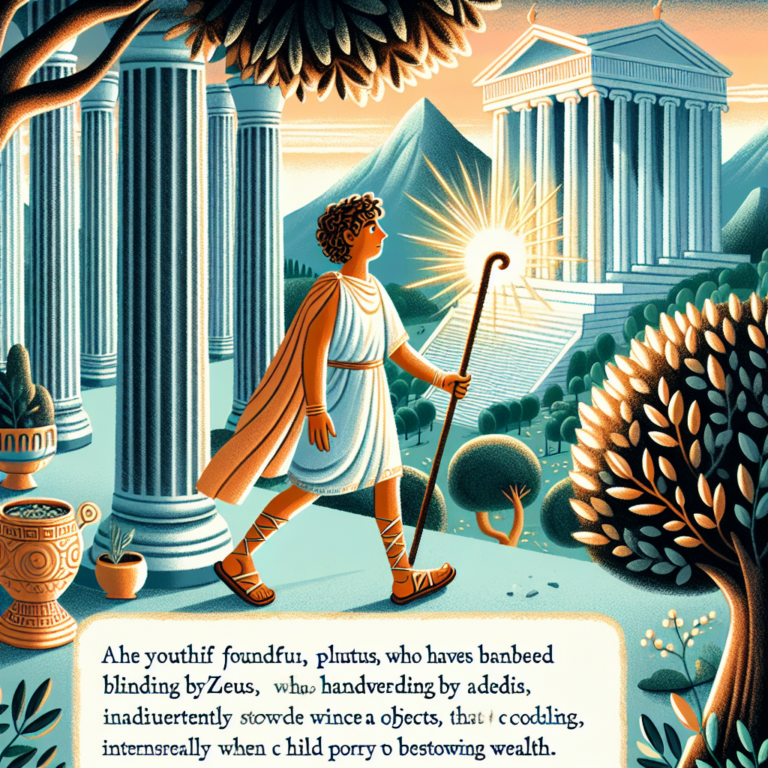
‘PLUTUS.’ is an educational moral story perfect for bedtime reading with children ages 6-12.
Deep in the bowels of the earth, where precious metals hide in veins of glittering ore and gems sparkle in the darkness, there lived a very unusual god.
His name was Plutus, and he was the god of wealth.
Plutus was the son of Demeter, the great goddess of the harvest, and a mortal man named Iasion. Because his mother was a goddess and his father was human, Plutus belonged to both the divine world and the mortal world.
And it was his job to decide who would be rich and who would be poor.
You would think this would make Plutus very popular. Everyone wants wealth, after all! Everyone dreams of finding gold, of having more than enough, of never worrying about money again.
But there was something very strange about Plutus—something that made people shake their heads and wonder if he was the right god for the job.
You see, Plutus was both blind and foolish.
He couldn’t see where he was going or who he was giving his gifts to. And even if he could see, he didn’t have the wisdom/” title=”More stories about wisdom”>wisdom to choose wisely.
So Plutus gave his gifts of wealth without any discrimination at all, frequently bestowing riches upon the most unworthy objects.
Let me tell you a story about how this happened.
* * *
One day, Plutus decided it was time to bring wealth to the mortal world.
He climbed up from his abode in the bowels of the earth, pushing through layers of rock and soil until he emerged into the bright sunlight.
When Plutus made his appearance in the world above, he was always lame—walking with a slow, halting limp, as if his legs didn’t quite work properly. This is why wealth arrives so slowly for most people. It limps along, taking its sweet time, making people wait and wait.
“Let me find someone to bless with riches today,” Plutus said to himself, squinting around with his blind eyes.
The first person he bumped into (literally—remember, he was blind!) was a greedy merchant named Croesus.
Croesus already had plenty of money. He had three houses, dozens of servants, and warehouses full of goods. But he was never satisfied. He always wanted more, more, more. And he had gotten his wealth by cheating his customers, lying about the quality of his goods, and refusing to help anyone in need.
In other words, Croesus was completely unworthy of more wealth.
But Plutus, being blind, couldn’t see any of this.
“Here!” said Plutus, handing Croesus a heavy bag of gold coins. “Enjoy your riches!”
Croesus grabbed the bag greedily and hurried away, cackling with glee.
A little girl who had been watching nearby tugged on Plutus’s robe.
“Excuse me, sir,” she said politely. “That man you just gave gold to is very mean. He doesn’t deserve it. My father is kind and works hard every day, but we barely have enough to eat. Couldn’t you give the gold to us instead?”
But Plutus couldn’t see the little girl or her poor father. He couldn’t tell who was worthy and who wasn’t.
“Sorry,” he said, shrugging. “I’ve already given away my gold for today. Perhaps another time!”
And he limped away, leaving the little girl standing there sadly.
* * *
The next person Plutus encountered was a lazy young man named Midas Jr. (not to be confused with the famous King Midas—this was just a regular fellow who happened to have the same name).
Midas Jr. had never worked a day in his life. He slept until noon, spent his afternoons gossiping with friends, and complained constantly that life was unfair.
Plutus, unable to see what kind of person Midas Jr. was, cheerfully dumped a pile of silver coins into his lap.
“There you go!” said Plutus. “Enjoy!”
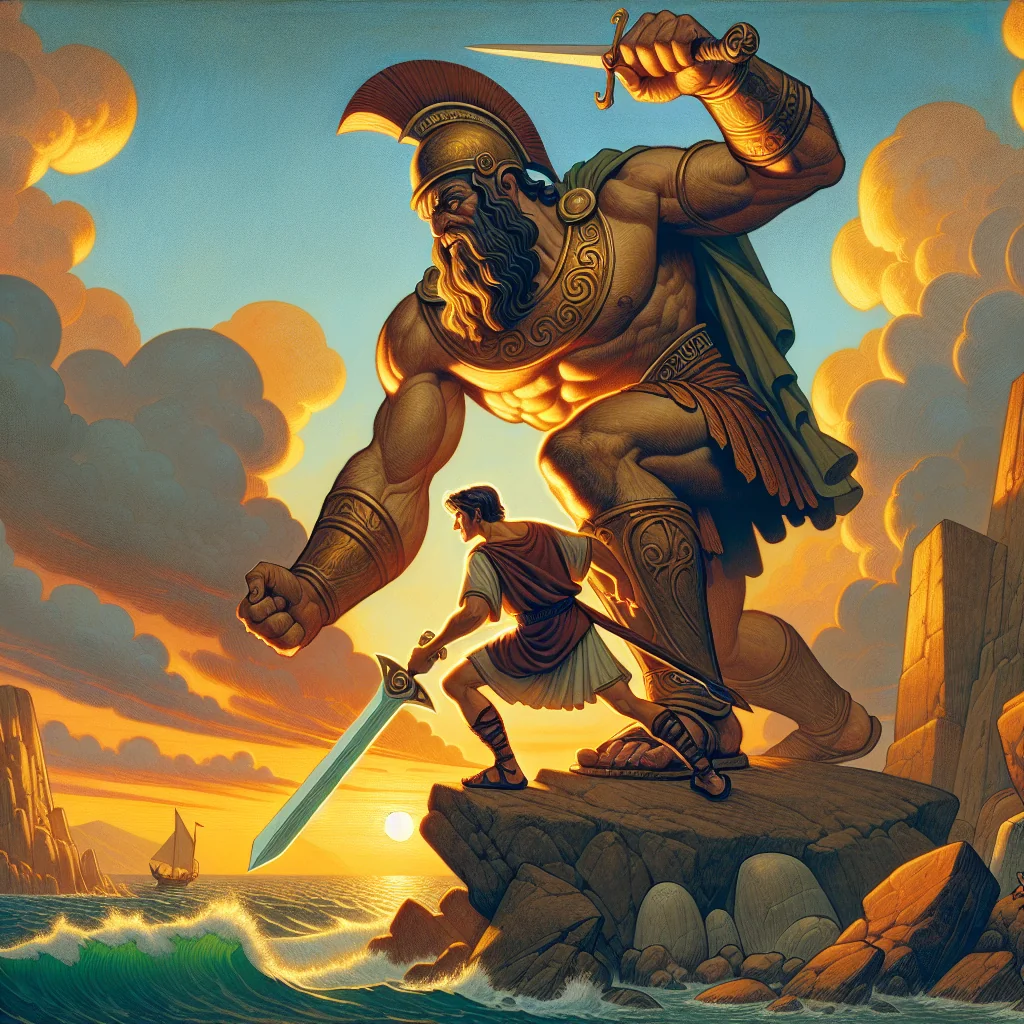

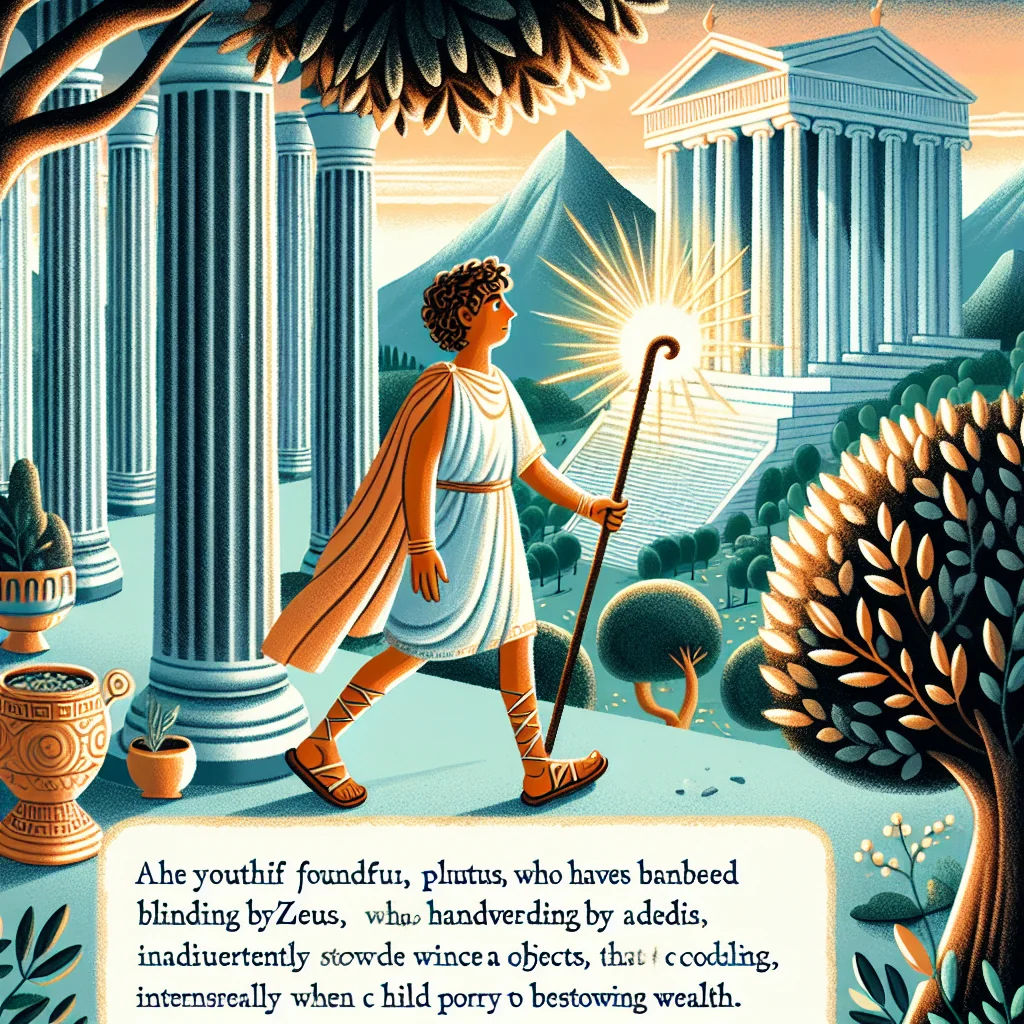
Midas Jr. whooped with joy and ran off to spend the money on parties and expensive clothes.
Meanwhile, just down the street, an old woman sat outside her tiny cottage. She had spent her whole life helping others—nursing sick neighbors, teaching children to read, sharing what little food she had with anyone who was hungry. But she herself had almost nothing.
“Plutus!” she called out. “I’ve been good my whole life. Could you spare just a little wealth for my old age?”
But Plutus had already moved on, his blind eyes unable to see the deserving old woman.
* * *
This is how Plutus wandered through the world—giving wealth randomly, without any rhyme or reason, blessing the unworthy just as often as (or more often than!) the worthy.
And when it was time for Plutus to leave and return to his home in the bowels of the earth?
Ah, that’s when something remarkable happened.
Suddenly, Plutus became winged!
Great feathered wings sprouted from his shoulders, and he could fly as swift as an eagle. This is why wealth departs so quickly—it limps in slowly, but it flies away in an instant.
WHOOSH!
One moment Croesus had his bag of gold, the next moment he’d spent it all and was searching desperately for more.
WHOOSH!
One moment Midas Jr. had his silver, the next moment it was all gone, wasted on foolish things.
Wealth came slowly but left fast, flying away on Plutus’s wings.
* * *
The ancient Greeks told this story to remind themselves of an important truth:
Wealth is arbitrary. It doesn’t always go to those who deserve it. Sometimes the wicked prosper while the good struggle. Sometimes lazy people strike it rich while hard workers barely get by.
This isn’t fair, of course. But it’s the way Plutus works—blind, foolish, limping when he arrives, flying when he departs.
That’s why the wise Greeks taught their children: “Don’t put all your hope in wealth. Don’t assume that having money means you’re good, or that lacking money means you’re bad. Plutus gives his gifts without discrimination. True worth comes from your character, not your bank account.”
And they also taught: “If Plutus does bless you with wealth, use it wisely and generously. Give to those who need it. Share what you have. Because wealth can fly away on wings at any moment—but the good you do with it lasts forever.”
* * *
Some people in later times confused Plutus with Aides (also known as Hades), the god of the underworld and the dead. This probably happened because both gods lived in the earth’s depths—Aides ruling over the spirits of the deceased, Plutus dwelling among the buried treasures.
But they were very different gods.
Aides was stern and serious, ruling his kingdom with justice.
Plutus was blind and foolish, giving away gold without any sense at all.
And perhaps that’s the final lesson: Don’t confuse wealth with death, or poverty with life. Neither riches nor poverty define who you are.
The only things that truly matter are how you treat others, what you do with what you have, and who you become along the way.
Everything else is just Plutus, stumbling around blindly, handing out gold coins to anyone who happens to be standing nearby when he limps past.
MORAL LESSONS:
– Wealth doesn’t always go to those who deserve it
– Don’t judge someone’s worth by their riches or poverty
– Character matters more than money
– Use wealth wisely and generously when you have it
– Riches come slowly but can disappear quickly
– True value lies in how you treat others, not what you own
Test Your Understanding
1. Who were the parents of Plutus, the god of wealth?
Frequently Asked Questions
What is the moral lesson of PLUTUS.?
What age is this story appropriate for?
How long does it take to read PLUTUS.?
What culture does this story come from?
Can I use this story for teaching?
Frequently Asked Questions
What is the moral story of Plutus about?
The moral story of Plutus is about the Greek god of wealth who was blind and foolish, distributing riches without fairness or wisdom. It teaches children that wealth alone does not equal happiness or virtue, and that how we earn and use money matters more than simply having it.
Who is Plutus in Greek mythology?
Plutus is the Greek god of wealth, born to Demeter, goddess of the harvest, and a mortal man named Iasion. Because of his mixed divine and human origins, he belonged to both worlds. He was famously depicted as blind, symbolising how wealth is often distributed without fairness or reason.
Is the Plutus story suitable for young children?
Yes, the Plutus moral story is written for children aged 6 to 12 and is ideal for bedtime reading. It uses simple, engaging language to explore themes of wealth, fairness, and wisdom in a way that young readers can easily understand and discuss with parents or caregivers.
📚 Recommended Books
Handpicked for readers like you
As an Amazon Associate, we earn from qualifying purchases. These recommendations are personalized based on this story's themes and your reading history.
Why was Plutus considered blind and foolish?
In the story, Plutus was blind and foolish because he could not see who truly deserved wealth. He gave riches randomly, rewarding both good and bad people alike. This blindness became a metaphor for how money does not always go to the most deserving, making wisdom and character more important than wealth.
What lesson does the Plutus story teach kids about money?
The Plutus story teaches children that money and wealth have no moral judgment on their own. Because Plutus was blind, riches could go to anyone. The real lesson is that wisdom, kindness, and good values matter far more than how much money a person has.