


This moral story for children ages 6-12 combines entertainment with important values.
In the depths of the sea lived the silver-footed, fair-haired Thetis, daughter of Nereus (though some say she was the daughter of Poseidon himself).
Thetis played an important part in the mythology of Greece, and for good reason.
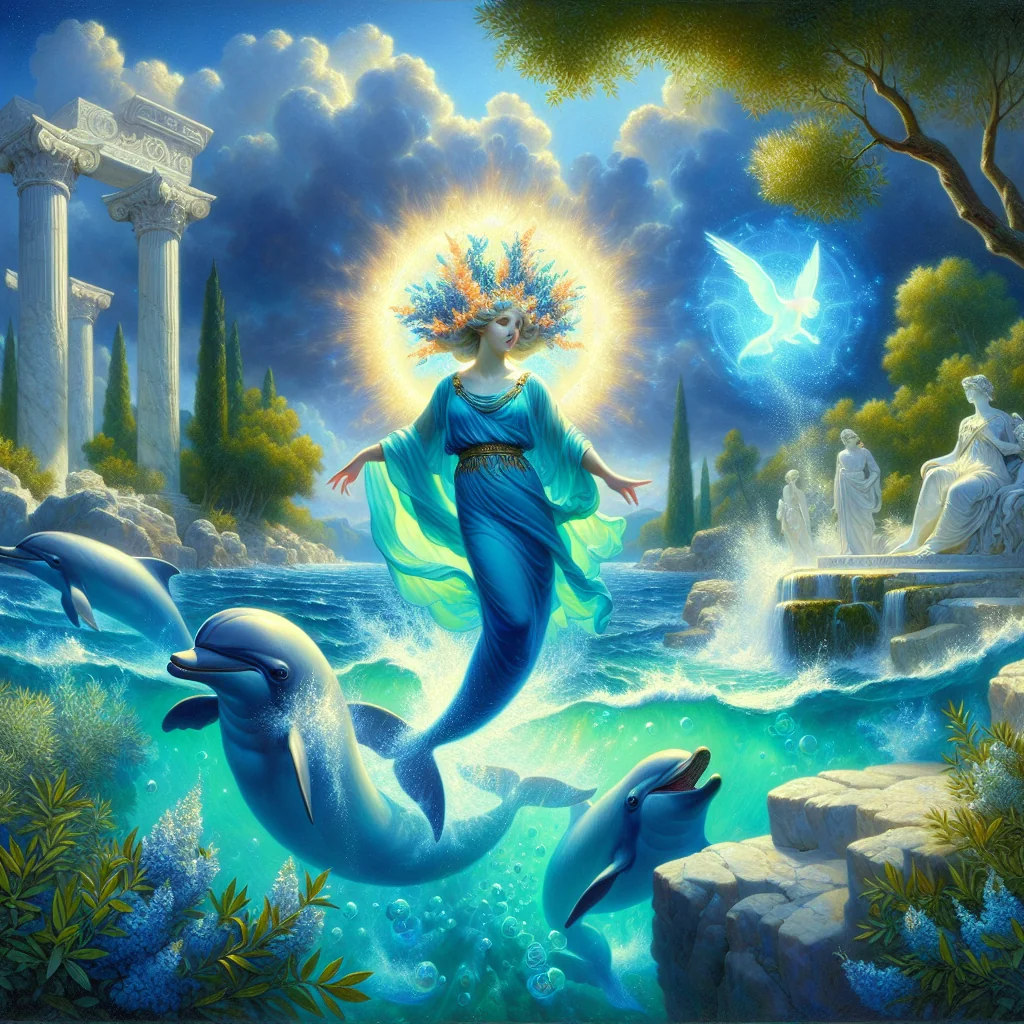
Her grace and beauty were so remarkable that when she swam through the water, dolphins would stop to admire her. When she walked along the shore, her silver feet would leave shimmering footprints in the sand. Her fair hair flowed around her like spun moonlight.
She was, quite simply, the most beautiful sea-goddess anyone had ever seen.
It wasn’t long before the most powerful gods in all of creation noticed her.
* * *
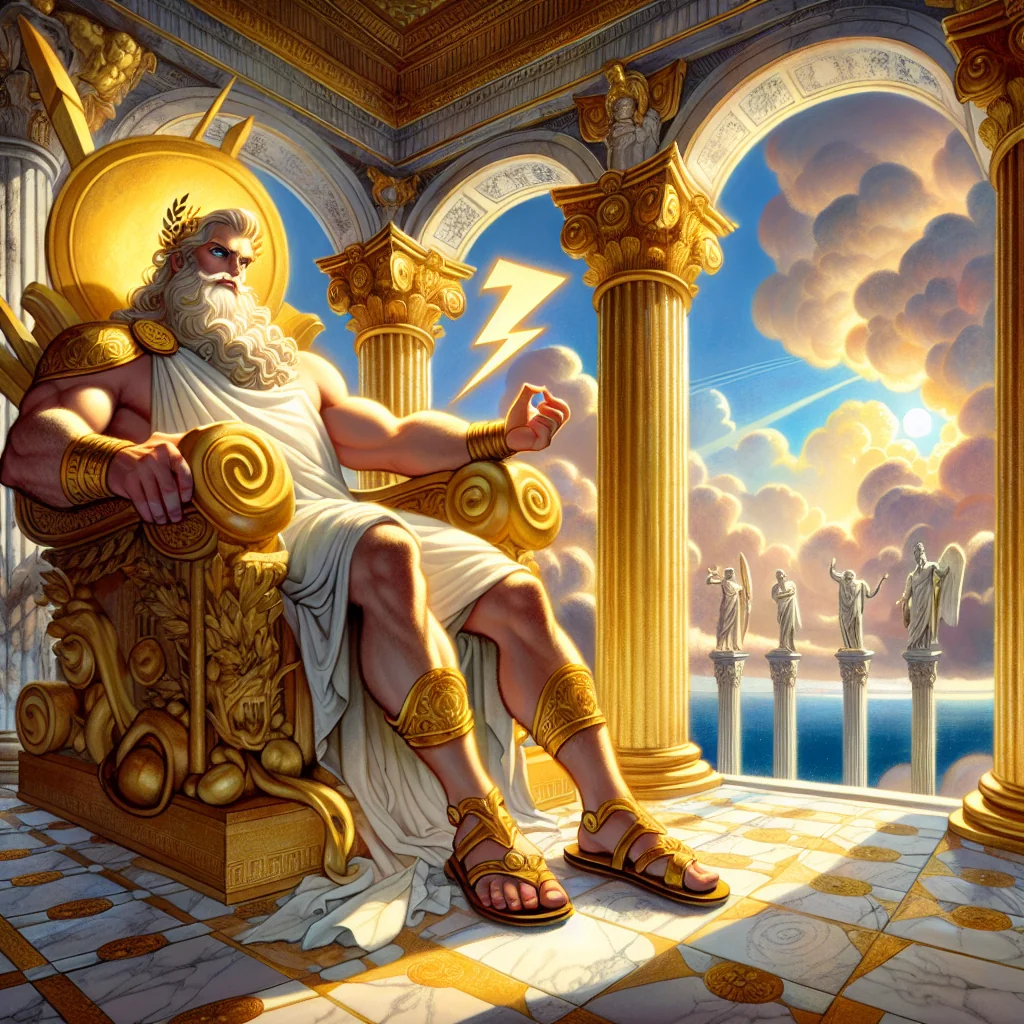
Zeus, the mighty lord of heaven and king of all the gods, looked down from Mount Olympus one day and saw Thetis dancing in the waves.
“She is extraordinary,” Zeus murmured. “I must make her my wife.”
But at the very same time, Poseidon, the powerful god of the seas, was watching Thetis swim through his ocean kingdom.
“She is perfect,” Poseidon declared. “I must make her my wife.”
Both Zeus and Poseidon began planning how to win Thetis’s hand in marriage. This could have led to a terrible conflict between the two mighty gods—maybe even a war that would shake the very foundations of the earth.
But then the Fates, who knew all things past and future, delivered a prophecy that changed everything.
“If Thetis has a son,” the Fates warned, “that son will gain supremacy over his father. He will become more powerful than the god who sires him.”
Zeus stopped his wedding plans immediately.
Poseidon called off his courtship at once.
For you see, neither god wanted to father a son who would one day overthrow him and take his power. Zeus himself had overthrown his own father, Cronus, and he knew how these family dramas usually ended.
“Thetis must marry a mortal instead,” Zeus decided. “That way, even if her son becomes powerful, he will only be powerful among mortals. He won’t threaten the gods.”
And so it was decreed that Thetis would marry Peleus, a brave hero who was the son of Æacus.
There was just one small problem.
Thetis didn’t want to marry a mortal.
* * *
When Peleus came to court Thetis, she was polite but firm.
“I’m sorry,” she said, “but I’m a goddess. I can’t marry a human. It wouldn’t work.”
But Peleus was determined. He had fallen deeply in love with her silver feet and fair hair and graceful movements.
“I won’t give up,” he said.
Thetis sighed. She could see that Peleus was serious.
“Very well,” she said. “If you insist on pursuing this, I’ll have to do something about it.”
You see, like Proteus (the Old Man of the Sea), Thetis possessed the power of transforming herself into a variety of different shapes. She had inherited this gift from her father, Nereus, who was also a shape-shifter.
And Thetis decided to use this power to elude Peleus.
* * *
The next time Peleus tried to approach her, Thetis transformed herself into a bird and tried to fly away.
But Peleus was quick. He grabbed her by the wing and held on tight.
Thetis transformed into a tree, her branches waving in the wind.
Peleus wrapped his arms around the trunk and held on.
Thetis became fire, her flames hot and burning.
Peleus gritted his teeth against the heat and didn’t let go.
She became water, flowing and slipping through his fingers.
He cupped his hands and caught her.
She became a lioness, roaring and snapping.
He held her by the mane.
She became a serpent, cold and slithering.
He gripped her coils.
On and on it went—Thetis changing into every shape she could imagine, and Peleus holding on with stubborn persistence, knowing that if he could just hold her long enough, she would eventually have to give up.
Finally, exhausted from all the transformations, Thetis assumed her true form once more.
She stood before Peleus, breathing hard, her silver feet planted firmly on the ground, her fair hair wild around her face.
“You win,” she said quietly. “Your persistence has succeeded. I will marry you.”
And despite herself, she smiled just a little. Because there was something admirable about someone who refused to give up, who held on no matter what happened, who believed in love that strongly.
* * *
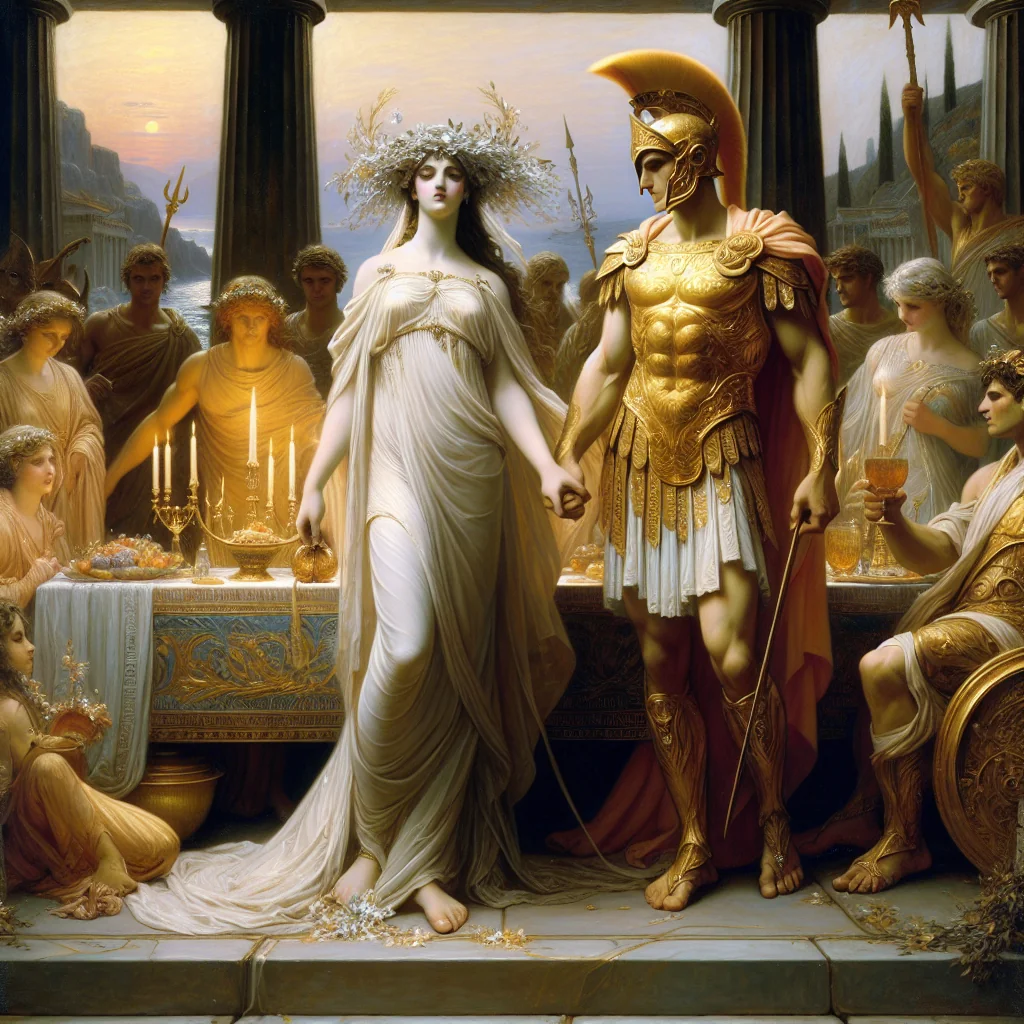
The wedding of Thetis and Peleus was celebrated with the utmost pomp and magnificence.
All the gods and goddesses came down from Mount Olympus to attend. There was feasting and music and dancing. The Muses sang. Apollo played his lyre. The nymphs scattered flowers.
It was the most glorious wedding anyone had ever seen.
Well, almost anyone.
There was one goddess who didn’t receive an invitation: Eris, the goddess of discord.
And as you may know, Eris resented her exclusion from the marriage festivities very much indeed. So much so that she decided to crash the party anyway, bringing with her a golden apple inscribed with the words “For the Fairest.”
That golden apple would lead to a quarrel among the goddesses, which would lead to the Judgment of Paris, which would lead to the Trojan War.
But that’s a story for another day.
* * *
Thetis and Peleus had a son, just as the Fates had prophesied.
His name was Achilles, and he did indeed become supremely powerful—the greatest warrior the mortal world had ever known.
And Thetis, who had retained great influence over Zeus even after her marriage, used that influence to help her son during the Trojan War. She pleaded with the mighty lord of heaven on Achilles’s behalf, and Zeus listened to her requests because he remembered her grace and beauty, and because he respected the sacrifice she had made in marrying a mortal instead of a god.
* * *
Many years later, Thetis was swimming through her beloved ocean when she heard desperate crying.
A young woman named Halcyone had just thrown herself into the sea in despair. Her husband, King Ceyx, had died in a terrible shipwreck, and Halcyone was so heartbroken that she couldn’t bear to live without him.
Thetis’s heart filled with compassion. She remembered how Peleus had pursued her with such devoted love, and how that love had changed her life.
“Love like this should not end in death,” Thetis decided.
Using her divine power, Thetis transformed both Halcyone and her dead husband Ceyx into beautiful birds called kingfishers—halcyones in Greek.
As kingfishers, the couple was reunited. They flew together in pairs, always side by side, with the same tender affection they had shown each other in life.
The ancient people believed that these kingfishers built their nests on the surface of the sea, floating on the waves before and after the shortest day of winter.
And during those special days, Thetis would keep the waters smooth and tranquil, creating perfect conditions for the kingfishers to raise their young in peace.
This is why we call a peaceful, happy time “halcyon days”—because of Thetis’s kindness to the kingfishers, and her gift of calm waters and untroubled felicity.
* * *
So remember: the silver-footed, fair-haired Thetis, who was too beautiful for the gods to marry, who transformed herself to escape a mortal’s love but was won by his persistence, who mothered the greatest warrior of all time, and who gave us the very phrase we use when we want to describe the most peaceful, perfect days.
Her story reminds us that sometimes the things we resist the most can lead to the greatest blessings—and that compassion and kindness echo through the ages in ways we might never expect.
MORAL LESSONS:
– Persistence and determination can overcome great obstacles
– Sometimes our destiny leads us where we didn’t expect to go
– Compassion for others’ suffering is a divine virtue
– Love that endures deserves to be honored
– The choices powerful beings make can have far-reaching consequences
Test Your Understanding
1. Why did both Zeus and Poseidon stop pursuing Thetis as a wife?
Frequently Asked Questions
What is the moral lesson of THETIS.?
What age is this story appropriate for?
How long does it take to read THETIS.?
What culture does this story come from?
Can I use this story for teaching?
Frequently Asked Questions
Who is Thetis in Greek mythology?
Thetis is a sea goddess in Greek mythology, described as silver-footed and fair-haired. She is most commonly known as the daughter of Nereus, though some myths say she was the daughter of Poseidon. She was considered the most beautiful sea goddess and played an important role in many Greek myths.
What age group is this Thetis moral story for children suitable for?
This Thetis story is designed for children ages 6 to 12. It combines entertaining storytelling drawn from Greek mythology with important moral values, making it a great read-aloud for parents or an independent read for older kids in that age range.
What moral lessons does the story of Thetis teach kids?
The Thetis moral story for children explores values such as courage, wisdom, and the consequences of pride and power. Through the adventures of this remarkable sea goddess, young readers learn meaningful life lessons presented in a fun and accessible way.
📚 Recommended Books
Handpicked for readers like you
As an Amazon Associate, we earn from qualifying purchases. These recommendations are personalized based on this story's themes and your reading history.
Why did Zeus and Poseidon both want to marry Thetis?
Both Zeus and Poseidon were captivated by Thetis because of her extraordinary grace and beauty. Zeus spotted her dancing in the waves from Mount Olympus, while Poseidon admired her swimming through his ocean kingdom. Her remarkable appearance drew the attention of the two most powerful gods in creation.
Is Thetis the mother of Achilles?
Yes, in Greek mythology Thetis is famously known as the mother of the great hero Achilles. Her story involves prophecies and sacrifices linked to her son’s fate, which is one reason she plays such a significant role in Greek myths, including events connected to the Trojan War.
