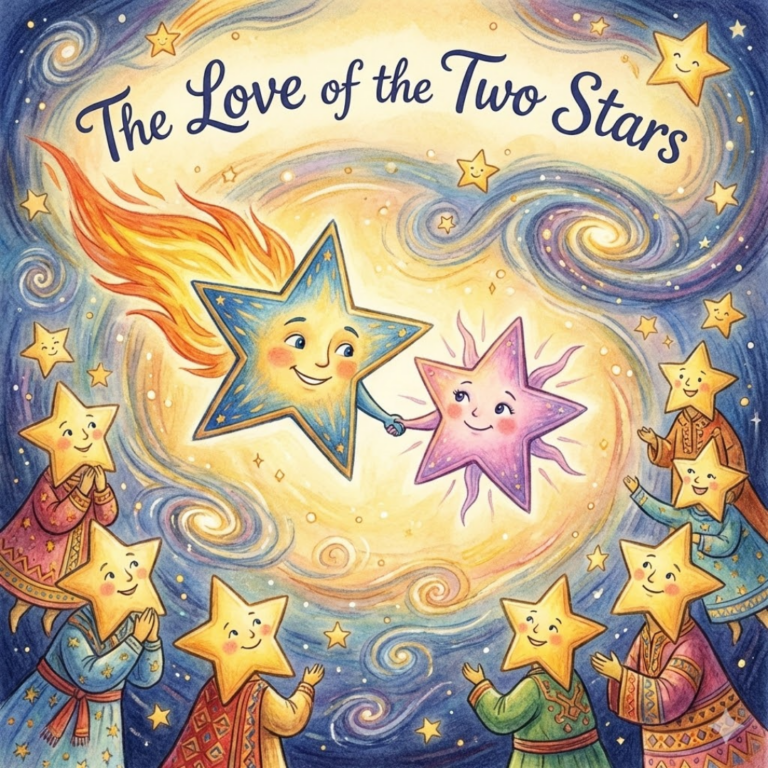
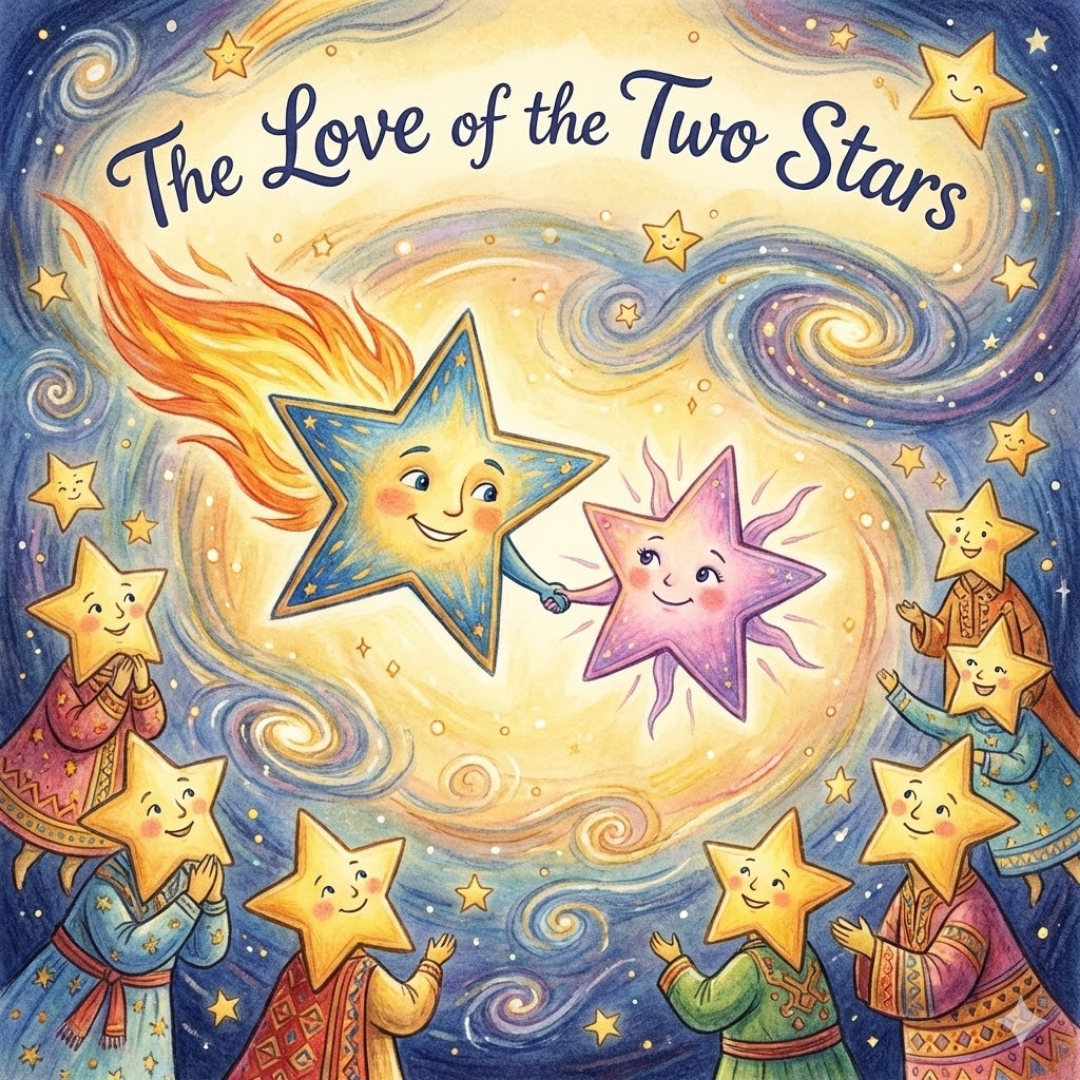
This bedtime story for kids, ‘The love/” title=”More stories about love”>Love of the Two Stars’, teaches children ages 6-12 about important moral values.
The Weaver Princess and the Cowherd Star
Part One: The Heavenly Realm
High above the clouds, beyond the silver moon and past the twinkling stars, there existed a kingdom unlike any on Earth. This was the realm of the Tentei, the great Emperor of the Heavens, who ruled over all the celestial bodies in the sky.
The Heavenly Emperor lived in a palace made of clouds and starlight, where the floors were paved with moonbeams and the walls shimmered with the colors of the aurora. Countless gods and spirits served him, each with their own important duties in keeping the universe running smoothly.
But of all the beings in his heavenly court, none was more precious to the Emperor than his daughter, the Princess Orihime.
Orihime was as beautiful as the brightest star, with hair like spun silk and eyes that sparkled with the light of distant galaxies. But what made her truly special was not her beauty, it was her extraordinary skill at weaving.
Every day, Orihime would sit at her loom by the banks of the Amanogawa, the great Heavenly River that we on Earth call the Milky Way. With her magical shuttle, she would weave the most incredible fabrics the universe had ever seen. She wove the colors of the sunset and the silver of moonlight. She wove the patterns of clouds and the sparkle of dew on morning flowers. She even wove the very robes that her father wore, fabrics so beautiful that they were said to hold the essence of heaven itself.
“My daughter, you are the finest weaver in all the heavens,” the Emperor would say proudly. “Your fabrics bring beauty to the entire cosmos.”
Orihime would smile and continue her work, but in her heart, there was a quiet sadness. She wove from dawn until dusk, day after day, never taking time for anything else. She had no friends her own age, no time for play, and she had never known what it felt like to love anyone outside her family.
“Is this all there is to my life?” she would sometimes whisper to the shimmering river. “Weaving beautiful things for eternity, but never truly living?”
Part Two: The Cowherd’s Lonely Life
On the other side of the Heavenly River lived a young man named Hikoboshi. He was not a prince or a god of great power. He was simply a cowherd, tasked with caring for the great celestial cattle that wandered across the heavens.
Hikoboshi was hardworking and kind. Every morning, he would lead his cows across the star-studded pastures, making sure each one was healthy and happy. Every evening, he would bring them home and brush their coats until they shone like the stars themselves.
His cattle loved him, and he loved them. But cows, as wonderful as they can be, are not the best conversation partners.
“I wonder what lies beyond the river,” Hikoboshi would say to his favorite cow, a gentle creature named Hoshiko. The cow would simply moo in response and continue eating celestial grass.
Hikoboshi had heard rumors of a beautiful princess who lived on the far bank of the Amanogawa. Some spirits had told him about her magical weaving, about how she created fabrics that captured the very essence of beauty. But the river was wide and deep, and he had never found a way to cross.
“Perhaps someday,” he would sigh, looking at the distant shore where he could sometimes see a glimmer of light that might have been a weaving loom.
Part Three: The Emperor’s Gift
The Heavenly Emperor noticed that his daughter was unhappy. Though she never complained, he could see the loneliness in her eyes as she worked at her loom day after day.
“What troubles you, my precious daughter?” he asked one evening, as the stars began to wake from their daily sleep.
Orihime hesitated. She did not want to seem ungrateful for all the blessings she had received. But she also knew that her father, for all his power, loved her and wanted her to be happy.
“Father,” she said softly, “I love my weaving, and I am proud to create beautiful things for the heavens. But sometimes I wonder if there is more to life than work. I have never had a friend my own age. I have never known what it feels like to share my heart with someone who truly understands me.”
The Emperor listened carefully. He was wise as well as powerful, and he understood that even the most wonderful talent is not enough to make a complete life.
“I have noticed a young man on the far side of the river,” the Emperor said. “He is a cowherd named Hikoboshi. He works as hard as you do, caring for the celestial cattle with dedication and love. Perhaps you two should meet.”
Orihime’s heart leaped with hope. “Really, Father? You would allow me to meet him?”
“More than that,” the Emperor said with a gentle smile. “I shall build a bridge across the Amanogawa so that you may spend time together. If you find that you enjoy each other’s company, perhaps your lives will both be richer for the friendship.”
Part Four: Love at First Sight
The Emperor was as good as his word. The next morning, a beautiful bridge of clouds and starlight appeared across the Heavenly River, connecting the two shores for the very first time.
Orihime practically ran across the bridge, her heart pounding with excitement and nervousness. What if this cowherd didn’t like her? What if they had nothing to talk about? What if she had forgotten how to have a conversation about anything other than weaving?
Hikoboshi saw her coming and felt his breath catch in his throat. She was more beautiful than any description could capture, moving across the bridge like a dream made real. He had never seen anyone so graceful, so radiant.
They met in the middle of the bridge, both suddenly shy.
“I am Orihime,” she said, her voice barely above a whisper.
“I am Hikoboshi,” he replied. “I… I have heard of your weaving. They say you create the most beautiful fabrics in all the heavens.”
“And I have heard that you are kind to your cattle,” Orihime said. “That you treat them with love and care.”
Hikoboshi laughed, a warm sound that made Orihime smile. “I didn’t know anyone noticed. It’s not a very impressive job, being a cowherd.”
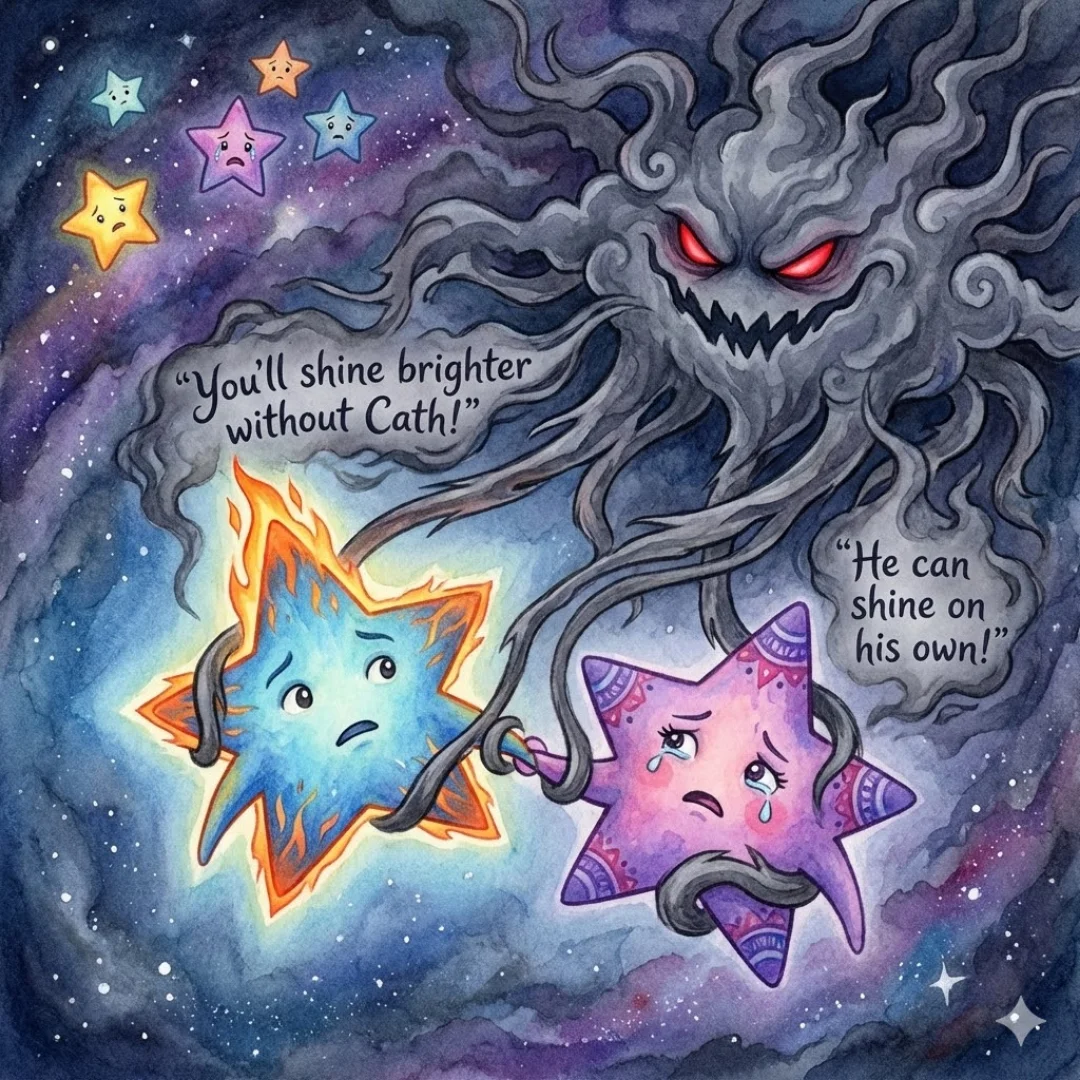
“But you do it with your whole heart,” Orihime said. “That makes it wonderful.”
They walked together along the riverbank, talking about everything and nothing. Orihime discovered that Hikoboshi had a wonderful sense of humor and a kind, generous spirit. Hikoboshi discovered that Orihime was not just beautiful but also intelligent, curious, and surprisingly down-to-earth for a princess.
By the time the sun set on the heavenly realm, they both knew that something magical had happened. They had fallen deeply, completely, in love.
Part Five: The Neglected Duties
The Emperor was pleased to see his daughter so happy. He gave his blessing for Orihime and Hikoboshi to marry, and their wedding was the most joyful celebration the heavens had ever seen. The stars danced, the moon sang, and even the grumpiest of the celestial spirits shed tears of happiness.
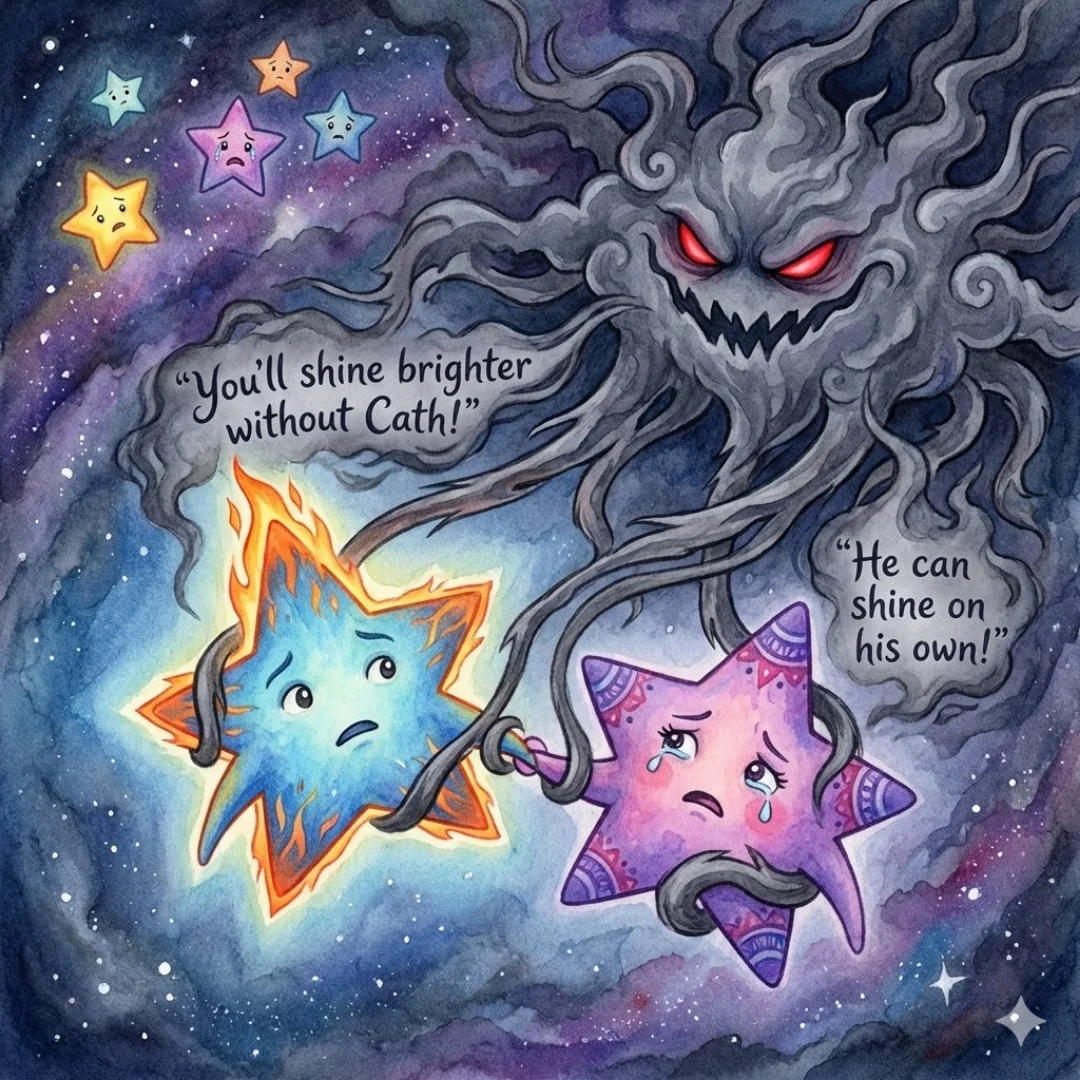
For a time, everything was perfect. Orihime and Hikoboshi were so happy together that they seemed to glow with their own light. They spent every moment they could in each other’s company, talking and laughing and simply enjoying being together.
But slowly, something began to go wrong.
Orihime was so busy spending time with Hikoboshi that she forgot to sit at her loom. Days passed, then weeks, then months, without a single thread being woven. The beautiful fabrics that had adorned the heavens began to grow old and faded. The Emperor’s robes became threadbare. The colors of the sunset grew dull because there was no one to weave new patterns into the sky.
Hikoboshi, too, neglected his duties. His cattle wandered across the heavens without guidance, munching on star-flowers they shouldn’t eat and wandering into realms where they didn’t belong. Some of them grew thin because they couldn’t find good pastures. Others got lost among the constellations and had to be rescued by annoyed celestial spirits.
The other gods and spirits began to complain.
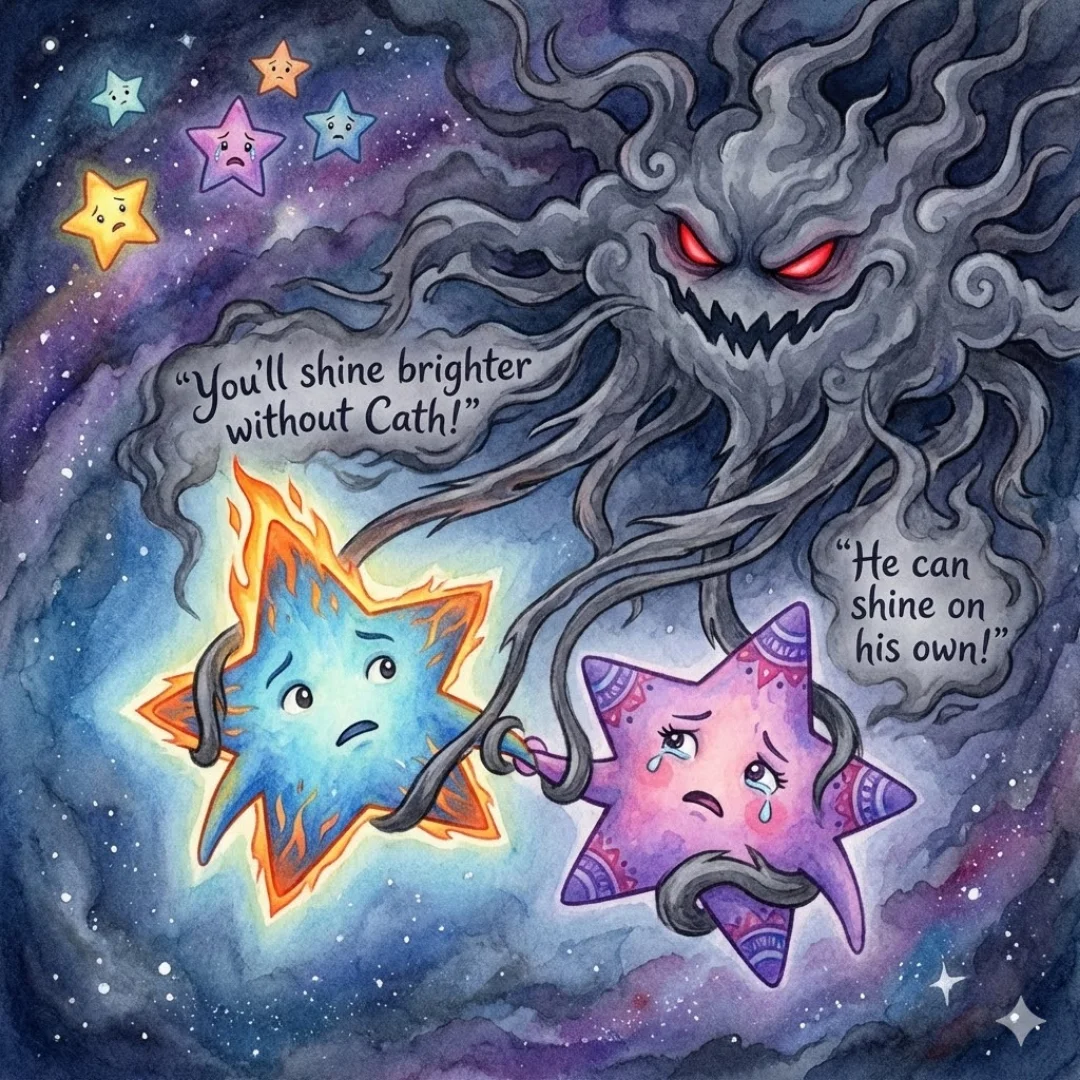
“The heavens are falling into disrepair!” they said. “Orihime has abandoned her weaving, and Hikoboshi has abandoned his cattle. Something must be done!”
Part Six: The Emperor’s Difficult Decision
The Heavenly Emperor summoned his daughter and son-in-law to his throne room. His face was sad but stern.
“I have heard the complaints of the heavenly court,” he said. “I have seen the fading colors of the sky and the wandering, unhappy cattle. You have both forgotten your responsibilities.”
Orihime and Hikoboshi looked at each other with shame. They had been so wrapped up in their love that they hadn’t noticed how their duties had suffered.
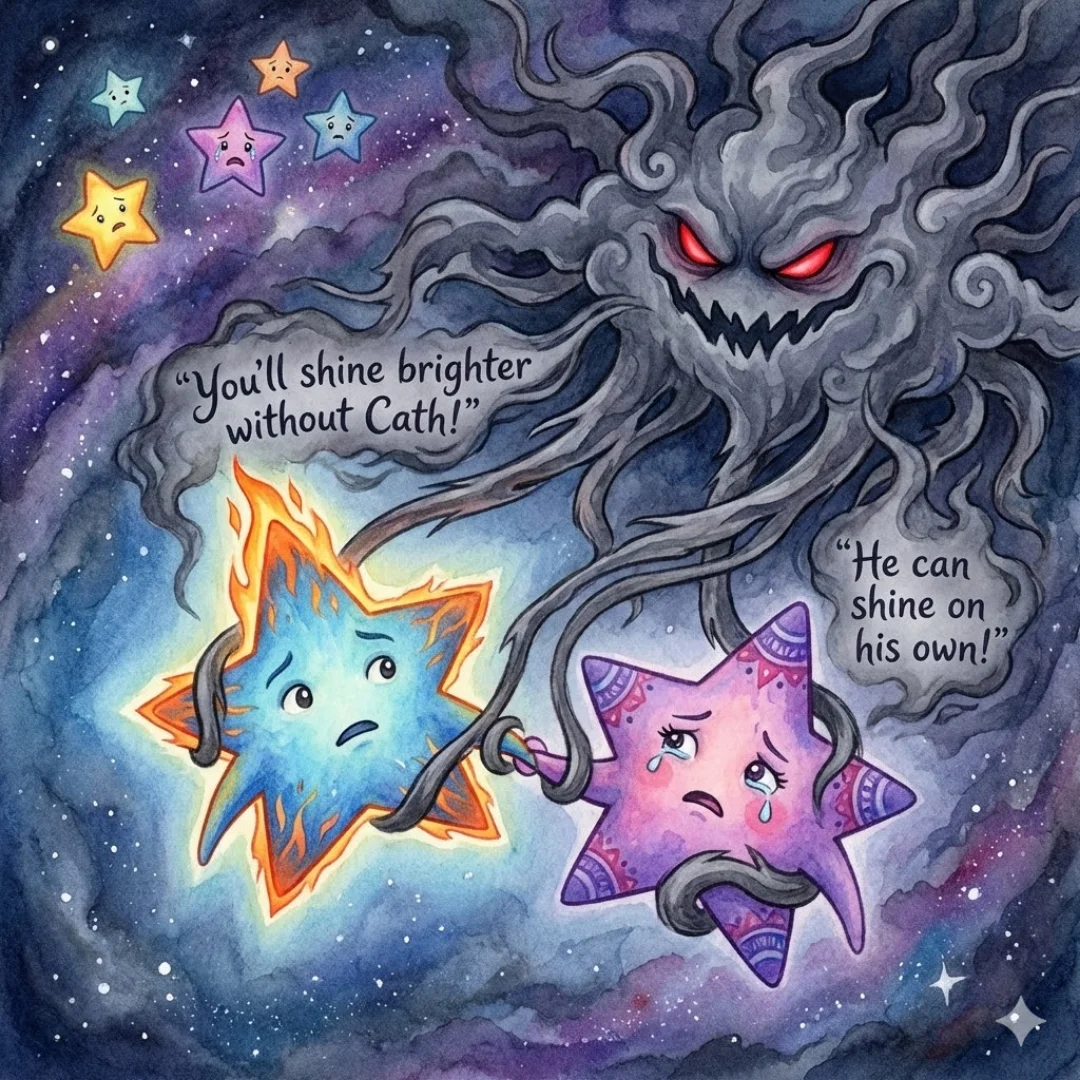
“Father, I am sorry,” Orihime said, tears forming in her eyes. “I never meant to neglect my weaving. It’s just that… being with Hikoboshi makes me so happy. I forgot about everything else.”
“I know, my daughter,” the Emperor said gently. “Love is a powerful thing. But power without balance leads to destruction. You have both learned an important lesson, I hope. Now you must accept the consequences.”
“What consequences?” Hikoboshi asked, his voice trembling.
The Emperor closed his eyes, as if the words pained him to speak. “I am destroying the bridge across the Amanogawa. From now on, you will live on opposite sides of the river, unable to meet.”
“No!” Orihime cried. “Father, please! I will return to my weaving, I promise! I will work harder than ever before!”
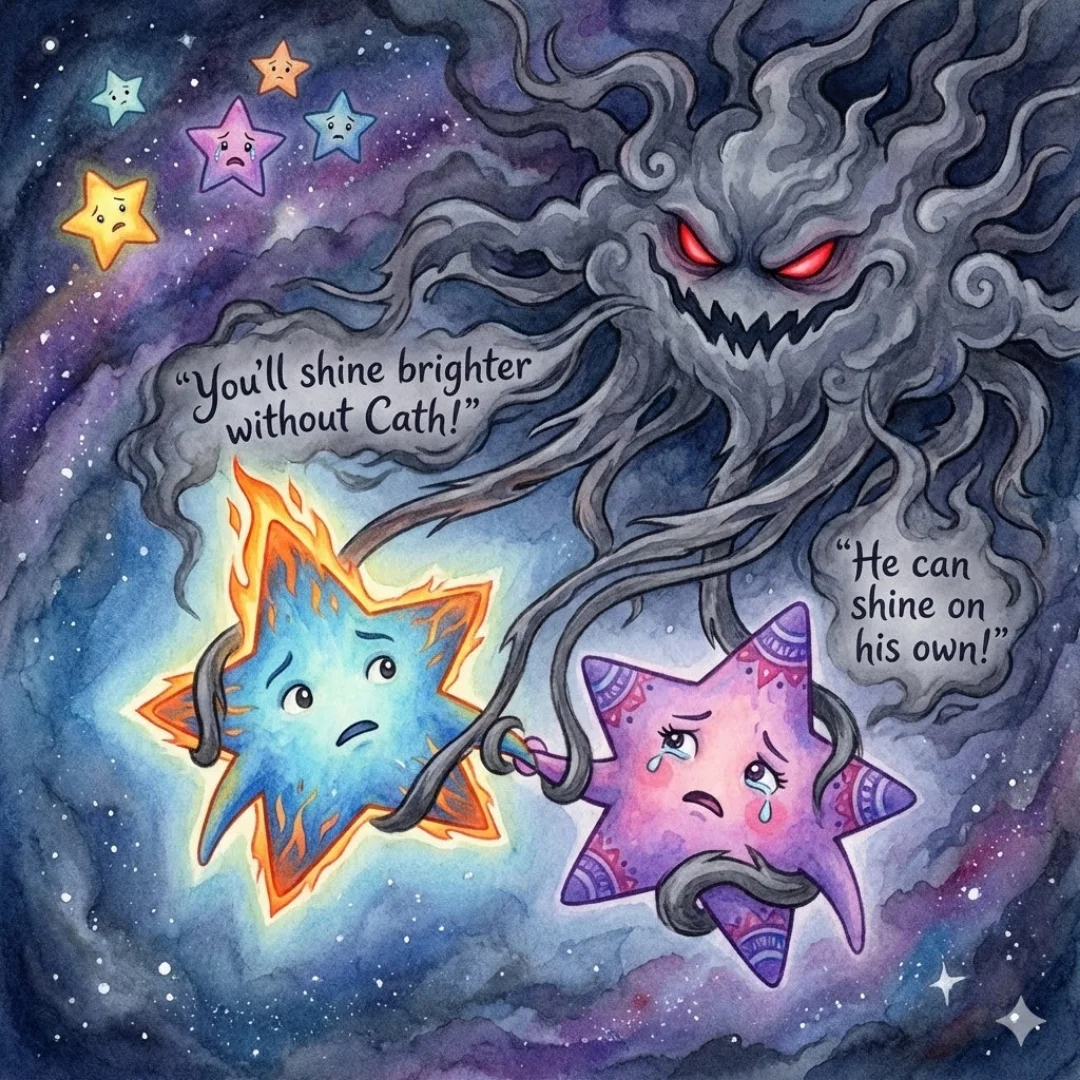
“And I will tend my cattle better than I ever have,” Hikoboshi added. “Please, don’t separate us!”
The Emperor held up his hand. “I am not without mercy. If you both return to your duties and fulfill your responsibilities faithfully, I will allow you to meet one time each year, on the seventh night of the seventh month. The magpies of the heavens will build a bridge with their wings so that you may be together.”
It was a harsh punishment, but it could have been worse. Orihime and Hikoboshi clung to each other one last time before the bridge dissolved beneath their feet, separating them across the vast expanse of the Heavenly River.
Part Seven: The Long Year
The first year of separation was the hardest. Orihime wept as she wove, her tears becoming the morning dew that falls on Earth. But she kept her promise, working at her loom every day, creating fabrics more beautiful than any she had made before. Her grief and love poured into her work, and the colors of the sunset became more vibrant than ever.
Hikoboshi threw himself into caring for his cattle. He made sure each one was healthy and happy, guiding them to the best pastures and keeping them safe from harm. His loneliness made him even more gentle with the creatures in his care, and they thrived under his attention.
But every night, both of them would stand by the river and gaze across at the distant shore, hoping to catch a glimpse of the one they loved.
“The seventh night of the seventh month,” they would whisper to themselves. “I just have to wait until then.”
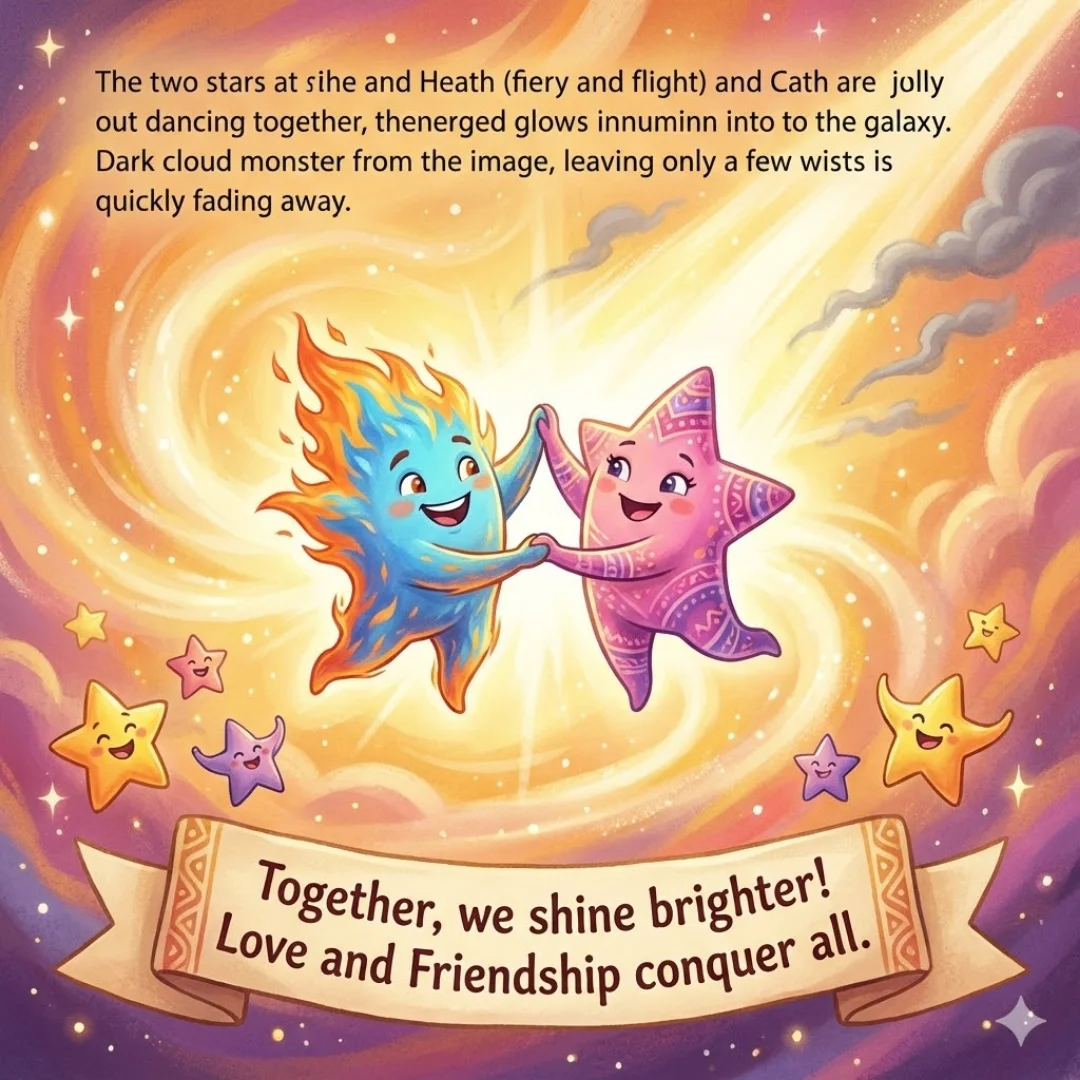
Part Eight: The Night of Tanabata
Finally, the seventh night of the seventh month arrived. Orihime put down her shuttle for the first time in a year and walked to the riverbank. Her heart pounded with anticipation and fear. What if her father had changed his mind? What if the bridge didn’t appear?
But as darkness fell and the stars came out, she heard a sound like the rushing of countless wings. Looking up, she saw thousands upon thousands of magpies flying toward the river, their black and white feathers gleaming in the starlight.
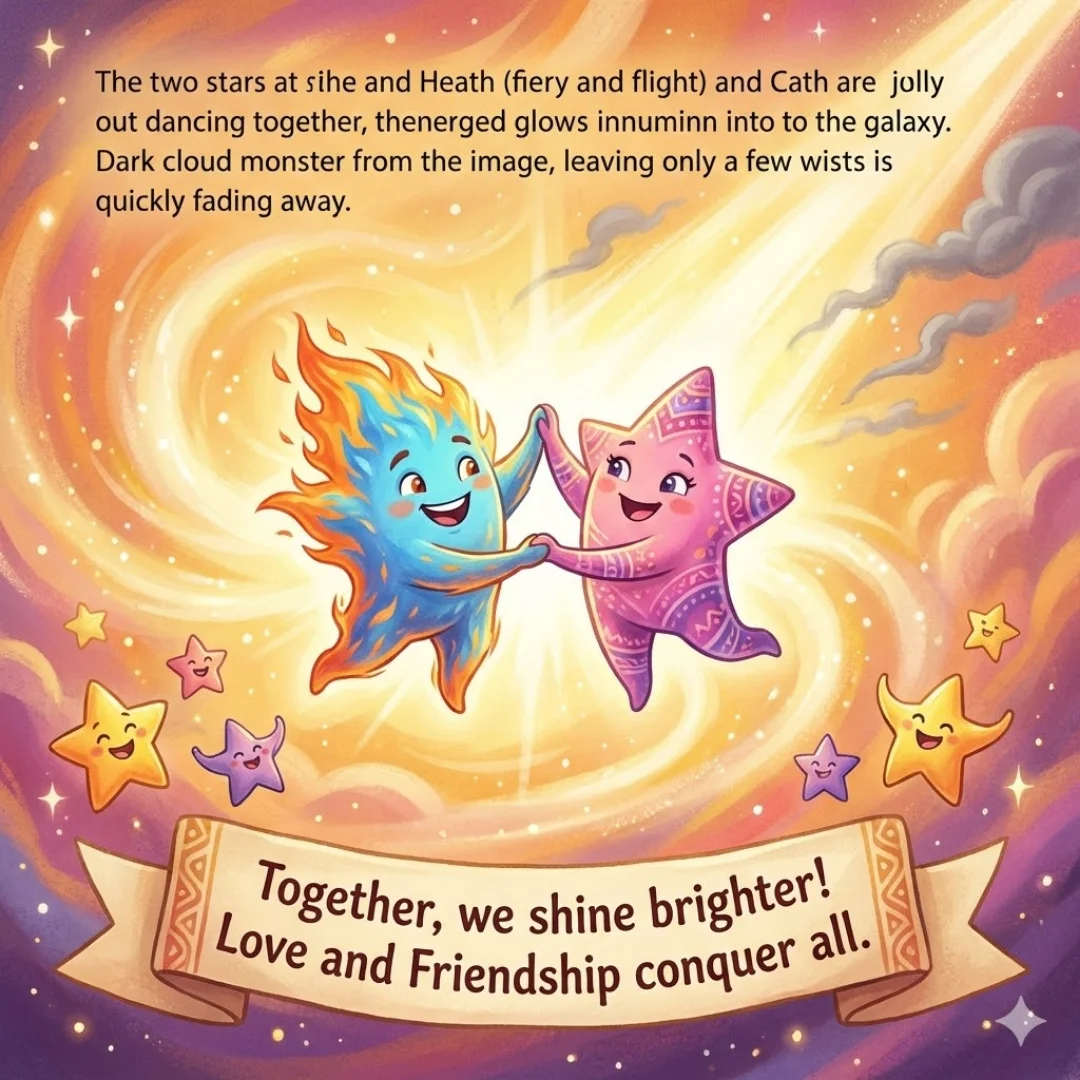
The magpies arranged themselves across the Amanogawa, linking wing to wing, creating a living bridge that stretched from shore to shore. And there, running toward her across this miraculous pathway, was Hikoboshi.
They met in the middle of the bridge and embraced, tears streaming down their faces.
“I missed you so much,” Orihime whispered.
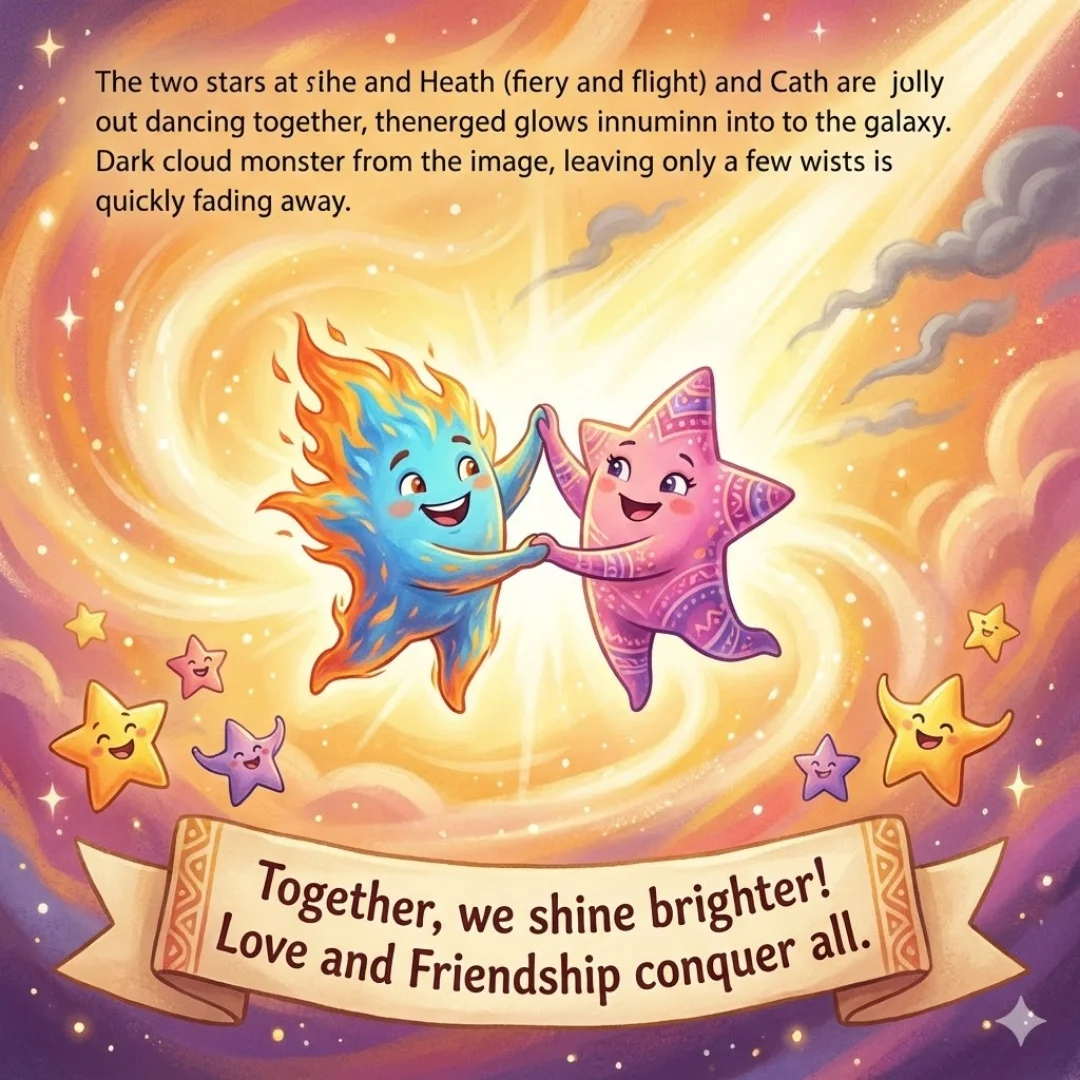
“Every day felt like an eternity without you,” Hikoboshi replied. “But knowing this day would come kept me going.”
They had only one night together, and they made the most of every moment. They talked about everything that had happened during their year apart. They laughed and cried and held each other close. They watched the stars together and made wishes for the future.
“We were foolish before,” Orihime admitted. “We loved each other so much that we forgot about everything else. But I’ve learned that love doesn’t mean ignoring the rest of the world. It means becoming a better person so you have more to share with the one you love.”
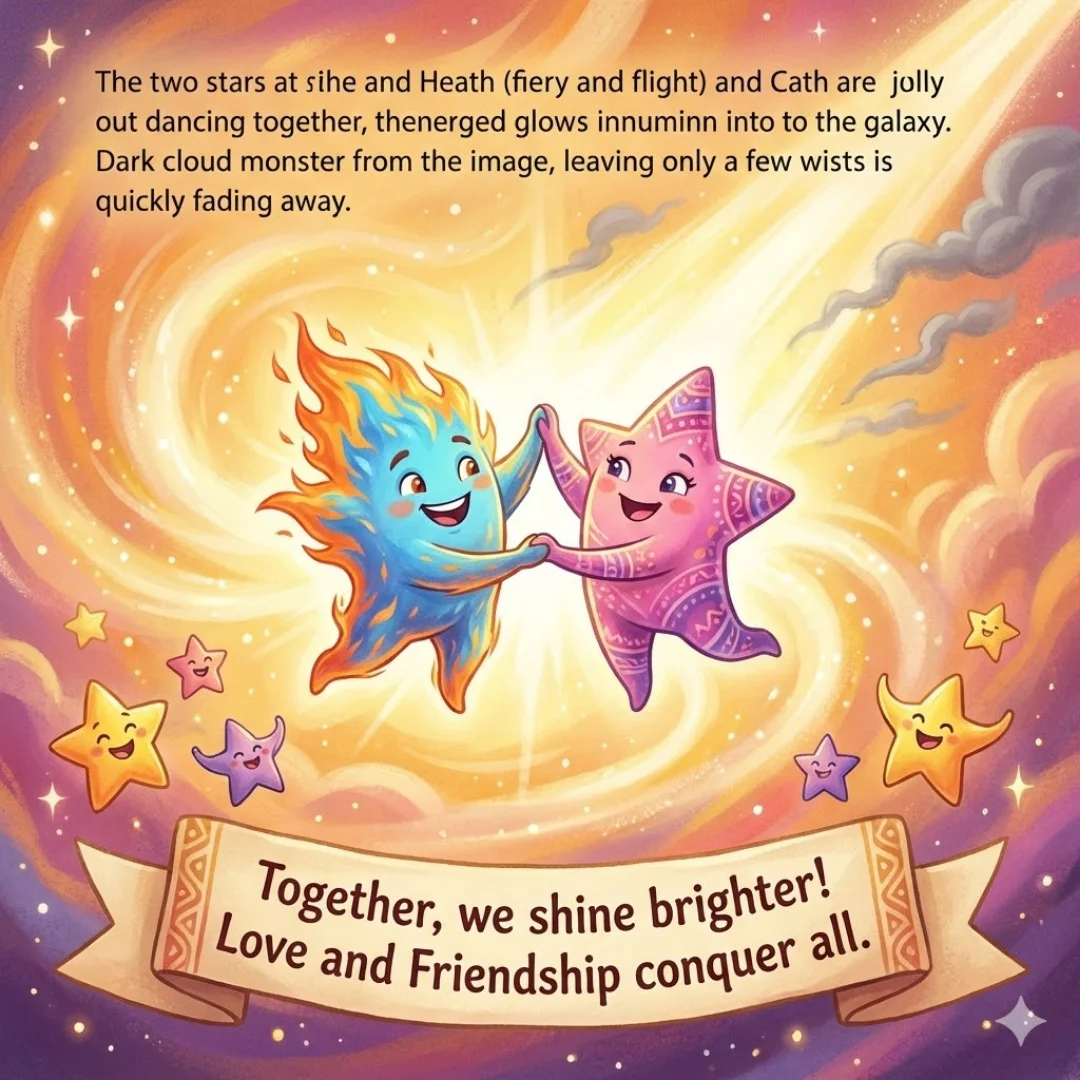
“I’ve learned the same thing,” Hikoboshi said. “My cattle need me, and your weaving makes the heavens beautiful. Our duties matter. But so does our love. Now we understand that we need both.”
As dawn approached and the magpies began to fly away, Orihime and Hikoboshi said their goodbyes.
“I will see you next year,” Hikoboshi said. “I will count every day until then.”
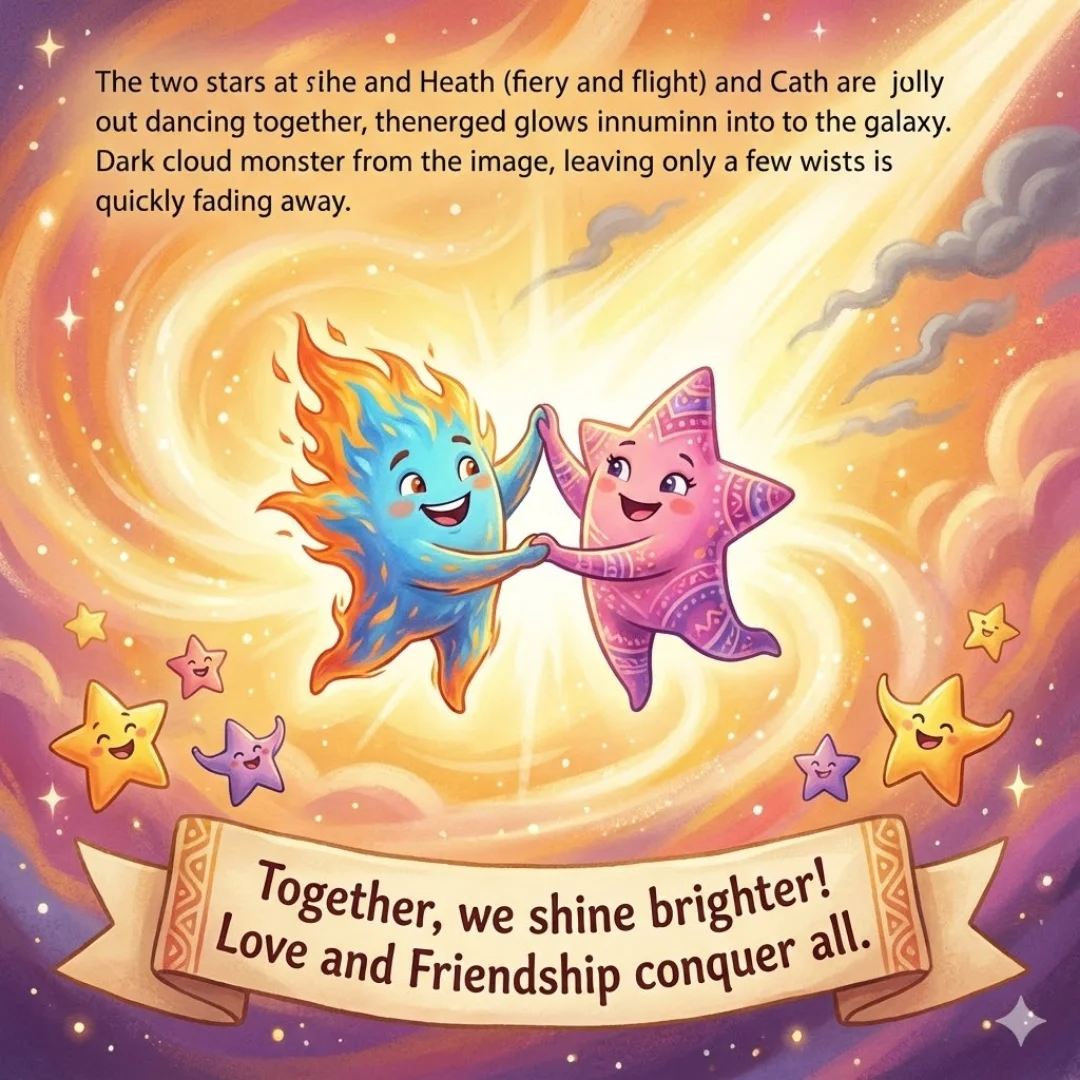
“And I will weave a special fabric for you,” Orihime promised. “Something that captures all the love I feel, so you can wrap yourself in it during the long year apart.”
Part Nine: The Festival Below
The story of Orihime and Hikoboshi spread from the heavens down to Earth, where people were touched by the tale of the star-crossed lovers. In Japan, people began to celebrate their meeting each year on July 7th, calling it Tanabata, the Star Festival.
On this night, children and adults alike write their wishes on colorful strips of paper called tanzaku. They hang these wishes on bamboo branches and hope that the stars will grant them. Families eat special noodles called somen, whose long strands remind them of the Milky Way and the threads of Orihime’s loom.
People look up at the sky on Tanabata night, trying to spot Vega and Altair, the stars that represent Orihime and Hikoboshi. When the sky is clear, they say the lovers are having a happy reunion. But if it rains, they say that the rain is Orihime’s tears, falling because the magpies cannot fly in the rain and the bridge cannot be built.
Part Ten: The Lesson of the Stars
And so, every year, Orihime and Hikoboshi meet on the bridge of magpies, cherishing every moment of their brief time together. Their love has not faded over the centuries; if anything, it has grown deeper because they understand how precious it is.
They never again neglected their duties. Orihime became the greatest weaver the heavens have ever known, and Hikoboshi’s cattle are the healthiest and happiest in all the celestial realms. But they also never forgot that their work, however important, is not the whole of their lives.
The Heavenly Emperor watches his daughter and son-in-law with pride and a little sadness. He knows the separation is hard for them, but he also sees how it has helped them grow. They have learned that love and responsibility can coexist, that passion must be balanced with duty, and that the things we work hardest for are often the things we treasure most.
“Perhaps,” the Emperor sometimes thinks, “I will shorten their time apart someday. When they have truly mastered the balance between love and duty, I will let them be together always.”
Until that day comes, Orihime and Hikoboshi continue their dance across the heavens, she at her loom and he with his cattle, both working hard and both counting the days until they can meet again.
And every July 7th, when children hang their wishes on bamboo branches and look up at the stars, they are reminded that love is precious, that balance is important, and that some things are worth waiting for.
Epilogue: A Message for Today
If you look up at the summer sky on a clear night, you can see Orihime and Hikoboshi watching over us. Vega, the bright blue star in the constellation Lyra, is Orihime. Altair, shining in the constellation Aquila, is Hikoboshi. And the great band of the Milky Way stretches between them, the Heavenly River that keeps them apart for all but one precious night each year.
Some people say that if you make a wish on Tanabata, the star-crossed lovers will hear it and help it come true. But the wisest people know that the real magic of Tanabata is not in wish-granting, but in remembering what Orihime and Hikoboshi learned: that we must balance the things we love with the work we need to do, and that the time we spend with the people we care about is the most precious gift of all.
So the next time you find yourself so focused on work that you forget about your friends and family, remember Orihime at her loom. And the next time you’re so busy having fun that you forget your responsibilities, remember Hikoboshi and his wandering cattle.
True happiness lies in the balance between the two.
Moral Lessons
- Love and responsibility must be balanced. We should pursue our passions and cherish our relationships, but never at the cost of neglecting our duties to others. The most precious things in life are those we work hard for and don’t take for granted.
Test Your Understanding
1. What was Princess Orihime’s special skill, and why was she unhappy despite being talented?
Frequently Asked Questions
What is the moral lesson of The Love of the Two Stars?
What age is this story appropriate for?
How long does it take to read The Love of the Two Stars?
What culture does this story come from?
Can I use this story for teaching?
Frequently Asked Questions
What is ‘The Love of the Two Stars’ story about?
This is the beautiful legend of Princess Orihime, the Weaver Princess, and her forbidden love with the Cowherd Star. Set in the heavenly realm ruled by the Tentei Emperor, it tells how two celestial lovers are separated and can only meet once a year, teaching children about love, devotion, and sacrifice.
Is this bedtime story appropriate for kids ages 6-12?
Yes, this story is specifically designed for children ages 6-12. It presents the classic star-crossed lovers tale in an age-appropriate way, focusing on themes of love, family duty, and perseverance while maintaining a gentle, magical tone perfect for bedtime reading.
What moral lessons does this love story teach children?
The story teaches valuable lessons about true love, patience, family relationships, and the importance of keeping promises. Children learn about making sacrifices for those we care about, respecting family decisions, and how love can overcome even the greatest obstacles through determination and faithfulness.
📚 Recommended Books
Handpicked for readers like you
As an Amazon Associate, we earn from qualifying purchases. These recommendations are personalized based on this story's themes and your reading history.
Is this based on a real cultural legend?
Yes, this is based on the famous Japanese and Chinese legend of Tanabata (Star Festival), featuring the stars Vega and Altair. The story of Orihime and Hikoboshi has been told for over a thousand years and is celebrated annually in East Asian cultures, making it both entertaining and culturally educational.
Why is this a good bedtime story for children?
This celestial love story creates a magical, dreamy atmosphere perfect for bedtime. The heavenly setting with clouds, starlight, and moonbeams naturally leads to peaceful sleep, while the gentle moral lessons about love and patience provide comforting thoughts for children to drift off with.