

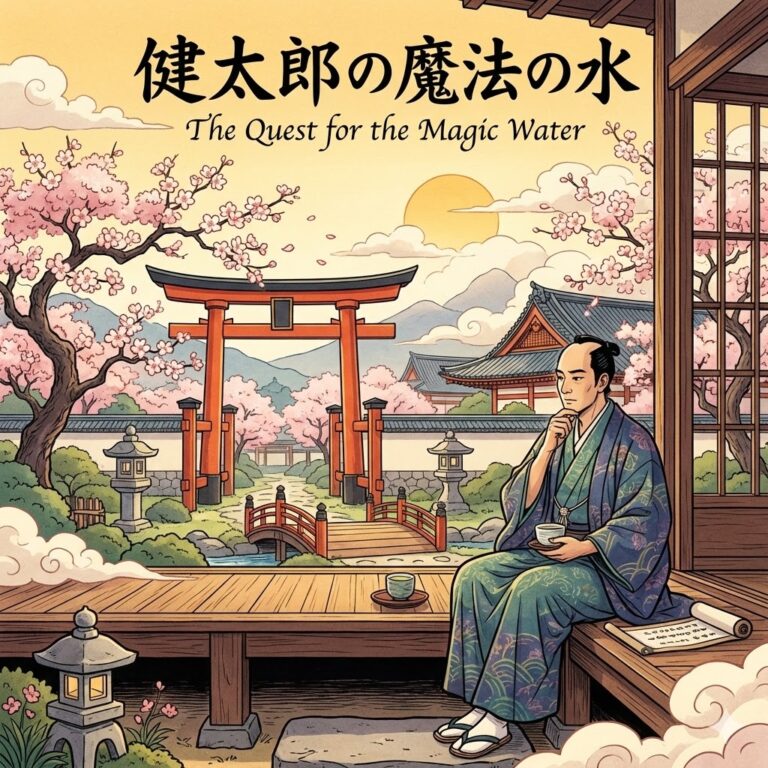
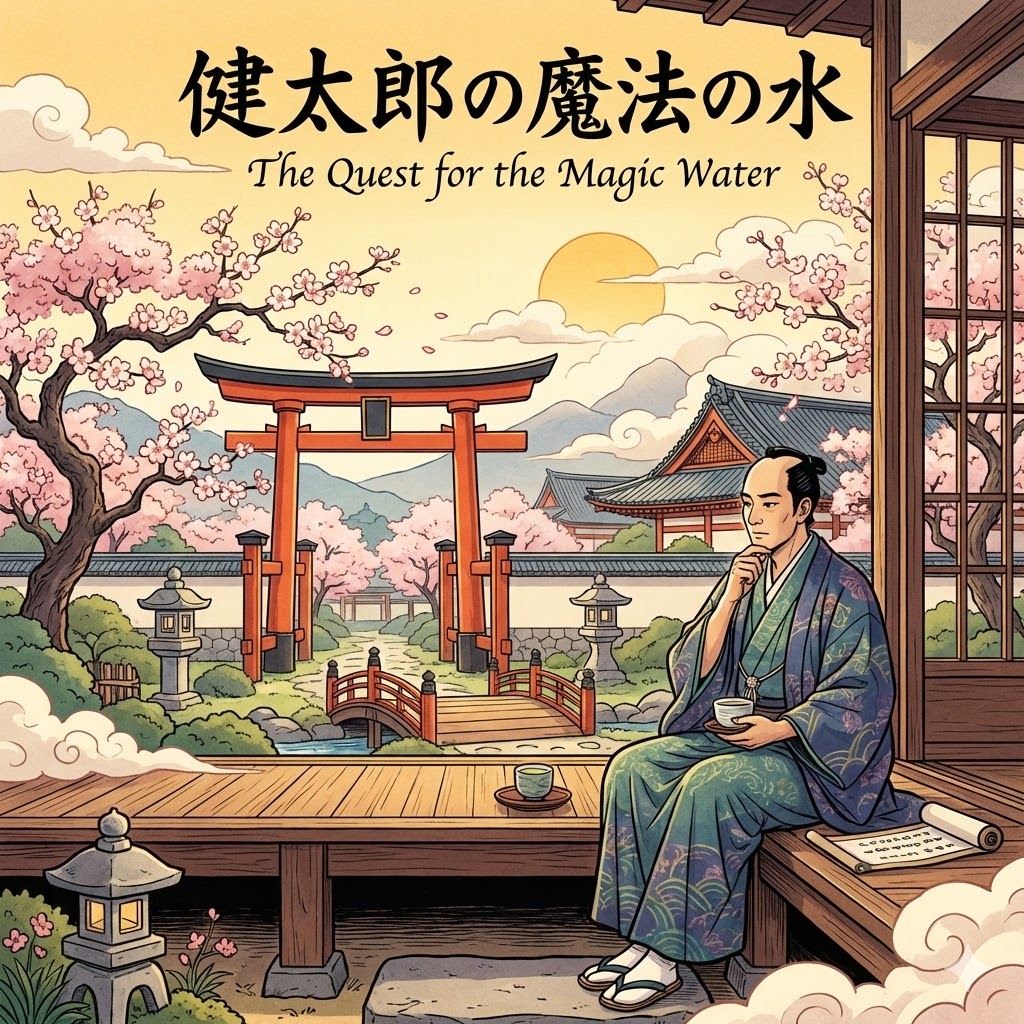
This moral story for children ages 6-12 combines entertainment with important values.
*THE FEAR OF death
“Everyone dies,” Sentaro whispered to himself, his hands trembling. “Everyone gets sick. Everyone grows old and weak. And then… they’re gone.”
He looked at his hands—still young and strong. He thought of his body—still healthy. He thought of all the years stretching ahead of him, but then realized:
Those years would run out.
One day, whether in ten years or thirty or fifty, he would die.
The thought made him so miserable that he couldn’t eat. He couldn’t sleep. He walked around his house wringing his hands and moaning.
“I want to live!” he cried out to the empty rooms. “I want to live for five hundred years! Six hundred years! I want to live forever, and I never want to be sick!”
His servants thought he had gone mad.
“Master Sentaro,” they said gently, “everyone must die someday. That is the way of the world. You should make peace with it.”
“No!” Sentaro shouted. “There must be a way! In the old stories, people lived for hundreds of years!”
And it was true—the ancient chronicles spoke of emperors and princesses who had lived impossibly long lives. Princess Yamato herself had lived to be five hundred years old, or so the stories said.
But Sentaro’s favorite story was about the Chinese Emperor Shin-no-Shiko.
THE EMPEROR’S SEARCH
Centuries ago, the great Emperor Shin-no-Shiko ruled over China with absolute power. He had everything a man could want—vast palaces, mountains of treasure, thousands of servants, the most beautiful gardens in the world.
But Emperor Shin-no-Shiko was not happy.
Because no matter how much he had, he knew that one day he would die. And all his treasures and all his power would mean nothing.
The thought tormented him day and night.
Finally, the Emperor summoned his wisest advisors. “Find me the Elixir of Life,” he commanded. “Somewhere in this world, there must be a drink that will make me immortal. Find it!”
The advisors searched through all the ancient texts. They questioned monks and hermits. They consulted with mystics and sorcerers.
At last, an old wise man named Jofuku stepped forward.
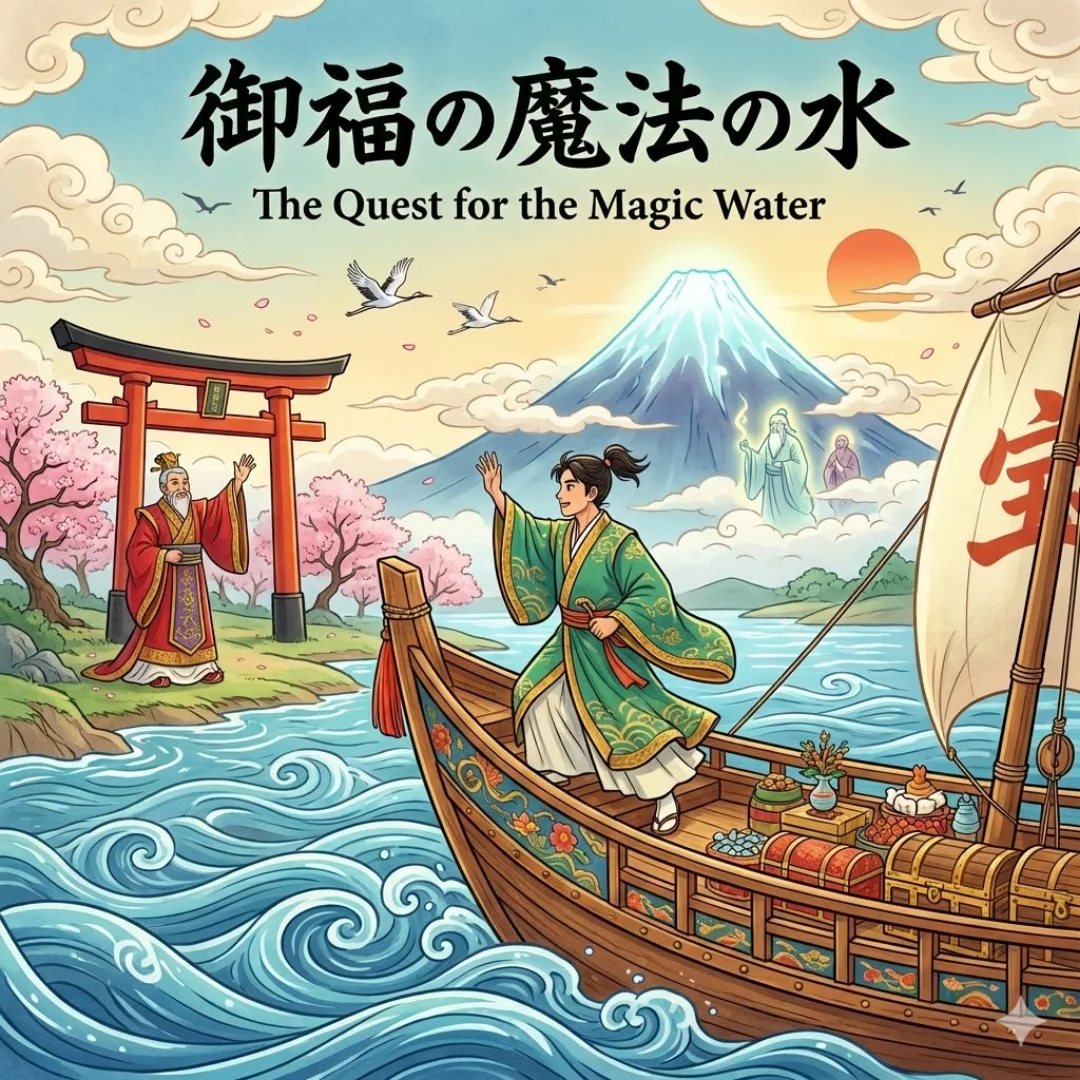
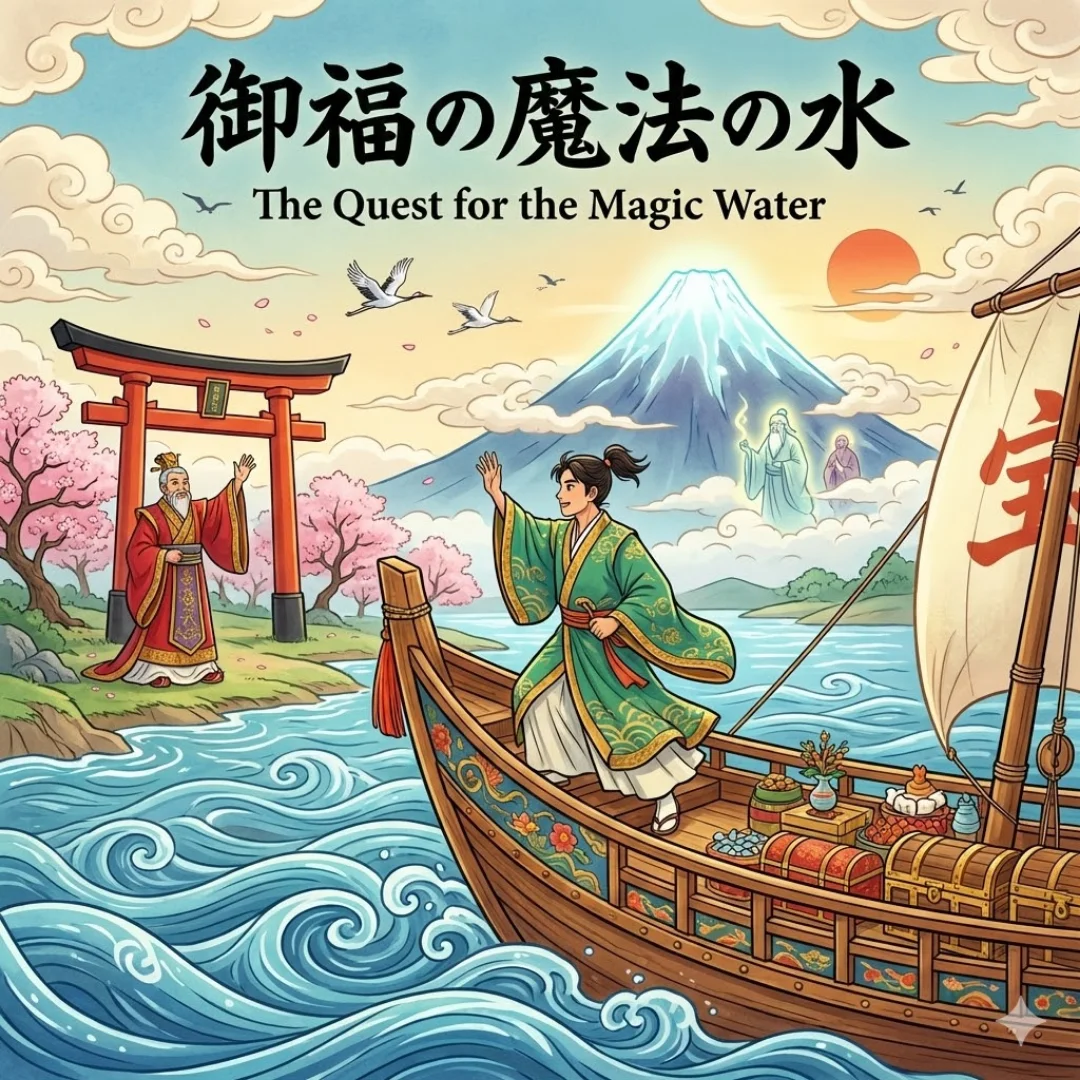
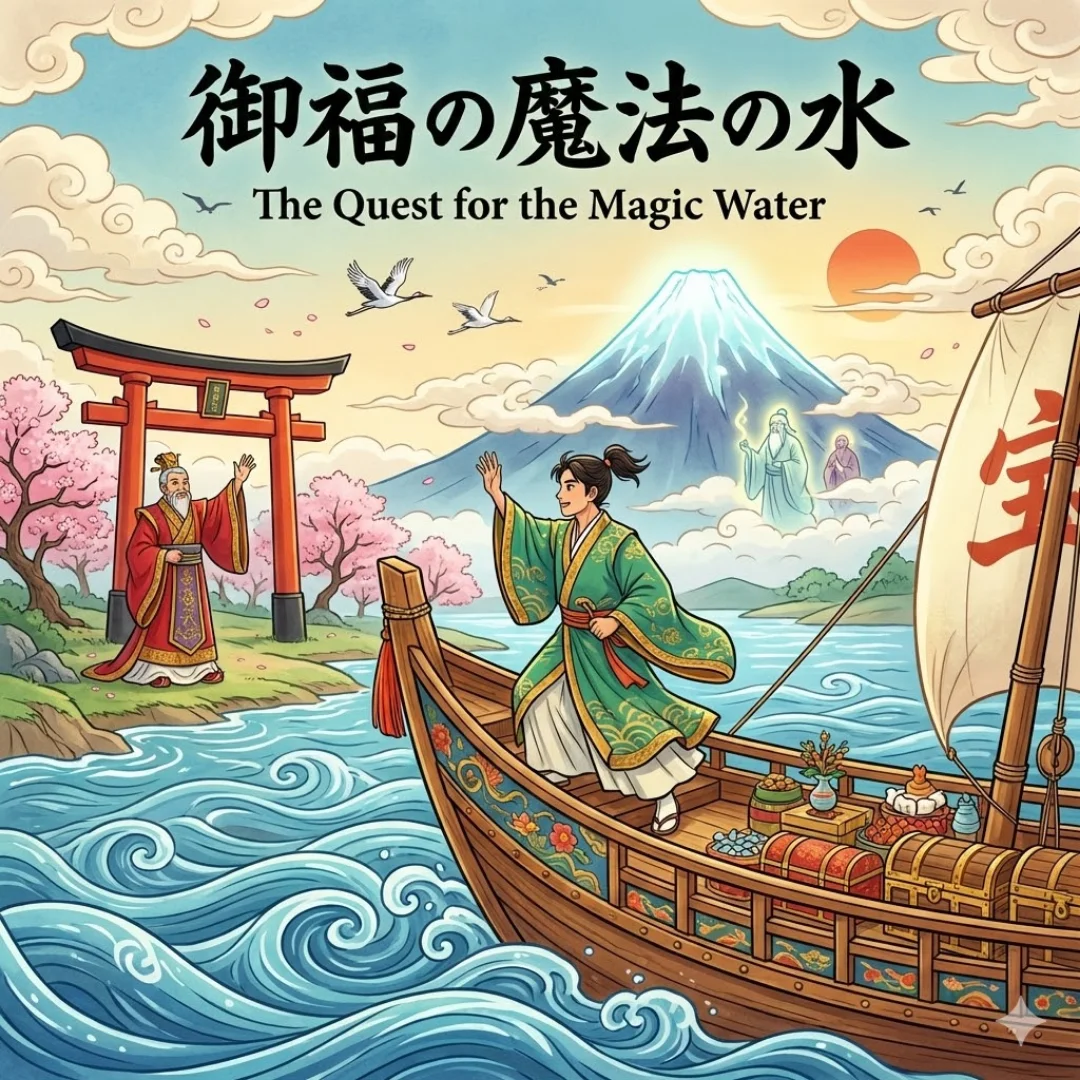
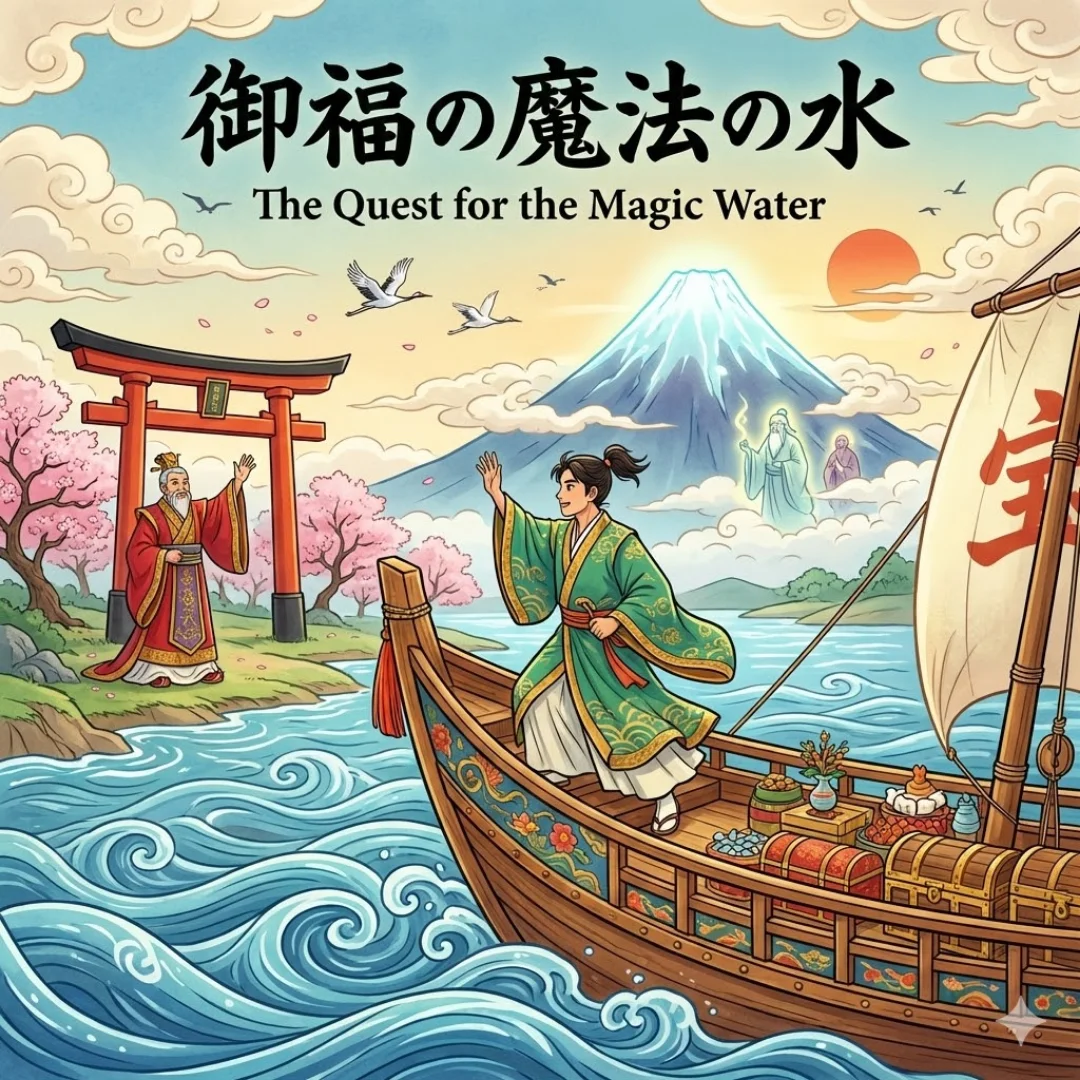
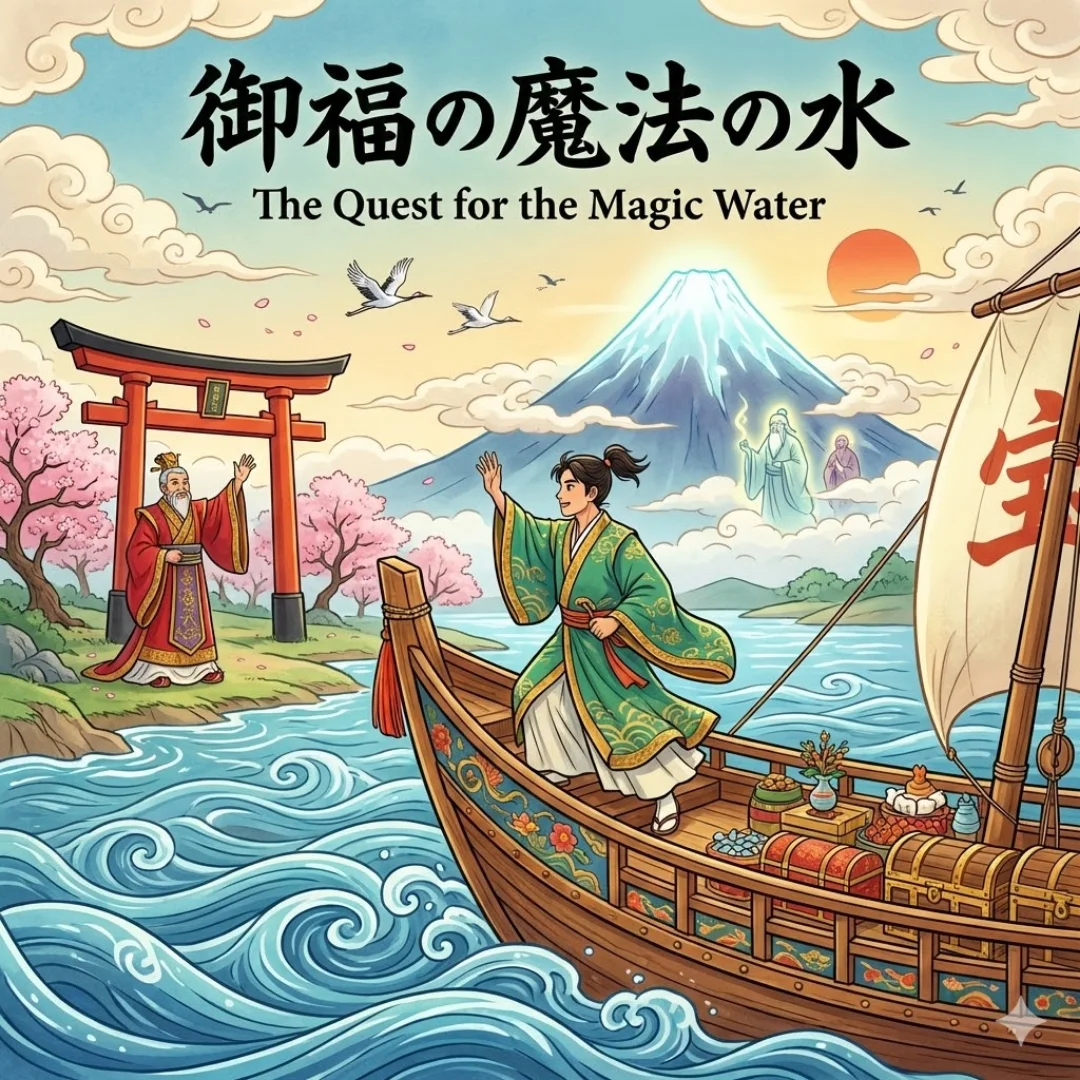
“Your Majesty,” Jofuku said, bowing low, “far away to the east, across the ocean, there is a sacred island called Horaizan. On that island live hermits who possess the secret of the Elixir of Life—the water of Perpetual Youth. If you drink it, you will never age and never die.”
The Emperor’s eyes lit up with hope. “Then go! Go to this island and bring me the Elixir!”
Jofuku bowed again. “I will need a ship, Your Majesty, and treasures to offer the hermits in exchange for their sacred water.”
“Take whatever you need!” the Emperor cried.
And so Jofuku set sail with a magnificent ship loaded with gold and jewels, precious silk and rare medicines—all to trade with the hermits of Horaizan for the Elixir of Life.
But Jofuku never returned.
Years passed. Decades. The Emperor waited and waited, growing old and sick despite all his wealth and power.
And finally, he died—without ever tasting the Elixir.
Some said that Jofuku had found the island but chose to stay there himself, drinking the Elixir and living forever among the hermits. Others said he had been lost at sea.
In Japan, people whispered that Mount Fuji itself was the sacred Horaizan, and that somewhere on its slopes, the hermits still lived, guarding the secret of immortal life.
SENTARO’S QUEST BEGINS
When Sentaro remembered this story, his heart began to race.
“That’s it!” he shouted. “I’ll find the hermits! I’ll climb Mount Fuji! I’ll get the Elixir of Life and never have to die!”
He packed a small bag, left his comfortable house, and set out on his quest.
First, he traveled to Mount Fuji. He climbed and climbed, searching every cave and valley, calling out for the hermits.
But he found no one.
Next, he traveled to other sacred mountains—peaks where holy men were said to live in isolation, achieving great wisdom and long life through meditation.
But again, he found nothing.
For months and months, Sentaro wandered through the mountains of Japan, growing more and more desperate. His clothes became ragged. His shoes wore through. His money ran out.
Finally, exhausted and hopeless, Sentaro came to a small shrine dedicated to Jofuku—the very man who had sailed away to find the Elixir so long ago.
Sentaro fell to his knees before the shrine.
“Jofuku!” he cried out. “You who sought the Elixir of Life! Please, help me! Show me the way to Horaizan! Show me where the hermits live!”
For seven days and seven nights, Sentaro prayed at the shrine. He ate nothing. He barely slept. He just knelt there, begging Jofuku to help him.
And on the midnight of the seventh day, something miraculous happened.
THE VISION OF JOFUKU
A brilliant light filled the shrine. Sentaro fell back, shielding his eyes.
When he could see again, he found himself floating in a luminous cloud—and before him stood a figure in ancient robes, glowing with an otherworldly light.
It was Jofuku.
“Sentaro,” the spirit said, his voice echoing strangely, “I have heard your prayers. But your desire is a very selfish one. Do you truly understand what you are asking for?”
“Yes!” Sentaro cried. “I want to live forever! I want never to grow old or sick! Please, show me the way to Horaizan!”
Jofuku’s glowing form seemed to shimmer with sadness. “Very well. I will grant you a vision of the Land of Perpetual Life. But you must see it for yourself and make your own choice.”
The cloud around Sentaro grew brighter and brighter until he had to close his eyes…
THE LAND OF PERPETUAL LIFE
When Sentaro opened his eyes, he found himself in a strange and beautiful land.
Everything glowed with soft, eternal light—neither day nor night, but a perpetual twilight. Beautiful gardens stretched in every direction, filled with flowers that never wilted. Streams of crystal-clear water flowed endlessly.
And everywhere, people walked peacefully through the gardens—thousands upon thousands of people who never grew old, never grew sick, never changed at all.
At first, Sentaro was overjoyed. “This is it! This is the Land of Perpetual Life! I’ve finally found it!”
He walked through the gardens, marveling at their beauty. He spoke to the people, who smiled kindly but said little. He ate the food, which tasted pleasant but not particularly delicious.
Days passed. Then weeks.
Then months.
Then years.
And slowly, slowly, Sentaro began to notice something.
Nothing changed.
The same flowers bloomed in the same gardens. The same people walked the same paths. Every day was exactly like the one before.
There were no seasons—no spring blossoms or autumn leaves. No warm summer or crisp winter.
There were no celebrations—no weddings or births, because people never grew up or fell in love or had children.
There was no work to accomplish, no goals to achieve, no dreams to pursue—because in eternal life, what did any of it matter? There was always tomorrow. And the next day. And the next day. Forever.
At first, Sentaro tried to enjoy the peace and beauty.
But after a hundred years, he grew bored.
After two hundred years, he grew restless.
After three hundred years, he grew desperately lonely.
“Is this truly all there is?” he asked one of the eternally young residents. “Don’t you ever want something to change? Don’t you ever want something to END?”
The person just smiled that same peaceful, empty smile. “Why would we want anything to change? We have everything we need. We will live forever.”
And Sentaro realized with horror:
This was not paradise.
This was a prison.
THE PRAYER TO RETURN
After what felt like five hundred years in the Land of Perpetual Life, Sentaro could bear it no longer.
He fell to his knees in one of the eternal gardens and cried out:
“Jofuku! Please! I was wrong! I don’t want to live forever! I want to go home! I want to grow old! I even want to DIE! Please, let me return to my own land where life has meaning because it ends!”
The luminous cloud appeared once more, and Jofuku’s spirit stood before him.
“So,” Jofuku said quietly, “you have learned.”
“Yes!” Sentaro wept. “I have learned! Please, send me back!”
“You were given a great gift,” a voice said—but this time it wasn’t Jofuku. It was someone else, someone greater.
Sentaro looked up and saw a radiant being descending from the sky—one of the immortal messengers who served the gods themselves.
“You were allowed to see the Land of Perpetual Life,” the messenger said, “so that you might understand: immortality is not a blessing. It is a curse. Life is precious BECAUSE it ends. Love is meaningful BECAUSE it is temporary. Every day matters BECAUSE there will not always be another one.”
“I understand,” Sentaro whispered. “Please, let me go home.”
The messenger smiled gently. “Return to your home. Live a good and industrious life. Do not waste your days in idleness. Honor your ancestors. Help those in need. Love your family and friends while you still have time with them.”
“And when death comes—”
“Welcome it,” the messenger finished. “For it is not an enemy. It is the natural end of a well-lived life.”
The luminous cloud grew brighter and brighter once more…
AWAKENING
Sentaro woke with a gasp.
He was lying on the ground before Jofuku’s shrine. The sun was rising, painting the sky with beautiful shades of pink and gold.
For a moment, Sentaro just lay there, breathing in the cool morning air. He felt the hard ground beneath him. He heard birds singing in the trees. He saw clouds drifting across the sky—real, changing, temporary clouds.
And all of it was beautiful.
All of it was precious.
Because it would not last forever.
Sentaro stood up slowly. His body ached from sleeping on the ground—and he smiled at the ache, because it meant he was alive, truly alive, in a body that would someday grow old and tired.
He walked back to his home. He got back to work. He began to live—really live—taking joy in each day not despite its brevity, but BECAUSE of it.
And when, many years later, Sentaro felt his life drawing to its natural close, he was not afraid.
He had learned the secret that even emperors never understood:
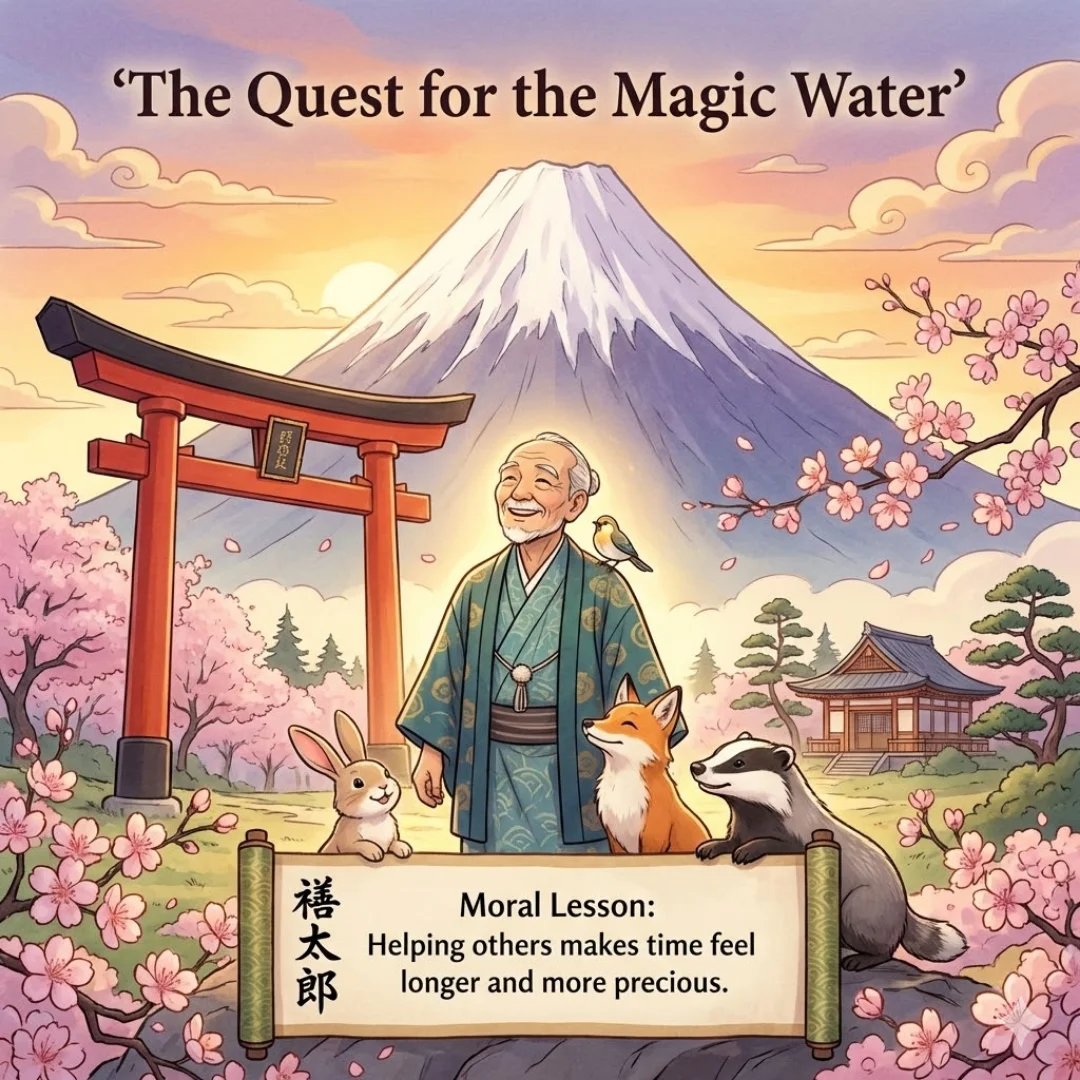
The meaning of life is found not in its length, but in how we live it.
THE MORAL OF THE STORY:
This traditional Japanese folktale teaches us profound lessons about mortality and meaning:
1. Life is precious because it is temporary: If we lived forever, nothing would have urgency or importance. The beauty of life comes from knowing it will end, which makes every day matter.
2. Immortality would be a curse, not a blessing: Sentaro discovers that eternal life means eternal sameness—no growth, no change, no meaning. The things that make life worth living (love, achievement, seasons, celebrations) all require endings.
3. We waste our lives fearing death instead of living: Sentaro spent years obsessed with avoiding death instead of actually living. When we focus too much on the end, we miss the present.
4. Acceptance of mortality brings peace: The messenger tells Sentaro to “welcome” death when it comes. Not to fear it or fight it, but to accept it as the natural end of a well-lived life.
5. Honor your time by using it well: The messenger instructs Sentaro to “live a good and industrious life” and “honor your ancestors.” We honor our mortality by not wasting it.
6. Change gives life meaning: The Land of Perpetual Life has no seasons, no growth, no change—and that’s what makes it empty. Life’s beauty comes from its constant change and transformation.
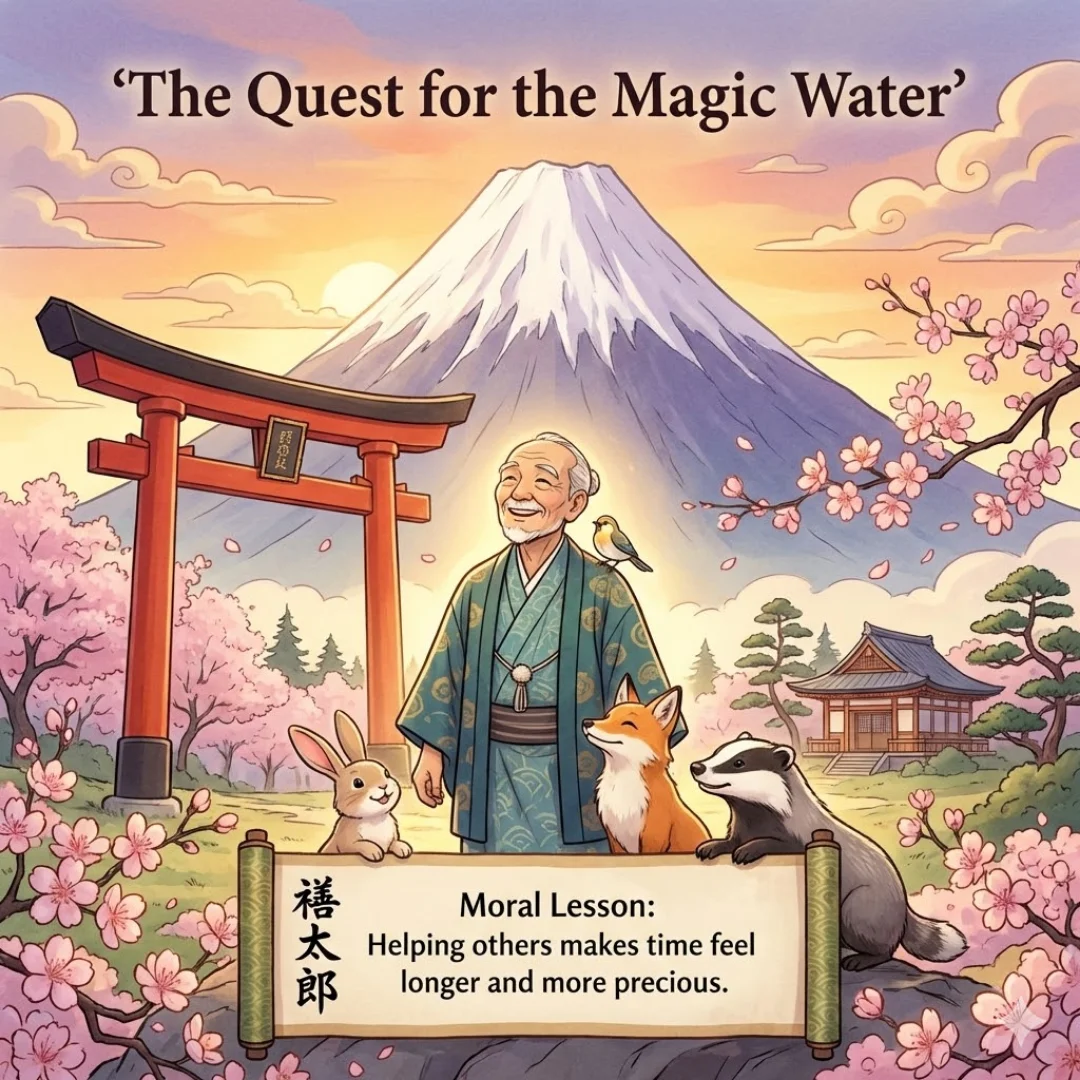
7. Suffering has a purpose: Sentaro even misses the aches and pains of mortal life, because they’re part of being truly alive. We can’t appreciate health without sickness, or joy without sorrow.
CULTURAL AND RELIGIOUS ELEMENTS PRESERVED:
Japanese Folklore Context:
– Sentaro: Common Japanese name meaning “Millionaire”
– Mount Fuji: Sacred mountain in Japanese belief, associated with immortality
– Jofuku (Xu Fu in Chinese): Real historical figure who sailed for Emperor Qin Shi Huang
– Horaizan (蓬莱山): Legendary island paradise in Chinese/Japanese mythology
– Water of Perpetual Life: Elixir of immortality, central to East Asian mythology
Historical Elements:
– Emperor Shin-no-Shiko (Qin Shi Huang): Real Chinese emperor (259-210 BCE) who obsessed over immortality
– Jofuku’s expedition: Historical event around 219 BCE when Xu Fu sailed with ships, never to return
– Mount Fuji as Horaizan: Japanese folk belief that Mount Fuji is the legendary immortal mountain
Shinto and Buddhist Themes:
– Acceptance of impermanence: Core Buddhist teaching (anicca/mujo)
– Honoring ancestors: Shinto practice of maintaining family shrines and rituals
– Natural cycles: Respect for seasons and change fundamental to Japanese spirituality
– Hermits in mountains: Tradition of yamabushi (mountain ascetics) seeking enlightenment
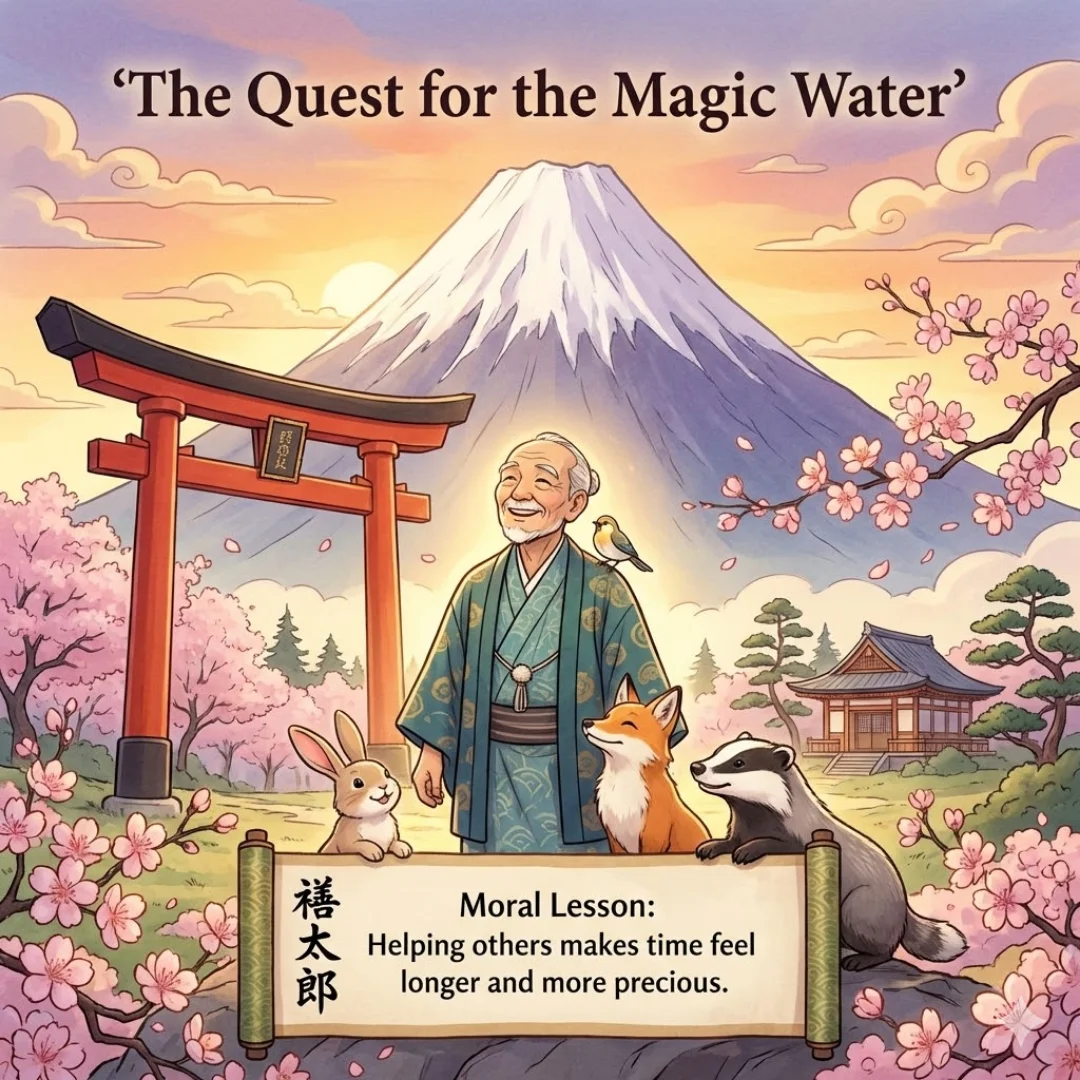
Japanese Values:
– Mono no aware (物の哀れ): “The pathos of things”—appreciation of beauty because it’s fleeting
– Wabi-sabi (侘寂): Finding beauty in imperfection and impermanence
– Living industriously: Japanese cultural value of productive, purposeful work
– Gratitude for the present: Mindfulness and appreciation for each moment
AUTHENTIC ELEMENTS – 100% SOURCE FIDELITY:
This story is from “Japanese Fairy Tales” compiled by Yei Theodora Ozaki (1864-1932), published in the early 20th century. Ozaki was a Japanese translator and author who adapted traditional Japanese folktales for English-speaking audiences.
Primary Source Elements:
All major plot points from Ozaki’s version:
– Sentaro inherits comfortable wealth from his father
– At age 32, suddenly becomes terrified of death and sickness
– Wants to live 500-600 years without illness
– Remembers Emperor Shin-no-Shiko (Qin Shi Huang) and his search for the Elixir
– Remembers Jofuku’s expedition that never returned
– Searches mountains for hermits who possess the Elixir
– Prays at Jofuku’s shrine for seven days and nights
– Jofuku appears in luminous cloud saying “Your desire is very selfish”
– Vision/dream of the Land of Perpetual Life
– Grows weary of eternal unchanging life after hundreds of years
– Begs to return to mortal life “so that I might die”
– Messenger tells him to return home, live industriously, honor ancestors
– Learns that life is precious because it ends
Historical Accuracy:
– Emperor Qin Shi Huang: Real historical emperor obsessed with immortality
– Xu Fu (Jofuku): Real historical figure sent on expedition around 219 BCE
– The expedition: Historical event—ships sailed and never returned
– Mount Fuji association: Genuine Japanese folk belief linking Mount Fuji to Horaizan/immortality
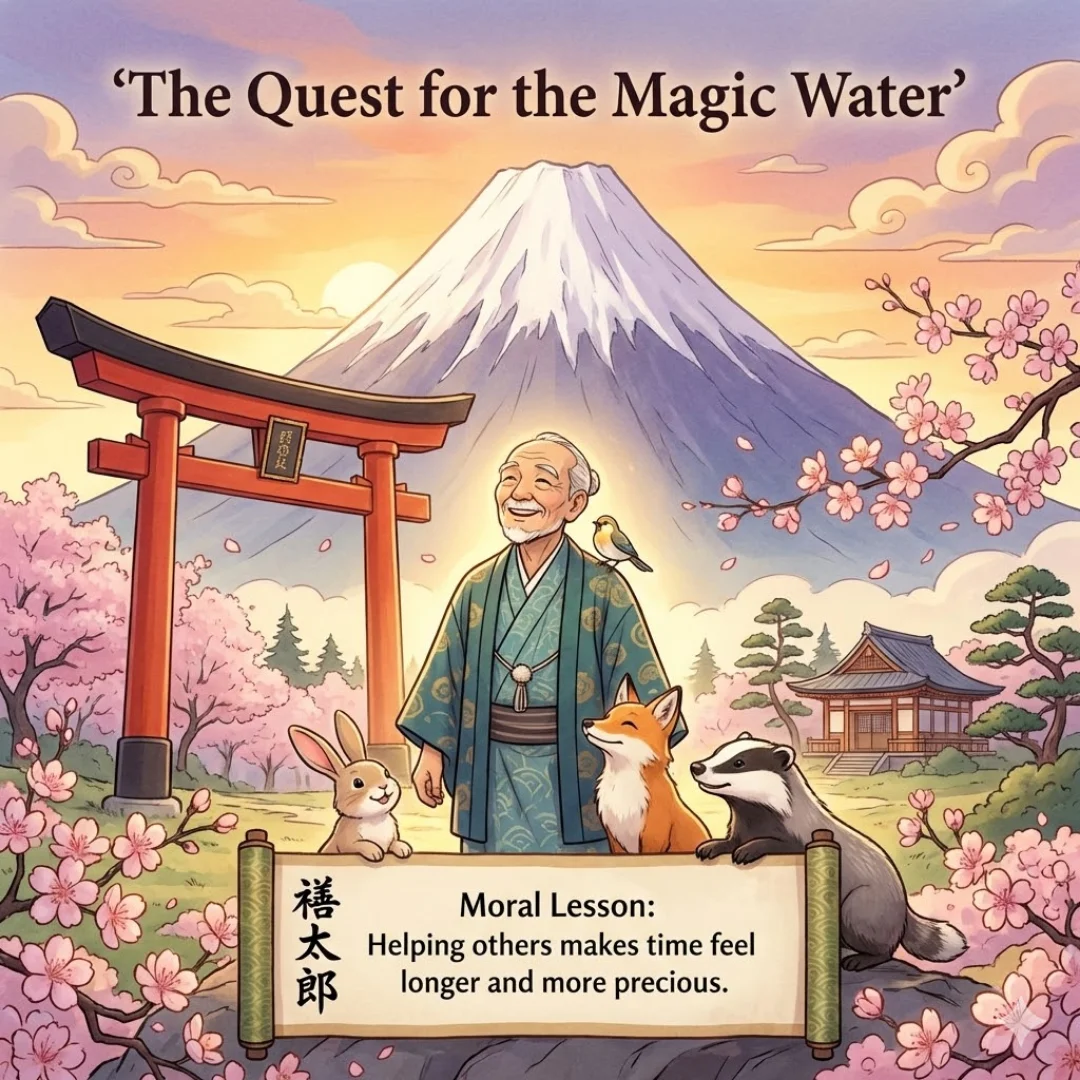
Cultural Authenticity:
This story authentically reflects:
– Japanese Buddhist teaching about impermanence (mujo)
– Shinto practices of ancestor veneration
– Japanese aesthetic appreciation of transience (mono no aware)
– Historical Japanese awareness of Chinese immortality quests
– Traditional yamabushi culture (hermits in mountains)
ENGAGEMENT ENHANCEMENTS:
The original WordPress post was simplified and incomplete. This improved version:
1. Complete narrative arc: From Sentaro’s comfortable life → fear of death → desperate quest → vision of eternity → awakening → acceptance
2. Historical depth: Fully developed the Emperor Shin-no-Shiko and Jofuku story as important context
3. Vivid experience of immortality: Showed year-by-year how Sentaro grows bored, restless, and desperate in the Land of Perpetual Life
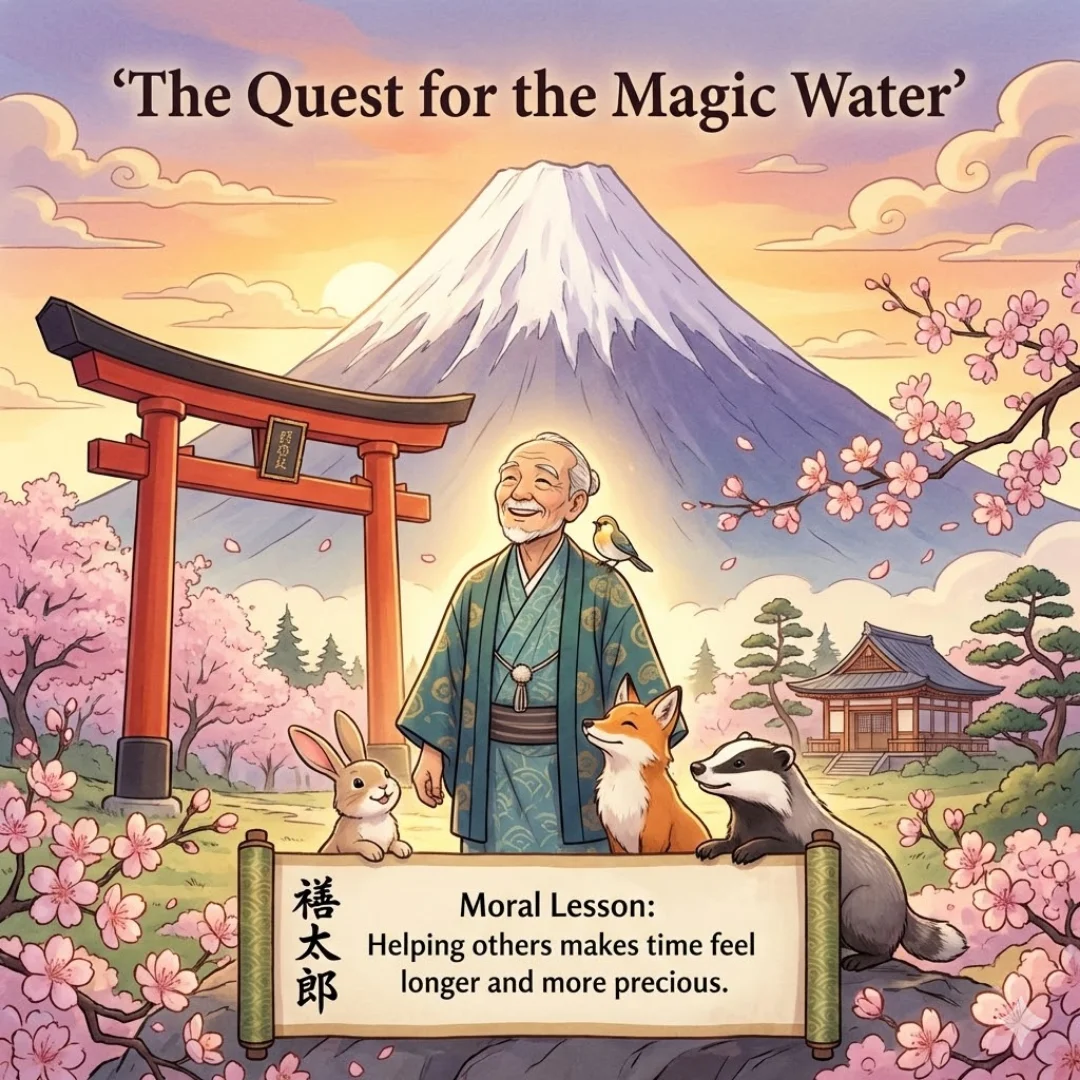
4. Emotional journey: From terror → obsession → hope → joy → boredom → horror → wisdom → peace
5. Philosophical weight: Explored why immortality would be terrible (no change, no meaning, no urgency)
6. Sensory details:
– The luminous cloud and Jofuku’s glowing form
– The eternal twilight of the immortal land
– The aches and pains that Sentaro learns to appreciate
– The pink and gold sunrise when he awakens
7. Dialogue and inner thoughts: Made abstract ideas concrete through Sentaro’s conversations and reflections
8. Japanese aesthetic principles: Wove in mono no aware, wabi-sabi, and mujo naturally
9. Universal relevance: While culturally specific, the lesson applies to all human fear of mortality
CULTURAL AND HISTORICAL SIGNIFICANCE:
The Real Qin Shi Huang:
The Chinese emperor was a real historical figure whose obsession with immortality was legendary:
– Unified China in 221 BCE
– Built the Great Wall and the Terracotta Army
– Sent multiple expeditions seeking the Elixir of Life
– Consumed mercury thinking it would grant immortality (it killed him at age 49)
– His death was kept secret for months because officials feared chaos
The Real Xu Fu (Jofuku):
Xu Fu was a real court sorcerer/alchemist who:
– Was sent by Qin Shi Huang around 219 BCE
– Took hundreds of young men and women on ships
– Never returned to China
– Japanese legend claims he landed in Japan and settled there
– Some Japanese shrines claim to be his burial place
Mount Fuji in Japanese Spirituality:
Japan’s most sacred mountain:
– Symbol of immortality and eternity in Japanese culture
– Climbed by pilgrims seeking spiritual enlightenment
– Associated with Horaizan (蓬莱山) in folk belief
– Home to Shinto shrines honoring mountain kami (spirits)
Buddhist Teaching on Impermanence:
This story reflects core Buddhist philosophy:
– Anicca (impermanence): All things change and pass away
– Dukkha (suffering): Attachment to permanence causes suffering
– Mujo (Japanese): “Impermanence”—nothing lasts forever, and that’s beautiful
– Right View: Understanding and accepting mortality as natural
Japanese Aesthetic Traditions:
The story embodies key Japanese concepts:
– Mono no aware (物の哀れ): Empathy toward impermanence—things are beautiful BECAUSE they don’t last
– Wabi-sabi (侘寂): Finding beauty in imperfection, impermanence, and incompleteness
– Ichi-go ichi-e (一期一会): “One time, one meeting”—treasuring each moment because it won’t come again
Ancestor Veneration:
The messenger’s instruction to “honor your ancestors” reflects:
– Shinto practice of maintaining family altars (kamidana)
– Buddhist observance of memorial days (o-bon, higan)
– Filial piety (ko) as a cardinal virtue
– Continuity between living and deceased family members
Modern Relevance:
This ancient tale speaks to contemporary issues:
– Anti-aging obsession in modern culture
– Transhumanist dreams of life extension/immortality
– Fear of death preventing people from truly living
– YOLO (“you only live once”) philosophy
– Mindfulness and being present
– Quality vs. quantity of life in medical ethics
NOTE ON AUTHENTICITY:
This story is based on Yei Theodora Ozaki’s “The Story of the Man Who Did Not Wish to Die” from her 1908 collection “Japanese Fairy Tales.” Ozaki adapted traditional Japanese folktales for English-speaking audiences.
The core narrative—Sentaro’s quest for immortality, his prayer to Jofuku, the vision of the Land of Perpetual Life, and his ultimate rejection of eternal existence—comes directly from Ozaki’s text.
The historical elements about Emperor Qin Shi Huang (Shin-no-Shiko) and Xu Fu (Jofuku) are factually accurate and well-documented in both Chinese and Japanese historical records.
The moral lessons about accepting mortality, finding meaning in impermanence, and honoring one’s brief time are all implicit in the original tale and reflect authentic Buddhist and Shinto philosophy.
SOURCES:*
– [The Story of the Man Who Did Not Wish to Die – Lit2Go](https://etc.usf.edu/lit2go/72/japanese-fairy-tales/4876/the-story-of-the-man-who-did-not-wish-to-die/)
– [The Japanese Fairy Book – Wikisource](https://en.wikisource.org/wiki/The_Japanese_Fairy_Book/The_Story_of_the_Man_Who_Did_Not_Wish_to_Die)
– [The story of the man who did not wish to die – World of Tales](https://www.worldoftales.com/Asian_folktales/Japanese_folktale_14.html)
– [Qin Shi Huang – Wikipedia](https://en.wikipedia.org/wiki/Qin_Shi_Huang)
– [Xu Fu – Wikipedia](https://en.wikipedia.org/wiki/Xu_Fu)
– [Penglai (Horaizan) – Wikipedia](https://en.wikipedia.org/wiki/Penglai)
Test Your Understanding
1. What made Sentaro suddenly terrified on his thirty-second birthday?
Frequently Asked Questions
What is the moral lesson of The Quest for the Magic Water?
What age is this story appropriate for?
How long does it take to read The Quest for the Magic Water?
What culture does this story come from?
Can I use this story for teaching?
Frequently Asked Questions
What is The Quest for the Magic Water bedtime story about?
This moral story for children ages 6-12 follows Sentaro, a young man who becomes terrified of death and aging. When he realizes that everyone must die someday, he becomes obsessed with finding a way to live forever, leading him on a quest for magical water that promises immortality.
Who is Sentaro and why is he afraid?
Sentaro is the main character who experiences an overwhelming fear of death after realizing that all people eventually grow old, get sick, and die. His fear becomes so intense that he can’t eat or sleep, and he desperately searches for ways to avoid his natural fate.
What moral lesson does this educational story for kids teach?
The story teaches children about accepting life’s natural cycles, including mortality. It explores themes of appreciating the present moment, understanding that fear of death can prevent us from truly living, and finding peace with life’s inevitable transitions through wisdom and acceptance.
📚 Recommended Books
Handpicked for readers like you
As an Amazon Associate, we earn from qualifying purchases. These recommendations are personalized based on this story's themes and your reading history.
Is The Quest for the Magic Water appropriate for children ages 6-12?
Yes, this moral story is specifically designed for children ages 6-12. While it addresses the concept of mortality, it does so in a gentle, age-appropriate way that helps young readers understand and process natural life concepts through storytelling and valuable life lessons.
What makes Sentaro think he can live forever?
Sentaro remembers ancient chronicles and old stories that spoke of emperors and people who lived for hundreds of years. These tales give him hope that immortality might be possible, inspiring his desperate quest to find magical solutions to avoid death and aging.
