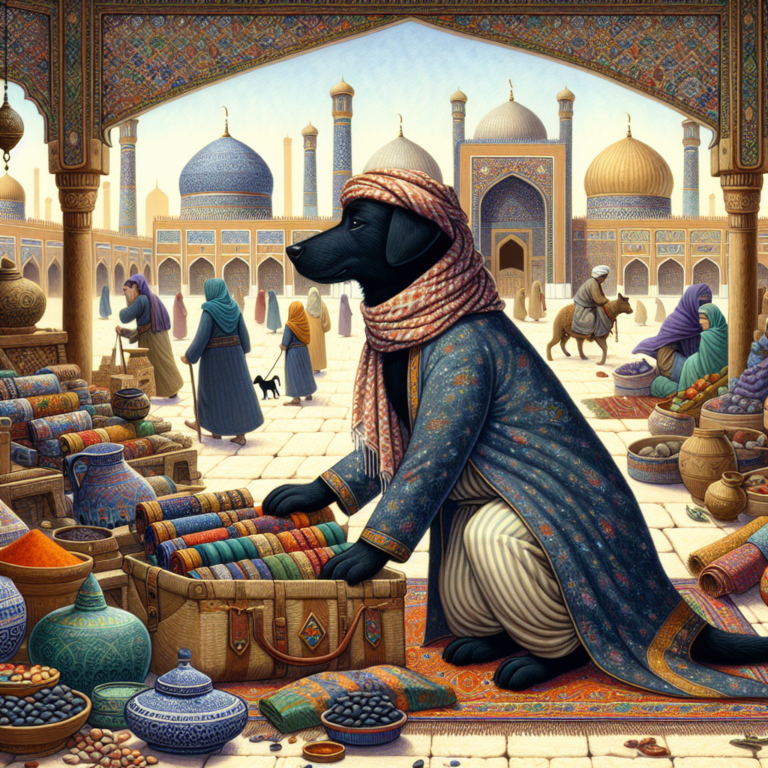
Share this engaging bedtime story with kids ages 6-12 to teach valuable life lessons.
Long ago in Baghdad, there lived three brothers.
When their father died, he left each of them exactly one thousand gold sequins—a fortune large enough to start a business and build a good life.
The three brothers decided to become merchants. They opened shops side by side in the marketplace, selling spices and silks and precious things from distant lands.
For a while, they worked happily together.
But then the eldest brother grew restless.
“I want to travel to foreign countries,” he announced one day. “I want to see the world and find rare merchandise that no one else has!”
So the eldest brother sold everything he owned and used the money to buy goods suitable for his voyage. He set out on a great adventure, sailing across blue seas and visiting strange cities.
A whole year passed.
* * *
One morning, a beggar appeared at the door of the middle brother’s shop.
The beggar was dirty and thin, dressed in rags, with a face lined by suffering.
“Good day,” said the middle brother politely, as he would to any customer.
“Good day,” replied the beggar. Then he looked up with sad eyes. “Is it possible that you do not recognize me?”
The middle brother looked more closely—and gasped.
It was his eldest brother!
“Brother! What happened to you?” He quickly pulled him inside, closed the shop, and took him home. He prepared a warm bath for him, gave him beautiful robes to wear, and offered him food and drink.
“Please, tell me,” the middle brother said gently. “How did your voyage go?”
The eldest brother shook his head miserably. “Do not question me. Just look at me—you see all I have left. To tell you of all the misfortunes that befell me this year would only renew my trouble. Everything is lost. Everything.”
The middle brother’s heart filled with compassion.
He went to check his accounts and discovered that his business had prospered while his brother was away. He had doubled his capital—he now had two thousand sequins instead of one thousand!
“Brother,” he said kindly, “here—take half of what I have.” He counted out one thousand gold sequins and placed them in his brother’s hands. “Now you can forget your losses and start again.”
The eldest brother’s eyes filled with tears of gratitude. He accepted the money, reopened his shop, and the two brothers lived together as they had before.
* * *
But some time later, the youngest brother also grew restless.
“I want to travel and trade, just as our eldest brother did,” he said.
“No!” cried the eldest brother. “You saw what happened to me! I lost everything!”
“Please don’t go,” begged the middle brother. “Stay here where it’s safe.”
But the youngest brother would not be dissuaded. He sold his business, joined a caravan, and set out on his own adventure.
A year passed.
And just as before, he returned in exactly the same state as his elder brother—poor, broken, with nothing to show for his journey but sadness and regret.
The middle brother, whose business had continued to prosper, looked at his youngest brother with love and compassion.
“Don’t worry,” he said. “I have a thousand sequins to spare. Take them. Reopen your shop. All is well.”
And so the youngest brother, too, was restored.
* * *
The years passed peacefully.
But one day, both brothers came to the middle brother with a proposal.
“We’ve been thinking,” they said. “Why don’t the three of us travel together and trade? We could make a fortune!”
The middle brother shook his head firmly. “You both traveled before. What did you gain? Nothing but misery!”
But his brothers kept asking, day after day, month after month, year after year.
Finally, after holding out for five whole years, the middle brother gave in.
“All right,” he sighed. “We’ll make one voyage together.”
They began to prepare—buying the merchandise they would need, arranging for a ship.
But then the middle brother discovered something troubling: his brothers had spent every single piece of the thousand sequins he had given them! They had nothing left!
The middle brother did not reproach them. Instead, he looked at his own wealth—he now had six thousand sequins from years of careful business.
“Here,” he said. “I will give each of you one thousand sequins. I’ll keep one thousand for myself. And the other three thousand…” He dug a hole in the corner of his house and buried them. “These will wait for us when we return.”
Together, the three brothers bought merchandise, loaded a ship, and set sail with a favorable wind.
* * *
After two months of sailing, they arrived at a beautiful seaport.
They did excellent trade, selling everything they’d brought and buying the wonderful merchandise of that foreign land. Soon they were ready to sail home, rich and successful.
As the middle brother walked along the shore, preparing to board the ship, he saw a woman approaching him.
She was beautiful, with kind eyes and a gentle face—but she was dressed in poor, ragged clothes.
She came up to him, kissed his hand, and spoke softly: “Please, kind sir, will you marry me and take me with you? I have nothing, but I promise I will be the best wife I can be.”
The middle brother hesitated. He had planned to return home, not to marry!
But the woman begged so earnestly, and her eyes were so full of hope, that his kind heart could not refuse.
“Very well,” he said.
He bought her beautiful dresses, and they were married that very day. Then they boarded the ship together and set sail for home.
During the voyage, the middle brother discovered that his new wife had many wonderful qualities. She was wise and kind, patient and good-humored. With each passing day, he loved her more and more.
But his two brothers watched this growing love with dark, jealous hearts.
“Why should he be so happy?” whispered the eldest brother.
“Why should he have wealth AND a beautiful wife?” muttered the youngest.
They began to plot against him.
* * *
One night, when the middle brother and his wife were sleeping peacefully in their cabin, the two jealous brothers crept in.
They grabbed them both and—with hearts as black as coal—threw them into the dark sea!
Down, down, down they sank into the cold water…
But the middle brother’s wife was not what she seemed.
She was a fairy!
And fairies do not drown.
With her magical power, she saved her husband from the waves and transported him instantly to a nearby island.
When dawn broke and the sun rose over the water, the fairy revealed the truth to her astonished husband.
“When I first saw you on the seashore,” she said, “I took a great fancy to you. I wanted to test your good nature, to see if you were truly as kind as you appeared. So I disguised myself as a poor woman and asked you to marry me.”
The middle brother listened, amazed.
“You passed the test!” the fairy continued, smiling. “You showed me compassion and generosity, even though I had nothing to offer you. Now I have saved your life as a reward. But I am very angry with your brothers. They betrayed you terribly! I shall not rest until I have taken their lives in revenge.”
“No!” cried the middle brother. “Please, don’t kill them! They’re still my brothers. They made a terrible mistake, but I cannot bear for them to die.”
The fairy looked at him in wonder. “Even after what they did to you? You would spare them?”
“Yes,” he said firmly. “Please.”
The fairy’s anger slowly cooled. “You are as good as I believed,” she said softly. “Very well. I will not kill them. But they must be punished.”
* * *
In an instant, the fairy transported the middle brother from the island to the roof of his own house in Baghdad.
Then she vanished.
He climbed down, opened his doors, and dug up the three thousand sequins he had buried before his voyage. They were still there, safe and sound!
He went to the marketplace, opened his shop, and was greeted with amazement by his fellow merchants.
“You’re alive!” they cried. “We heard your ship returned, but you were not on it! We thought you had died!”
The middle brother smiled mysteriously and returned home.
There, waiting at his door, were two black dogs.
They had sorrowful faces and looked up at him with eyes full of shame and regret.
The middle brother stared at them, confused—until the fairy suddenly reappeared.
“Do not be surprised to see these dogs,” she said. “They are your two brothers. I have condemned them to remain in these shapes for ten years as punishment for their treachery. After ten years, the spell will be broken, and they can return to being human.”
She told him where he could find her when the ten years were up, and then she vanished once more.
* * *
And so the middle brother lived with the two black dogs—his brothers—feeding them and caring for them despite what they had done.
The years passed slowly.
Finally, as the tenth year drew near, the middle brother set out on a journey to find the fairy and ask her to restore his brothers.
Along the way, he met a merchant who was in terrible trouble, about to be killed by a powerful genius. He also met two other old men—one with a hind (a female deer), and another with his own story to tell.
To save the merchant’s life, each old man told the genius a marvelous story. If the genius was impressed, he would give up part of the merchant’s punishment.
The middle brother—now an old man himself—told the genius the story you have just heard: the story of his generous heart, his brothers’ betrayal, his fairy wife, and the two black dogs.
“This is indeed a most marvelous story!” said the genius, astonished. “I will give up one-third of the merchant’s punishment.”
The third old man told an even more incredible tale—so amazing that the genius gave up the final third of the punishment.
The merchant was freed!
He thanked the three old men gratefully, and each went on his way.
The merchant returned to his wife and children and lived happily ever after.
And the middle brother? He found his fairy wife, who lovingly lifted the spell from his brothers and turned them back into humans.
The three brothers were reunited at last—older, wiser, and grateful for a second chance.
They returned home together, and this time they worked side by side in peace, never forgetting the lessons they had learned about kindness, jealousy, forgiveness, and the magic that can come from a generous heart.
* * *
**And so the tale was told by Scheherazade to the king,** adding one more jewel to her necklace of stories—though she said that even this marvelous tale could not compare to the story of the Fisherman, which she would tell next…
But that, dear reader, is a story for another night.
MORAL LESSONS:
– Generosity and kindness bring unexpected rewards
– Jealousy and betrayal lead to punishment and regret
– Forgiveness is more powerful than revenge
– True love comes from genuine compassion, not outward appearances
– Those who test others’ goodness are often repaid with loyalty
– Second chances allow for redemption and wisdom
CULTURAL ELEMENTS PRESERVED:
– Arabian Nights (1001 Nights) frame narrative
– Scheherazade as storyteller to the king
– Genius/Djinn as powerful magical being
– Fairy/supernatural beings testing mortals
– Sequins as currency
– Merchant culture and trade voyages
– Baghdad as setting
– Transformation punishment (humans to animals)
– Frame-within-frame storytelling structure
– Islamic tradition of hospitality and generosity
SOURCE FIDELITY NOTES:
✓ “Three brothers, each inherited thousand sequins, became merchants” exact
✓ “Eldest brother traveled, returned as beggar” preserved
✓ “Do not question me, see me you see all I have, renew my trouble” quote preserved
✓ “Shut shop, paid attention, bath, beautiful robes, examined accounts, doubled capital (2000 sequins)” exact
✓ “Gave brother half (1000 sequins), lived together as before” exact
✓ “Second brother also traveled, returned same state” exact
✓ “Gave him 1000 sequins, reopened shop” exact
✓ “Brothers proposed journey after holding out for 5 years” exact
✓ “Brothers spent their 1000 sequins, narrator divided 6000 (1000 each + 1000 self + 3000 buried)” exact
✓ “Two months sailing, arrived seaport, great trade” exact
✓ “Beautiful poorly dressed woman, kissed hand, implored marriage” exact
✓ “Got beautiful dresses, married, embarked, discovered good qualities, loved more and more” exact
✓ “Brothers jealous, plotted, threw couple into sea” exact
✓ “Wife was fairy, didn’t let drown, transported to island” exact
✓ Fairy’s speech: “Saw you on seashore, took fancy, tested good nature, disguised, rewarded by saving life, angry with brothers” exact
✓ “Begged her not to kill brothers, appeased wrath” exact
✓ “Transported to roof of house, dug up 3000 sequins, opened shop, merchants congratulated return” exact
✓ “Two black dogs with sorrowful faces, fairy said they are brothers, condemned 10 years” exact
✓ “Ten years nearly passed, seeking fairy, met merchant and old man with hind” exact
✓ “Told story to genius, genius gave up third of punishment” exact
✓ “Third old man told more marvelous story (not described)” preserved
✓ “Genius gave up final third, merchant thanked friends, returned to wife and children happily” exact
✓ “Scheherazade frame, compared to story of Fisherman” exact
✓ No contradictions or changes to plot sequence
ENGAGEMENT ENHANCEMENTS ADDED:
+ Scene-by-scene pacing with clear breaks
+ Dialogue bringing characters to life
+ Emotional development (compassion → betrayal → forgiveness)
+ Vivid descriptions (dirty beggar, blue seas, dark jealous hearts)
+ Suspense and tension (brothers plotting, drowning scene)
+ Character depth (middle brother’s consistent kindness)
+ Magical reveal (fairy’s true identity)
+ Moral choice demonstrated (forgiveness over revenge)
+ Complete frame narrative structure preserved
+ Child-appropriate language while preserving Arabian Nights atmosphere
+ “Show don’t tell” throughout
+ Thematic unity (generosity rewarded, betrayal punished, forgiveness triumphs)
Test Your Understanding
1. What happened to the eldest brother when he returned from his first trading voyage?
Frequently Asked Questions
What is the moral lesson of The Story of the Second Old Man, and of the Two Black Dogs?
What age is this story appropriate for?
How long does it take to read The Story of the Second Old Man, and of the Two Black Dogs?
What culture does this story come from?
Can I use this story for teaching?
Frequently Asked Questions
What is the story of the Second Old Man and the Two Black Dogs about?
The story of the Second Old Man and the Two Black Dogs follows three brothers in Baghdad who each inherit a thousand gold coins and become merchants. It explores themes of greed, loyalty, betrayal, and consequences, teaching children valuable life lessons about trust and the dangers of poor choices.
What age group is the Second Old Man and the Two Black Dogs story suitable for?
This story is ideal for children aged 6 to 12. It uses engaging, easy-to-follow language and vivid storytelling to capture young imaginations while delivering meaningful moral lessons about family, responsibility, and the consequences of our actions.
What moral lessons does this bedtime story teach kids?
The story teaches children about the importance of loyalty, the dangers of greed, and how our choices affect others. It also shows that kindness and generosity can matter even when people have failed us, making it a rich source of conversation between parents and children.
📚 Recommended Books
Handpicked for readers like you
As an Amazon Associate, we earn from qualifying purchases. These recommendations are personalized based on this story's themes and your reading history.
Where does the story of the Second Old Man and the Two Black Dogs come from?
This tale originates from One Thousand and One Nights, also known as Arabian Nights — a classic collection of ancient Middle Eastern folk stories set in places like Baghdad. It has been retold for centuries and remains beloved for its imaginative storytelling and timeless moral themes.
Why do the two brothers turn into black dogs in the story?
Without giving too much away, the two brothers are transformed into black dogs as a magical consequence of their greed and betrayal. The transformation serves as a powerful symbol of how selfish behavior can trap people, and it forms the emotional heart of the Second Old Man’s tale.