

A prince born with white hair is abandoned as different—but raised by the legendary Simurgh bird and taught that difference is a kind of gift.
When the great hero Sam’s son was born with hair as white as snow, Sam was frightened. “Something is wrong with this child,” the court whispered. “He will bring shame.”
Sam, ashamed and afraid, took the infant to the Alborz mountains and left him on a rocky ledge.
The baby cried.
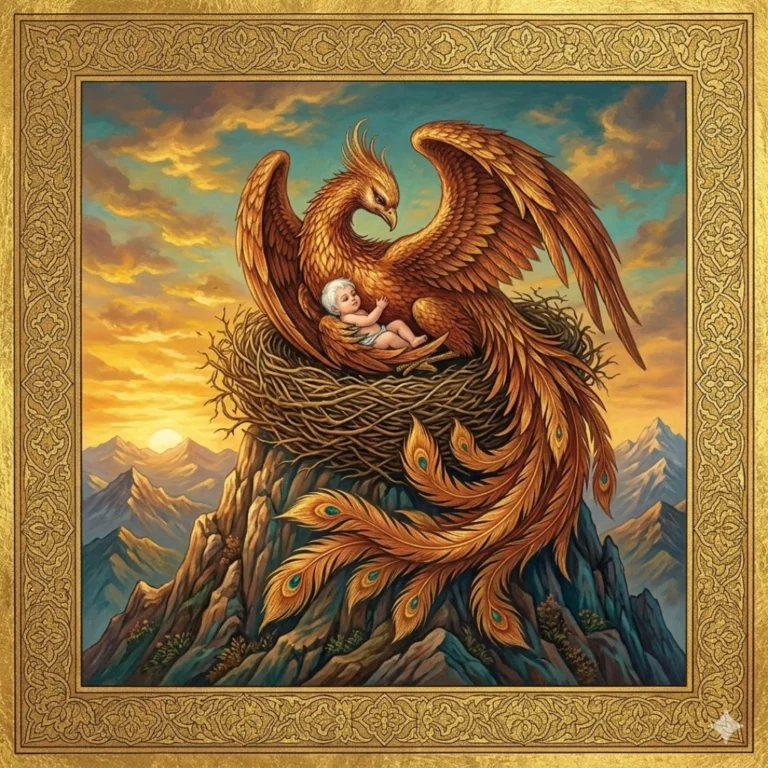
High above, a great bird with feathers of copper and gold—the Simurgh, oldest and wisest creature in the world—heard the sound. She swooped down and found the child. She carried him gently to her nest in the peaks.
The Simurgh had raised many creatures. But never a human child.
She named him Zal.
He grew among her chicks, eating what they ate, learning the language of birds, watching the stars from the highest point in the world. His hair stayed white. It was simply who he was.
Years passed. Zal grew into a man of extraordinary strength and wisdom. His white hair, which had been a reason for rejection, became his mark. Travellers who passed beneath the Alborz mountains heard of the white-haired hero-child of the Simurgh and came seeking counsel.
Sam, older now, heard of the legendary figure in the mountains. He sent messengers. He learned it was his abandoned son.
He came himself, weeping with regret.
Zal met him without anger.
“You left me,” he said. “But the Simurgh found me. I think perhaps what was meant to harm me was the making of me.”
The Simurgh gave Zal three feathers before he descended to the world. “Burn one when you need me,” she said.
Zal became one of the greatest heroes in Persian legend. He burned the first feather when his wife nearly died in childbirth—and the Simurgh told him what the healers did not know.
He never burned the third feather. He kept it close to remind himself: difference, abandoned in fear, had been his beginning—and it was enough.
Moral of the Story
Being different from others is not a flaw. Often the very thing people reject in us is the thing that shapes our greatest strength.
Learn These Words
- Simurgh
- a legendary immortal bird in Persian mythology, associated with wisdom
- counsel
- advice given by a wise person
- rejection
- being refused or turned away
- extraordinary
- very unusual or remarkable; beyond what is ordinary
- regret
- a feeling of sadness or guilt about something that has happened
Test Your Understanding
1Why did Sam abandon his son Zal?
2Who raised Zal in the mountains?
3What gift did the Simurgh give Zal?
4How did Zal react when his father Sam returned?
5What lesson does this story teach?
Frequently Asked Questions
Who is Zal in the story of Zal and the Simurgh?
Zal is the son of the great hero Sam, born with snow-white hair. Because he looked different, his father abandoned him on the Alborz mountains as an infant. He was rescued and raised by the Simurgh, a legendary bird of immense wisdom, and grew into a man of extraordinary strength, courage, and insight.
What is the Simurgh and why is it important in this story?
The Simurgh is a mythical bird with feathers of copper and gold, described as the oldest and wisest creature in the world. In this Persian tale, the Simurgh rescues baby Zal after he is abandoned and raises him in her mountain nest, teaching him wisdom and showing that compassion can come from unexpected places.
Why was Zal abandoned by his father Sam?
Zal was abandoned because he was born with completely white hair, which frightened his father and the royal court. They believed something was wrong with him and that he would bring shame. Out of fear and social pressure, Sam left the infant on a rocky ledge in the Alborz mountains.
📚 Recommended Books
Handpicked for readers like you
As an Amazon Associate, we earn from qualifying purchases. These recommendations are personalized based on this story's themes and your reading history.
What is the moral lesson in Zal and the Simurgh’s Feather?
The story teaches that being different is not a flaw—it can be a gift. Zal’s white hair, the very trait that caused his rejection, became his defining mark of strength and wisdom. The tale encourages children to embrace what makes them unique rather than seeing differences as something to fear or hide.
Is the story of Zal and the Simurgh from a real mythology?
Yes, it comes from the Shahnameh, the Persian Book of Kings written by the poet Ferdowsi around 1000 CE. It is one of the most beloved tales in Persian literature and culture. Zal goes on to become an important hero, and his story carries timeless themes of acceptance, identity, and resilience.
