A yak herder dreams of riches in a far city—but what he finds teaches him the value of what he already has.
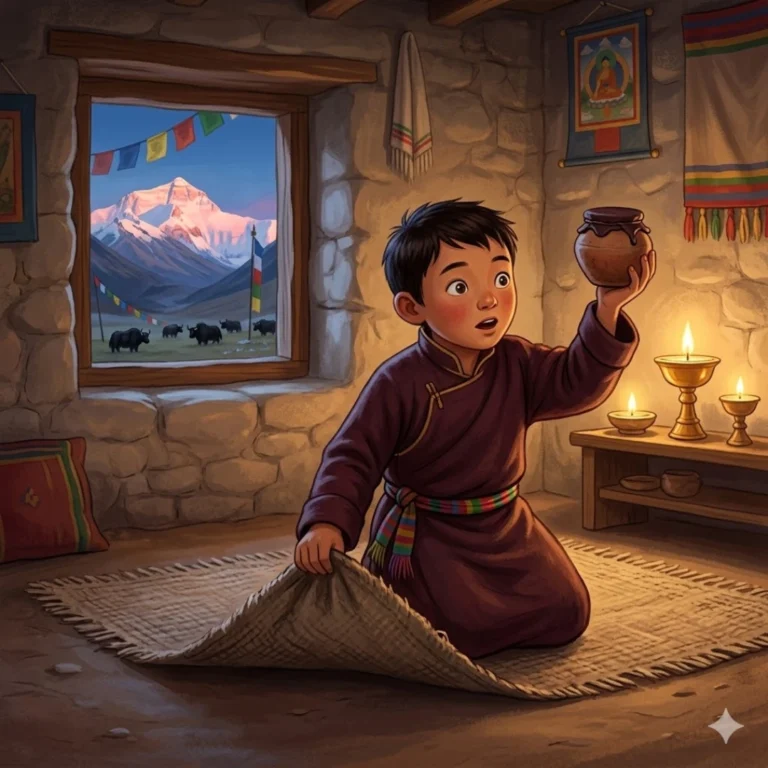
High in the Himalayan mountains, there was a young yak herder named Dorje. He lived in a stone house with his family, herding yaks across the alpine meadows, eating tsampa barley porridge every morning, watching the great peaks turn pink at sunset.
It was a good life. But Dorje was restless.
He had heard stories from travelling merchants: in the city of Lhasa, the streets were lined with butter lamps, monks recited golden scriptures, and fortune waited for those who arrived with courage.
One night Dorje dreamed of a bridge in Lhasa under which treasure was buried.
He left his yaks in his brother’s care, packed dried meat and a blanket, and began the long journey down the mountain passes. It took him many weeks.
In Lhasa, he found the bridge. He waited there, feeling foolish. Treasure under a bridge in the middle of the city?
A soldier noticed him waiting. “What are you doing, shepherd?”
Dorje told the truth about his dream.
The soldier laughed—not unkindly. “I also had a dream! I dreamed of a stone house high in the mountains, and a yak herder who sleeps on the east side of the house. Under his sleeping mat, the dream said, there is a pot of gold.”
Dorje stared.
He said goodbye politely, turned around, and walked all the way home.
He moved his sleeping mat. Under it was a clay pot, sealed with wax. Inside: old gold coins, left by some ancestor and forgotten.
He lit a butter lamp and looked out at the pink mountains.
He had travelled all the way to Lhasa to learn that his treasure was here all along.
He poured the tsampa into the pot and started the fire. Same breakfast. Different eyes.
Moral of the Story
Contentment is not giving up on dreams—it is recognising that what you seek is often already within reach. What you have may be exactly enough.
Learn These Words
- alpine
- relating to high mountains
- tsampa
- roasted barley flour, a staple food in Tibet
- scripture
- sacred or religious writing
- ancestor
- a family member from long ago
- contentment
- a feeling of happy satisfaction with what one has
Test Your Understanding
1What did Dorje dream about?
2What did the soldier in Lhasa tell Dorje?
3Where was the treasure actually hidden?
4What did Dorje do after finding the gold?
5What lesson does this story teach?
Frequently Asked Questions
What is ‘The Yak Herder’s Dream’ story about?
‘The Yak Herder’s Dream’ is a Tibetan-inspired folk tale about a young yak herder named Dorje who dreams of buried treasure in the city of Lhasa. He leaves his mountain home to find it, but ultimately discovers that true wealth was waiting for him back where he started. It teaches children the value of appreciating what they already have.
What is the moral lesson in The Yak Herder’s Dream?
The central moral is that happiness and real treasure are often right where you are. Dorje chases a dream of riches in a distant city, only to learn that the simple, good life he left behind—his family, his yaks, and the mountain meadows—was the true fortune all along. It’s a classic contentment parable.
Who is Dorje in the story and where does he live?
Dorje is a young yak herder who lives in a stone house high in the Himalayan mountains with his family. He spends his days herding yaks across alpine meadows and eating tsampa barley porridge. Despite having a peaceful life, he feels restless and yearns for the adventure and riches he’s heard about in distant Lhasa.
📚 Recommended Books
Handpicked for readers like you
As an Amazon Associate, we earn from qualifying purchases. These recommendations are personalized based on this story's themes and your reading history.
Is this story based on a real folk tale or legend?
Yes, the story follows a well-known folk tale pattern found in Tibetan and many other world traditions. The ‘dream of treasure elsewhere’ motif appears across cultures—from Tibetan Buddhist parables to European folk stories. The Lhasa setting and details like tsampa, butter lamps, and yak herding root it in authentic Tibetan culture.
What age group is The Yak Herder’s Dream best suited for?
This story works well for children aged roughly 5 to 10. Younger listeners enjoy the adventure of Dorje’s journey, while older children can appreciate the deeper moral about gratitude and contentment. Its simple language, vivid imagery, and gentle humour also make it an excellent bedtime or classroom read-aloud story.