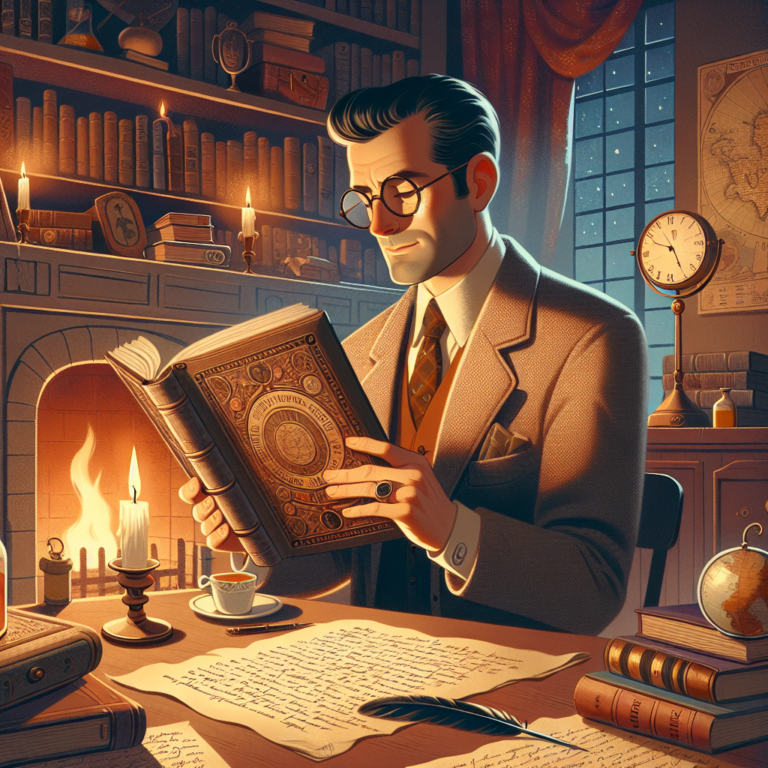
Share this engaging bedtime story with kids ages 6-12 to teach valuable life lessons.
Chapter One: The Curious Mind
In a village nestled between ancient forests and rolling meadows, there lived a girl named Rowan. She was named after the rowan tree that grew outside her grandmother’s cottage, a tree that the old people said had magical properties to protect against harm.
Rowan was twelve years old and filled with questions. Why did the farmers plant certain crops at the full moon? Why did her grandmother hang bundles of herbs above the doorway? Why did the village still dance around a bonfire at midsummer, even though nobody could quite remember what the celebration was for?
“Gran,” Rowan asked one evening, as she helped sort through dried lavender, “where do all these old customs come from?”
Her grandmother, whose name was Margaret but whom everyone called Meg, smiled a knowing smile. “That is a question with a very long answer, child. Are you sure you want to hear it?”
“I want to understand,” Rowan said.
Grandmother Meg set down her work and looked at Rowan with serious eyes. “Then I will tell you. But you must promise to listen with an open mind, to think carefully, and to remember that the truth is often more complicated than the stories.”
Rowan promised.
Chapter Two: The Old Ways
“Long, long ago,” Grandmother Meg began, “before there were churches or mosques or temples with walls, people lived close to the land. They watched the sun rise and set, watched the moon wax and wane, watched the seasons turn. Their lives depended on understanding these patterns.
They noticed that certain days were special: the longest day of summer, the shortest day of winter, the two days when day and night were equal in spring and autumn. These eight points in the year became their festivals.
At the winter solstice, when darkness was longest, they lit fires to call the sun back. They decorated their homes with evergreen branches to remind themselves that life persisted even in the coldest times. They feasted together because sharing warmth and food helped everyone survive.
At the spring equinox, they celebrated the return of new life, the first green shoots, the first lambs, the first flowers.
At midsummer, when the sun was strongest, they gave thanks for the light and prayed for a good harvest.
At the autumn equinox, they gathered the harvest and prepared for the coming dark months.
Between these four points were four more festivals, marking the times when herds were moved, when seeds were planted, when the last harvest was gathered, and when the dead were remembered.”
Rowan listened, fascinated. “So our bonfire at midsummer…”
“Is the last echo of a celebration older than anyone can remember. The old ways faded, but they never quite disappeared. They hid in folk customs, in nursery rhymes, in old sayings that nobody questioned.”
Chapter Three: The Scholars Who Went Looking
“About a hundred years ago,” Grandmother Meg continued, “some curious scholars began to wonder about these old traditions.
A man named James Frazer spent years studying customs from all around the world. He noticed that many cultures, even cultures that had never met, had similar beliefs and practices. He wrote a great book called ‘The Golden Bough,’ trying to understand what these similarities meant.
A woman named Margaret Murray went even further. She studied the witch trials of the past and asked a dangerous question: Were some of those accused actually practitioners of an old religion that had never completely died out?
Now, many scholars today think Murray got some things wrong. The witch trials were more complicated than she believed, and the evidence for a continuous secret religion is weak. But her ideas inspired people to take a fresh look at the old ways.”
Rowan frowned. “So she was wrong?”
“She was partly wrong and partly right, as most of us are. The important thing is that she asked questions, she looked for evidence, and she tried to understand. That is what good scholars do, even when their conclusions need to be revised later.”
Chapter Four: The Modern Seekers
“In the middle of the last century,” Grandmother Meg said, “a man named Gerald Gardner claimed to have been initiated into a surviving coven of witches. He wrote books about their practices and beliefs. Some people believe his claims; others think he created something new from fragments of old traditions.
What matters is what he taught: that the Earth is sacred, that the cycles of nature deserve celebration, that women and men are equally important, that magic is simply understanding and working with the patterns of nature.
He created what he called a ‘Book of Shadows,’ a handwritten book of rituals, prayers, and wisdom that could be passed down from teacher to student.
Another writer, Robert Graves, wrote about the goddess who appears in many cultures under many names: she who represents the moon, the earth, the cycles of birth and death and rebirth. He called her the White Goddess.
These modern seekers were not continuing an unbroken line from ancient times. They were doing something different: they were gathering scattered fragments, filling in gaps with their own creativity, and creating new traditions that felt meaningful to them.”
Chapter Five: The Book and the Fire
Rowan sat quietly for a while, thinking about everything her grandmother had said.
“Gran, do you believe in magic?”
Grandmother Meg picked up a sprig of rosemary and held it to her nose. “I believe that our ancestors knew things we have forgotten. They knew which herbs helped with headaches, which ones calmed anxious minds, which ones added flavor to food and which ones were poison. They knew when to plant and when to harvest, how to read the weather in the clouds and the behavior of animals.
They called this knowledge magic, but we might call it wisdom: deep, practical knowledge of the natural world.
They also knew how to mark time, how to celebrate together, how to grieve together, how to feel connected to something larger than themselves. That, too, is a kind of magic.
And they knew that stories and rituals have power, the power to change how we think and feel, to bring us together, to help us through difficult times. When we light a candle and make a wish, when we gather around a fire on the darkest night of winter, when we decorate with flowers in spring, we are using that power.”
Rowan looked at the rowan tree outside the window, its branches dark against the evening sky.
“So it is not about spells and broomsticks?”
“Some people do practice rituals they call spells, but these are really just focused intentions combined with symbolic actions. When you blow out birthday candles and make a wish, you are doing something very similar. The power is not in the candles; it is in your focused hope.”
Chapter Six: The Balance
“The old ways, whether real or reimagined, taught something important,” Grandmother Meg said. “They taught that humans are part of nature, not separate from it. They taught that the sun and moon, the rain and soil, the plants and animals, are not things to be used up but partners in life that deserve respect.
They taught that light and dark, growth and rest, life and death are all parts of one great cycle, and that fighting against this cycle brings only suffering.
And they taught that knowledge should be pursued carefully and humbly. The people accused as witches during the terrible witch trials, whatever they actually believed, were killed because people were afraid of knowledge they did not understand. That fear led to terrible injustice.”
“Is that why you wanted me to think carefully?” Rowan asked.
“Yes. When we study the old ways, we must be honest about what we know and what we do not know. We must not pretend to have ancient wisdom that was never written down. But we also must not dismiss all the old knowledge just because some claims about it were exaggerated.
The truth is usually somewhere in the middle: not as mystical as believers claim, not as empty as skeptics insist.”
Chapter Seven: Rowan’s Understanding
As the stars came out over the village, Rowan helped her grandmother light a candle for the evening.
“I think I understand,” Rowan said slowly. “The old ways are like a river that sometimes runs underground. You cannot always see it, but it is still flowing. The festivals we celebrate, the herbs we gather, the stories we tell, they all carry pieces of the past, even when we do not remember where they came from.”
Grandmother Meg nodded proudly.
“And the modern seekers, even if they got some things wrong, were trying to dig new channels for that underground river to flow again. They were trying to reconnect people with nature, with the cycles of the year, with each other.”
“And what about magic?” Grandmother Meg asked.
Rowan thought for a long moment. “Magic is wonder. Magic is paying attention to the world and noticing how extraordinary ordinary things are. Magic is knowing that we are connected to everything, to the stars and the soil and the generations that came before us.
It is not about supernatural powers. It is about being fully, deeply alive in a world that is already full of wonders.”
Grandmother Meg embraced her granddaughter. “You have learned well. Now, shall we go outside and look at the stars? Your ancestors looked at these same stars, and their light has been traveling toward us for millions of years.”
They walked out into the garden, where the rowan tree stood like a guardian. The stars blazed overhead, and for a moment, Rowan felt connected to everyone who had ever looked up at them, from the very first humans around the very first fire to this very night.
The Book of Shadows, she realized, was not really a book at all. It was the accumulated wonder and wisdom of countless generations, written not on paper but in the cycles of nature, the turning of the seasons, and the endless human desire to understand.
Moral Lessons
- Wisdom comes from approaching knowledge with both curiosity and humility, seeking the truth even when it is complicated. Our connection to nature and to generations past gives our lives meaning and roots us in something larger than ourselves.
Test Your Understanding
1Who is Gerald Gardner?
Frequently Asked Questions
What is the moral lesson of Gerald’s Enchanting Quest for the Ancient Shadows?
What age is this story appropriate for?
How long does it take to read Gerald’s Enchanting Quest for the Ancient Shadows?
What culture does this story come from?
Can I use this story for teaching?
Frequently Asked Questions
What age group is Gerald’s Enchanting Quest for the Ancient Shadows suitable for?
This bedtime story is designed for kids ages 6 to 12. It blends magical adventure with meaningful life lessons, making it a great choice for parents and caregivers looking for an engaging story that also sparks curiosity and thoughtful conversation with children.
What life lessons does Gerald’s Enchanting Quest for the Ancient Shadows teach children?
The story encourages children to ask questions, listen with an open mind, and understand that truth can be complex. Through characters like Rowan and her grandmother, young readers learn the value of curiosity, respecting traditions, and thinking carefully before drawing conclusions.
Is this an ancient shadows story appropriate for bedtime reading?
Yes, this ancient shadows quest story is well-suited for bedtime reading. While it touches on magical and mysterious themes like old customs and enchanted forests, the tone is warm and nurturing, guided by a wise grandmother figure that makes it comforting rather than scary for younger readers.
📚 Recommended Books
Handpicked for readers like you
As an Amazon Associate, we earn from qualifying purchases. These recommendations are personalized based on this story's themes and your reading history.
Who is the main character in this story?
The central character readers follow is Rowan, a curious twelve-year-old girl living in a village surrounded by ancient forests. She is guided by her grandmother Meg, who shares the history behind old village customs and magical traditions, setting the story’s adventure in motion.
Does the story explain where old folk customs and traditions come from?
Yes, exploring the origins of old customs is a key theme. Rowan’s grandmother begins explaining why villagers plant by the full moon, hang herbs above doorways, and dance at midsummer bonfires, weaving history and magic into a story that helps children appreciate cultural heritage and ask deeper questions.