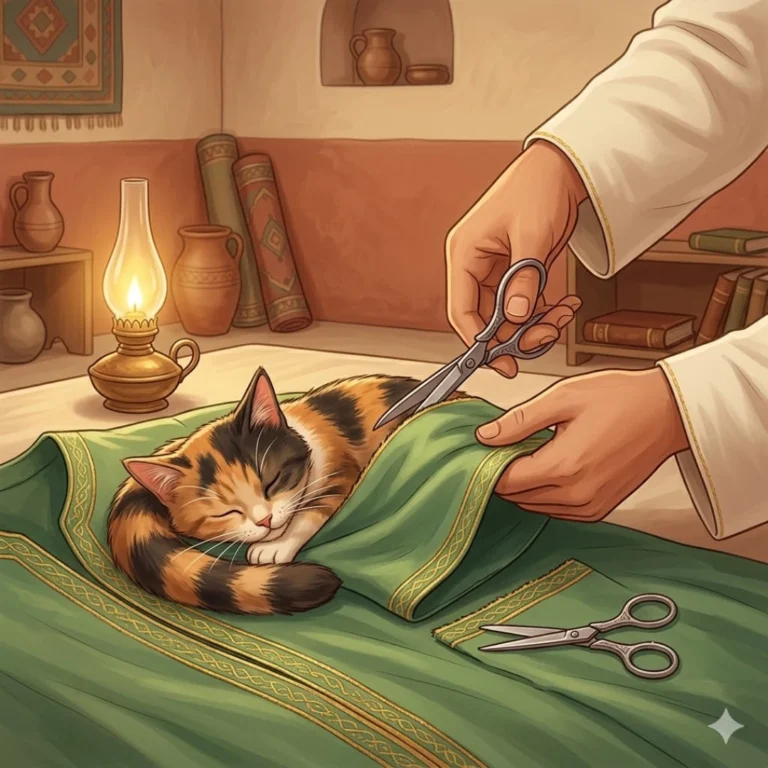
The Prophet Muhammad cuts off his own sleeve rather than disturb a sleeping cat—and teaches the world that kindness to all creatures matters.
In the city of Medina, long ago, the Prophet Muhammad was known for his kindness to all living things. Animals sensed this about him—they came to him without fear.
He had a favourite cat named Muezza who followed him like a shadow. Muezza would curl beside him while he read and sleep on his robe while he sat in thought.
One afternoon, the call to prayer sounded across the city. The Prophet rose to prepare for prayer—and found that Muezza was curled, fast asleep, on the sleeve of his robe.
He looked at the sleeping cat. The cat’s whiskers trembled slightly. Her paws were tucked under her chin.
A servant stepped forward to move the cat.
The Prophet raised his hand. “No.”
He took a small knife and carefully, quietly, cut off the sleeve of his robe. Leaving the fabric under Muezza undisturbed, he rose for prayer.
When he returned, Muezza woke, stretched, and came to him. The Prophet stroked her head three times.
His companions watched. Some were surprised. His robe was fine cloth. The sleeve was ruined. A robe was a possession; a cat was—well, a cat.
“But she was sleeping,” said the Prophet simply.
The companions thought about this for a long time. A man who could lead a city, negotiate peace between tribes, and recite words that changed history—this man would rather cut his sleeve than interrupt a sleeping cat.
They understood what he was teaching: that mercy and gentleness are not divided into those who deserve them and those who do not. They are simply how you move through the world.
Muezza is still remembered, centuries later, as the cat that inspired one of the most quoted examples of kindness in the Islamic tradition.
Moral of the Story
kindness is not something you switch on for special occasions. It is how you move through the world at every moment—even small, unwitnessed moments.
Learn These Words
- Medina
- a city in present-day Saudi Arabia, one of the holiest cities in Islam
- companion
- someone who spends time with you; in Islamic tradition, those who knew the Prophet
- mercy
- kindness and forgiveness shown to someone who is in your power
- negotiate
- to discuss something in order to reach an agreement
- possession
- something you own
Test Your Understanding
1What was the Prophet’s cat named?
2Why did the Prophet cut his sleeve?
3What event made the Prophet need to leave?
4How many times did the Prophet stroke Muezza’s head when he returned?
5What lesson does this story teach?
Frequently Asked Questions
What is the story of the Prophet Muhammad and the sleeping cat?
The story tells how the Prophet Muhammad cut off his own sleeve rather than wake his cat Muezza, who had fallen asleep on his robe when the call to prayer sounded. When companions questioned the act, he simply said, ‘But she was sleeping.’ The story teaches that kindness to all living creatures matters, no matter how small.
What was the name of the Prophet Muhammad’s cat?
The Prophet Muhammad’s favourite cat was named Muezza. She followed him like a shadow, curling beside him while he read and sleeping on his robe while he sat in thought. Their bond is one of the most well-known examples of the Prophet’s deep kindness toward animals.
Why did the Prophet Muhammad cut off his sleeve?
He cut off his sleeve so he could rise for prayer without disturbing Muezza, who was sleeping peacefully on the fabric. Rather than wake the cat or allow a servant to move her, he sacrificed his own fine garment. The gesture showed that compassion for a creature’s comfort outweighed the value of a possession.
📚 Recommended Books
Handpicked for readers like you
As an Amazon Associate, we earn from qualifying purchases. These recommendations are personalized based on this story's themes and your reading history.
What does this story teach children about kindness to animals?
The story shows that kindness to animals is not a small or trivial thing — even a prophet considered a sleeping cat’s rest worth protecting. It teaches children to be gentle and thoughtful toward all living things, and that how we treat creatures who cannot speak for themselves reflects our true character.
Is the Prophet Muhammad and the sleeping cat story suitable for young kids?
Yes, it’s a gentle and age-appropriate story ideal for young children. It uses simple, vivid details — trembling whiskers, tucked paws, a quiet act of kindness — that children can easily picture and understand. The moral is clear without being preachy, making it a great read-aloud or bedtime story.