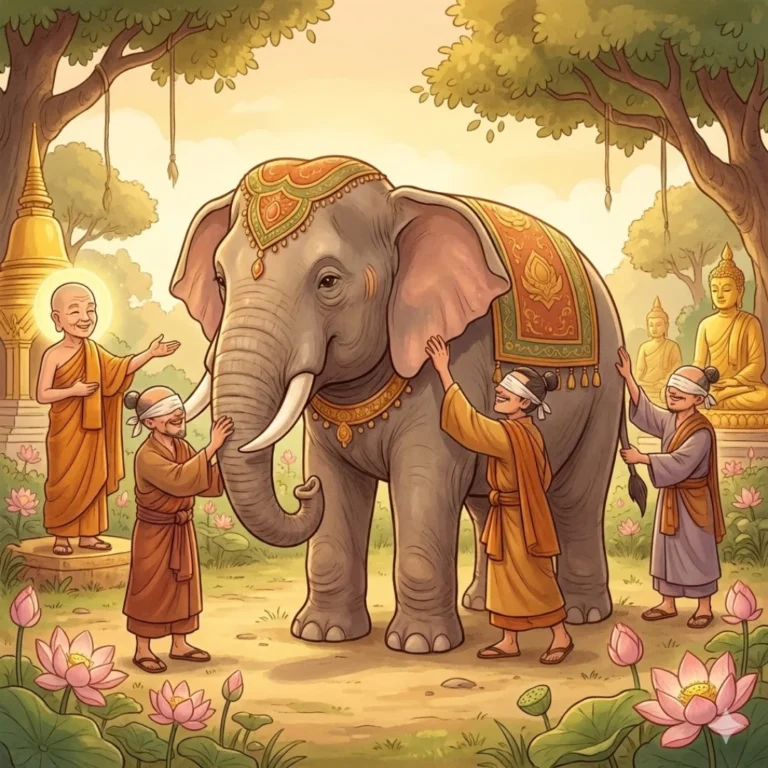
Moral of the Story
We each see only part of the truth; wisdom-story-for-kids/”>wisdom/” title=”More stories about wisdom”>wisdom comes from listening to others
Frequently Asked Questions
What is the moral lesson of The Elephant and the Blind Men – Buddhist Wisdom Story for Kids?
What age is this story appropriate for?
How long does it take to read The Elephant and the Blind Men – Buddhist Wisdom Story for Kids?
What culture does this story come from?
Can I use this story for teaching?
Frequently Asked Questions
What is the main lesson of The Elephant and the Blind Men?
The main lesson of The Elephant and the Blind Men is that no single person sees the whole truth. Each blind man touches a different part of the elephant and believes his experience is the complete reality. True wisdom comes from listening to others, combining different perspectives, and staying humble about what we think we know.
What age group is The Elephant and the Blind Men story suitable for?
The Elephant and the Blind Men story is suitable for children aged 6 to 12. It uses simple, relatable storytelling to introduce big ideas like humility, empathy, and open-mindedness, making it a great read-aloud for parents, teachers, and caregivers working with primary school-age kids.
Where does The Elephant and the Blind Men story originally come from?
The Elephant and the Blind Men is rooted in Buddhist tradition and is one of the most well-known wisdom parables in Asian philosophy. Versions of the story also appear in Hindu and Jain texts, showing how widely this timeless lesson about perspective and humility has resonated across cultures and centuries.
📚 Recommended Books
Handpicked for readers like you
As an Amazon Associate, we earn from qualifying purchases. These recommendations are personalized based on this story's themes and your reading history.
How does The Elephant and the Blind Men teach kids about perspective?
The story shows children that two people can both be right yet still disagree, because each is describing only part of the truth. By watching the blind men argue over what an elephant is, kids learn to ask questions, listen carefully, and consider viewpoints different from their own before forming a conclusion.
Why is listening to others important according to this wisdom story?
According to this wisdom story, listening to others fills in the gaps of our own limited experience. Because each blind man only touched one part of the elephant, none of them understood the full picture alone. Together, their descriptions form the truth, showing children that collaboration and open-minded listening lead to greater understanding.