Moral of the Story
Our fears are often based on misunderstanding, not reality
Frequently Asked Questions
What is the moral lesson of The Tiger and the Persimmon – Korean Wisdom Story for Kids?
What age is this story appropriate for?
How long does it take to read The Tiger and the Persimmon – Korean Wisdom Story for Kids?
What culture does this story come from?
Can I use this story for teaching?
Frequently Asked Questions
What is The Tiger and the Persimmon about?
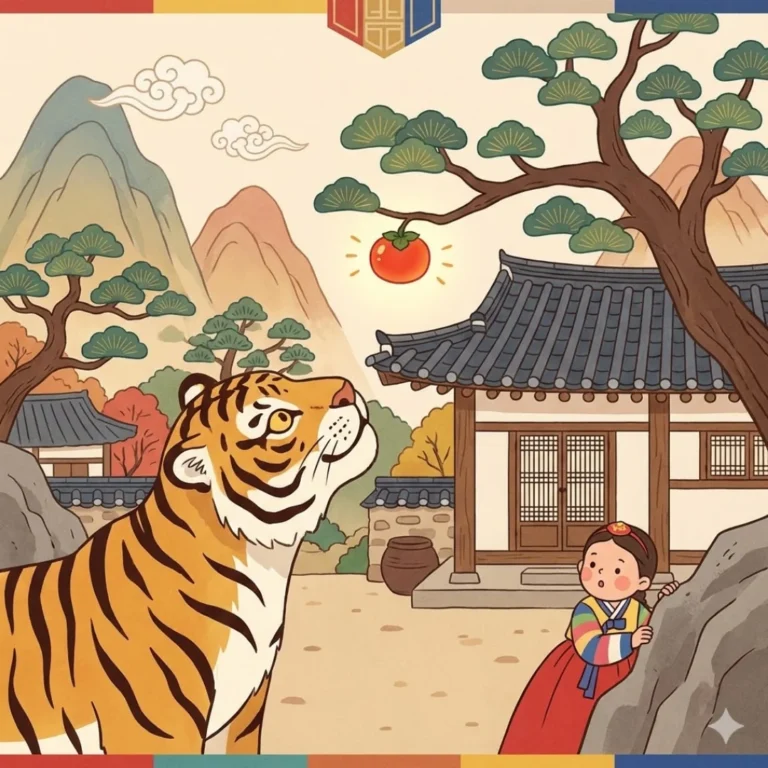
The Tiger and the Persimmon is a traditional Korean folktale about a fearsome tiger who is unexpectedly frightened by a persimmon fruit. The story humorously illustrates how our fears are often based on misunderstanding rather than reality, making it a fun and meaningful read for children ages 6 to 12.
What is the moral lesson of The Tiger and the Persimmon?
The moral of The Tiger and the Persimmon is that our fears are often based on misunderstanding, not reality. It encourages children to question what they’re afraid of and to think critically before assuming something is truly dangerous or threatening.
Is The Tiger and the Persimmon a good story for young kids?
Yes! The Tiger and the Persimmon is recommended for children ages 6 to 12. It’s a short, engaging Korean folktale at 587 words, making it easy to read aloud or independently. Its humor and clear moral message make it enjoyable and educational for early and developing readers.
📚 Recommended Books
Handpicked for readers like you
As an Amazon Associate, we earn from qualifying purchases. These recommendations are personalized based on this story's themes and your reading history.
Where does the story of The Tiger and the Persimmon come from?
The Tiger and the Persimmon comes from Korean folk tradition. It’s a classic piece of Korean wisdom storytelling passed down through generations, often used to teach children life lessons in a fun and memorable way through animal characters and everyday objects like the persimmon fruit.
Why is the tiger afraid of the persimmon in this Korean folktale?
In the story, the tiger misinterprets a situation involving a persimmon, leading to irrational fear. Without giving away too much, the humor comes from the tiger’s misunderstanding of something entirely harmless. This sets up the story’s central message that fear is often rooted in confusion rather than actual danger.