The Girl Who Spoke to Storms
—
The village of Aomidori smelled of cedar smoke and cold water. Every morning, Yuki climbed the mountain path to fetch water from the sacred spring, her wooden sandals clacking against wet stone, her breath rising in small silver clouds. The pines stood tall as sleeping giants, their roots gripping the earth like enormous gnarled fingers, and the wind whispered through their needles in a language she almost understood.
One autumn morning, the air tasted different — metallic and sharp, like bitten copper. The birds had gone silent. The leaves on the silver maple had turned face-down, pale bellies to the sky.
Yuki ran back to the village. She knew what those signs meant. Her father, a weathered fisherman with hands like carved driftwood, had taught her to read the mountain's moods.
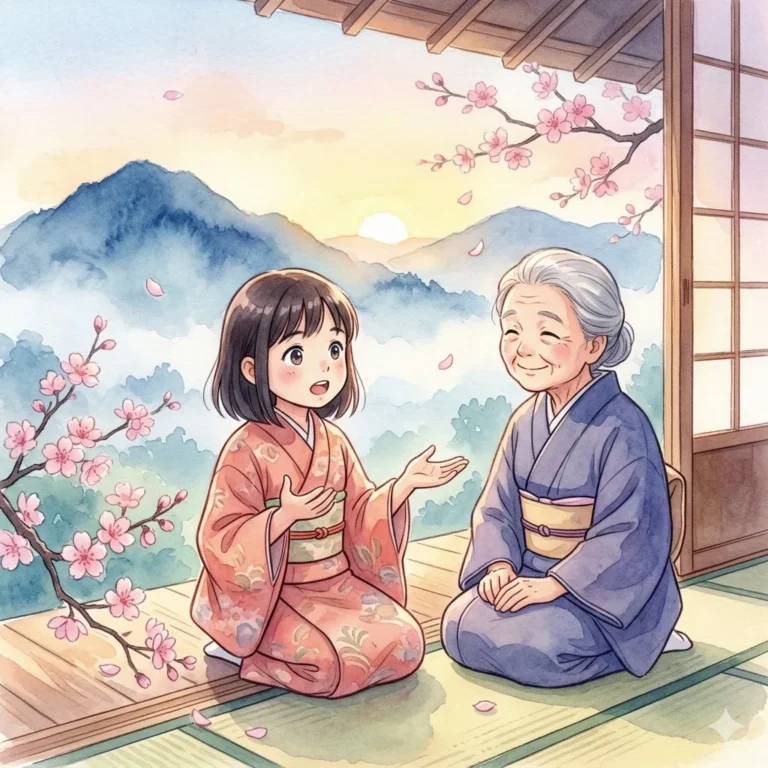
"Grandmother," she said, breathless in the doorway. "A great storm is coming. A bad one. We must move the boats and bring the rice inside."
Her grandmother, who was patching a fishing net by the fire, didn't look up. The smell of burning cedar chips hung sweet and low in the air.
"You are eight years old," her grandmother said gently. "Tell Elder Matsumoto."
But Elder Matsumoto was not gentle. He was a broad man with a grey beard that hung to his chest, and he had seen seventy winters without once being wrong about the weather.
Yuki found him outside the storehouse, squinting at the clear blue sky.
"Elder Matsumoto," she said, standing straight though her knees trembled. "I believe a great storm will strike before nightfall. The maple leaves have turned. The herons have left the river. The air smells of iron."
The old man looked down at her the way one looks at a persistent sparrow.
"Little girl," he said, not unkindly, "the sky is clear. There is no storm coming. Go home and help your mother."
Yuki looked at the sky. It was, in fact, perfectly clear. Blue as a morning glory.
She walked away. But she did not go home.
She went back to the spring.
There, sitting on a boulder with his great wings folded like black umbrellas, was a tengu — a mountain spirit with a long crimson nose and eyes like polished obsidian. Children who have read about tengu, for kids ages 6-12 especially, often imagine them as frightening. But this one was simply watching her with tremendous curiosity.
"You saw the signs," the tengu said. His voice was like wind through bamboo — hollow and resonant. "But the elder did not listen. What will you do now?"
Yuki's heart hammered in her chest. She could smell him: pine resin and cold stone and something ancient that had no name.
"I don't know," she admitted. "He is the elder. I am just a child."
"And the storm?"
"The storm does not care who is right," she said quietly. "It will come anyway."
The tengu tilted his enormous head. His black eyes caught the pale light like mirrors.
"Then what is the difference," he said, "between wisdom and courage?"
Yuki was quiet for a long time. A cold gust moved through the trees, bending them, and she felt the first electric tingle of change in the air.
"Wisdom is knowing the storm is coming," she said at last. "Courage is doing something about it even when no one believes you."
The tengu said nothing. But the corner of his terrible mouth curved — just slightly — upward.
Yuki ran.
She did not run to Elder Matsumoto. She ran to her father's boat, and she began to tie it higher on the dock with the heavy rope, her small fingers working furiously against the rough hemp fibres. Then she ran to old widow Sato's house and dragged the rice sacks inside herself, panting, her shoulders burning. She told every child she found to go home and bar the shutters. She could not make the adults believe her. But she could act.
By midday, the sky had turned the colour of bruises — green and purple and black. The wind arrived like a wall.
And then the storm struck.
The rain came in curtains of cold glass. The river surged. The trees groaned and cracked. The villagers scrambled to save what they could — but Yuki's father's boat was already secured. Widow Sato's rice was already dry. The children were already safe indoors, peering through shuttered windows at a world turned white and wild.
When the storm passed, three hours later, the air smelled clean and bright and new, like the inside of a cedar box. Water dripped from every eave in silver threads. The mountain gleamed.
Elder Matsumoto found Yuki sitting on her doorstep, wringing out her soaked sleeve.
He was quiet for a long time. Then he sat down beside her — this enormous man with his grey beard — and together they looked at the battered village, and at the one boat that had not been swept away.
"How did you know?" he asked.
"My father taught me," she said. "And I listened."
Another silence settled between them, soft as fresh snow.
"Then," said Elder Matsumoto, "perhaps I should listen too."
📚 Recommended Books
Handpicked for readers like you
As an Amazon Associate, we earn from qualifying purchases. These recommendations are personalized based on this story's themes and your reading history.
That evening, Yuki's grandmother braided her wet hair by the fire, and the smoke curled upward like a question answered, and outside, the mountain breathed long and slow in the settling dark.