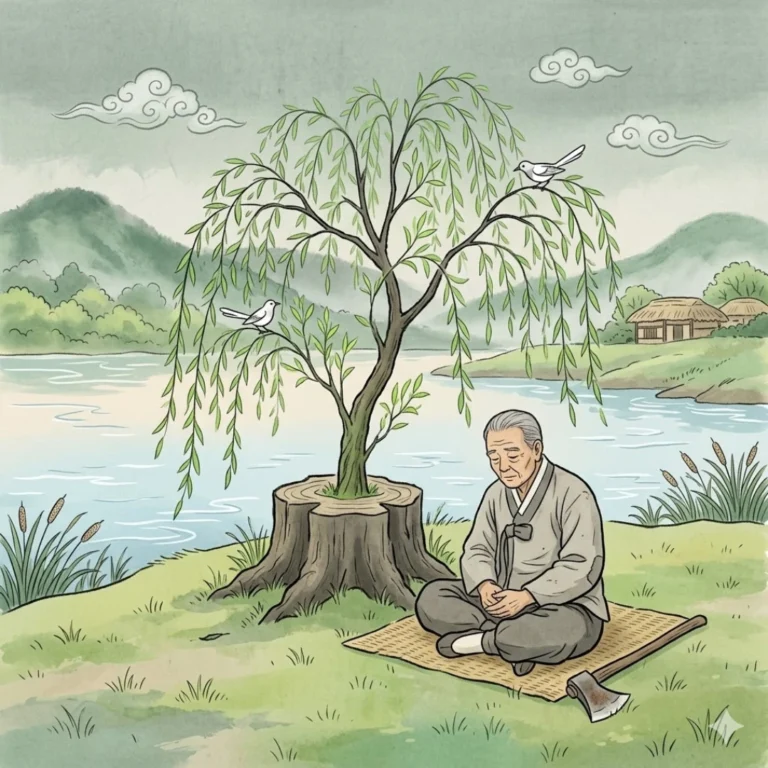
A willow tree is cut down in anger—but it grows back, and its shade shelters even the man who cut it. A story about forgiveness that asks nothing in return.
By the bank of the Han River, there stood an old weeping willow that had shaded the village for as long as anyone could remember. Children played in its shade. Elders sat beneath it. Lovers met under its trailing branches.
One spring, a young man named Gwan-sik came home from the city angry. He had failed his examinations. He had disappointed his family. He wanted to hurt something.
He picked up an axe and cut down the willow.
The village was horrified. The tree lay on its side, its roots torn from the earth, its trailing branches grey and still.
“What have you done?” said the old grandmother who had sat under that tree every afternoon for fifty years.
Gwan-sik said nothing. He was ashamed. But he would not show it.
He passed the empty bank every day for a year. He looked at the stump. Some mornings he put his hand on it but did not know why.
Then one spring morning, he noticed something.
A small shoot had pushed up from the stump—thin as a finger, green as new life.
He stopped walking.
He knelt down. Without thinking, he fetched water from the river and poured it carefully around the roots.
He came back the next day. And the next.
By summer, the shoot had grown three feet. By the following year, it was taller than Gwan-sik himself. Within five years, its branches trailed the water again.
The old grandmother came back to her spot beneath it. She smiled at Gwan-sik, who sat a few feet away.
“Trees know something about forgiveness,” she said. “They don’t wait to be asked. They just grow back toward the light.”
Gwan-sik put his face in his hands and cried for the first time since the day he swung the axe.
The willow rustled over him in the breeze.
Moral of the Story
Forgiveness does not wait for an apology. Like a tree that grows back after being cut, forgiveness is a choice to keep reaching toward the light.
Learn These Words
- examination
- a formal test of knowledge or ability
- shoot
- a new young growth on a plant
- stump
- the base of a tree left in the ground after the trunk is cut down
- rustled
- made a soft sound, like leaves moving in wind
- forgiveness
- choosing to stop being angry at someone for a wrong they did
Test Your Understanding
1Why did Gwan-sik cut down the willow?
2What happened one spring after Gwan-sik cut the tree?
3What did Gwan-sik start doing every day after noticing the shoot?
4What did the old grandmother say about trees and forgiveness?
5What lesson does this story teach?
Frequently Asked Questions
What is ‘The Willow Who Forgave the Axe’ about?
It’s a Korean-inspired moral story about a young man named Gwan-sik who, in a moment of anger and shame after failing his exams, cuts down a beloved village willow tree. When the willow grows back and shelters even the man who harmed it, the story delivers a powerful lesson about forgiveness that expects nothing in return.
What is the moral lesson of the willow tree forgiveness story?
The central moral is that true forgiveness asks for nothing in return. The willow doesn’t demand an apology or repayment—it simply grows back and offers its shade to everyone, including the person who caused it harm. This teaches children that forgiveness is a generous, unconditional act that heals both the forgiver and the forgiven.
Why did Gwan-sik cut down the willow tree?
Gwan-sik returned from the city after failing his examinations and feeling like he had disappointed his family. Overwhelmed by anger and shame, he wanted to lash out at something. He grabbed an axe and cut down the village willow tree—an impulsive, destructive act born from hurt rather than malice.
📚 Recommended Books
Handpicked for readers like you
As an Amazon Associate, we earn from qualifying purchases. These recommendations are personalized based on this story's themes and your reading history.
What age group is this forgiveness story best suited for?
This story works well for children ages 5 to 10, though its emotional depth also resonates with older readers. Younger children connect with the vivid imagery of the tree and the axe, while older kids can explore deeper themes like shame, regret, and the courage it takes to forgive someone unconditionally.
Is this willow tree story based on a Korean folktale?
The story is set along Korea’s Han River and draws on Korean cultural imagery, including the significance of weeping willows and Confucian examination traditions. While it follows the spirit of traditional Korean moral tales that use nature to teach virtues like patience and forgiveness, it is a modern retelling rather than a direct adaptation of a specific folktale.