Moral of the Story
Water is life, and we must respect the natural forces that sustain us
Frequently Asked Questions
What is the moral lesson of The Rainbow Serpent?
What age is this story appropriate for?
How long does it take to read The Rainbow Serpent?
What culture does this story come from?
Can I use this story for teaching?
Frequently Asked Questions
What is the Rainbow Serpent story about?
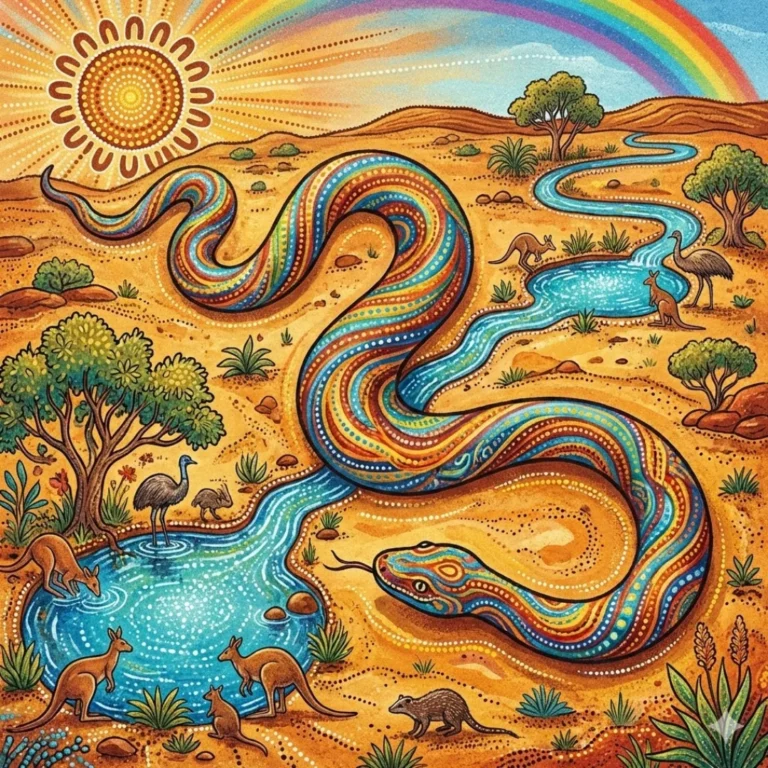
The Rainbow Serpent is an Aboriginal folktale about a powerful serpent connected to water and creation. It teaches children to respect the natural forces that sustain life, particularly water. The story is rooted in Australian Aboriginal tradition and is suitable for children ages 6 to 12.
Where does the Rainbow Serpent legend come from?
The Rainbow Serpent comes from Aboriginal Australian tradition, making it one of the oldest continuous mythological stories in the world. It is a central figure in many Aboriginal Dreamtime stories, symbolising the life-giving power of water, creation, and the natural world.
What moral lesson does the Rainbow Serpent teach kids?
The Rainbow Serpent teaches children that water is life and that we must respect the natural forces that sustain us. It encourages young readers to appreciate nature, make responsible choices, and understand that our actions toward the environment have meaningful consequences.
📚 Recommended Books
Handpicked for readers like you
As an Amazon Associate, we earn from qualifying purchases. These recommendations are personalized based on this story's themes and your reading history.
Is the Rainbow Serpent story appropriate for young children?
Yes, this story is designed for children ages 6 to 12. The language is accessible and engaging for early and middle elementary readers. Parents and teachers can use it as a great starting point for conversations about nature, respect, and indigenous cultural traditions.
Why is the Rainbow Serpent important in Aboriginal culture?
In Aboriginal culture, the Rainbow Serpent is one of the most significant Dreamtime beings, associated with water sources, fertility, and creation. It represents the power and unpredictability of nature, reminding people to live in harmony with the land and to honour the forces that give and sustain life.